
Last updated September 20, 2026
Free on-site gate assessment - hinges, posts, and your LiftMaster or Nice gate operator checked before anything is quoted
The assessment is free and the quote is the invoice.

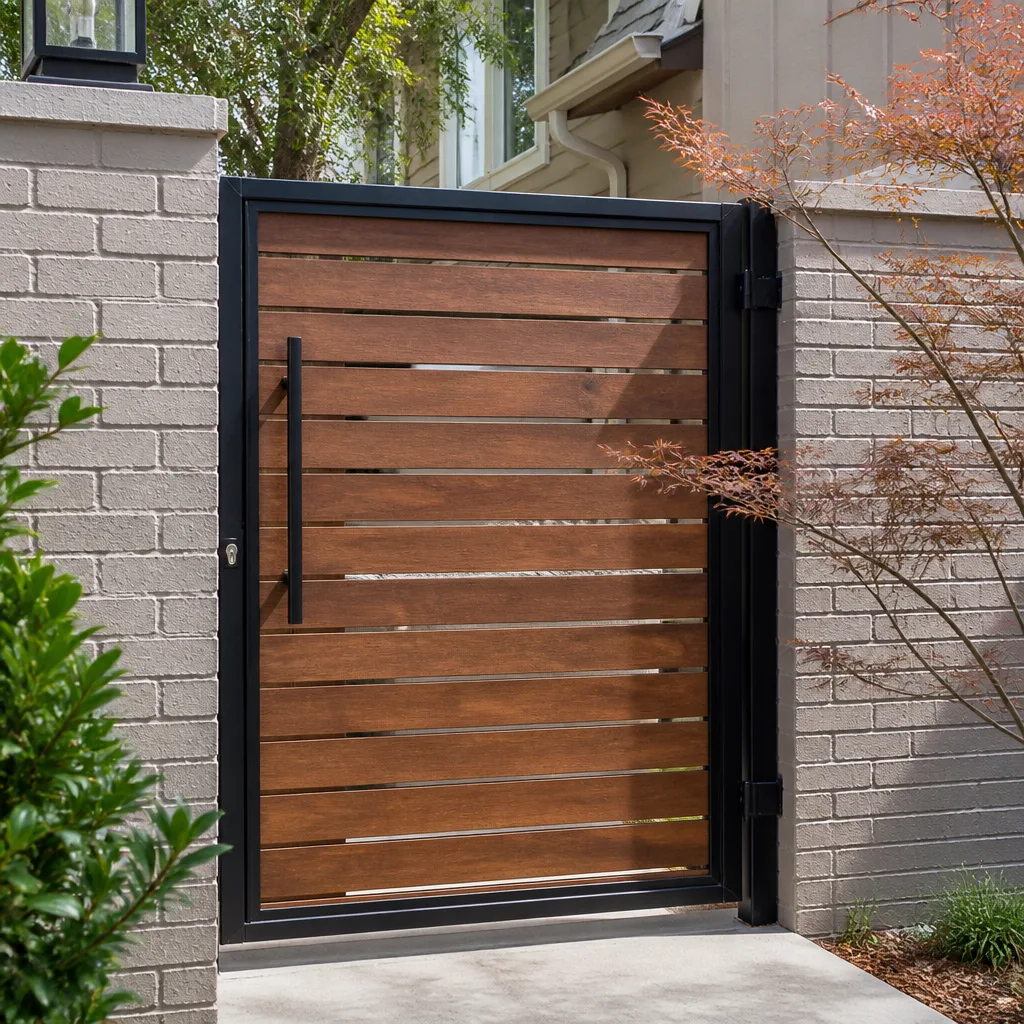

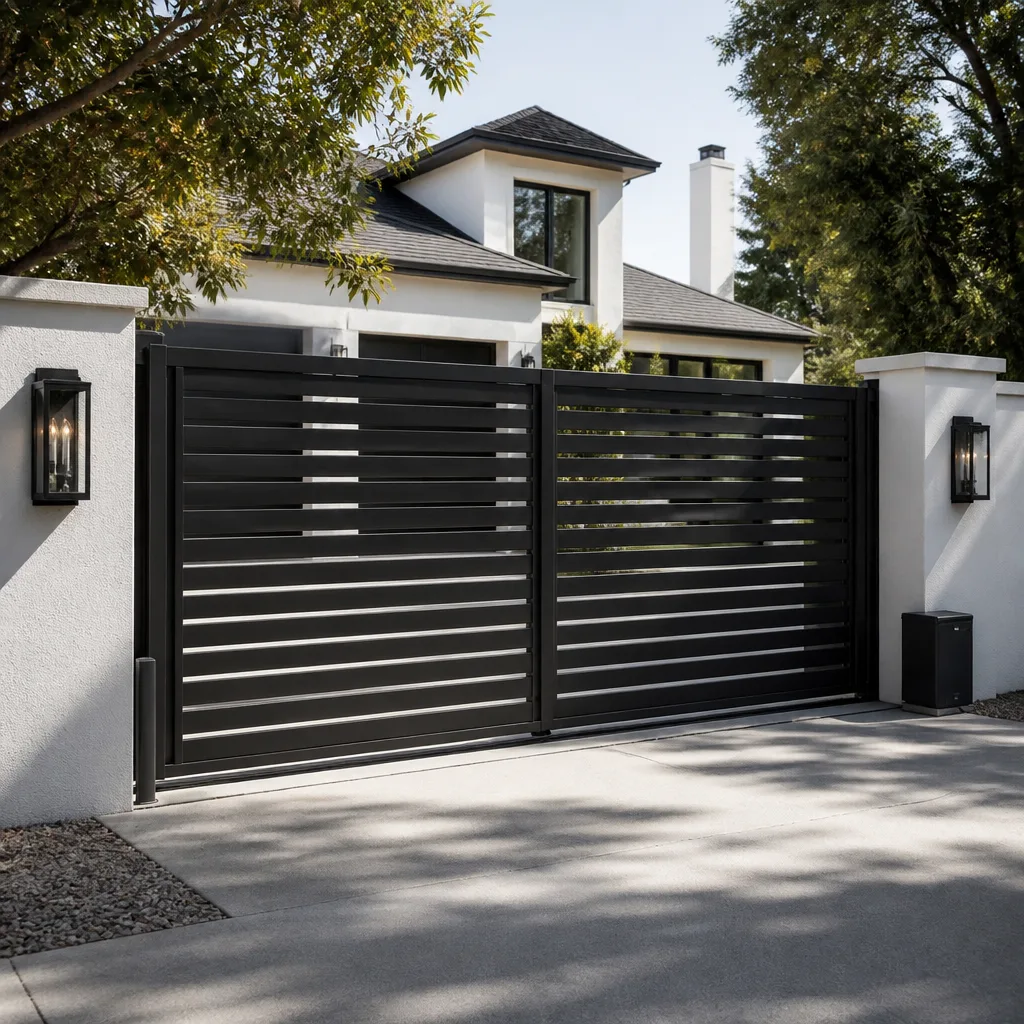
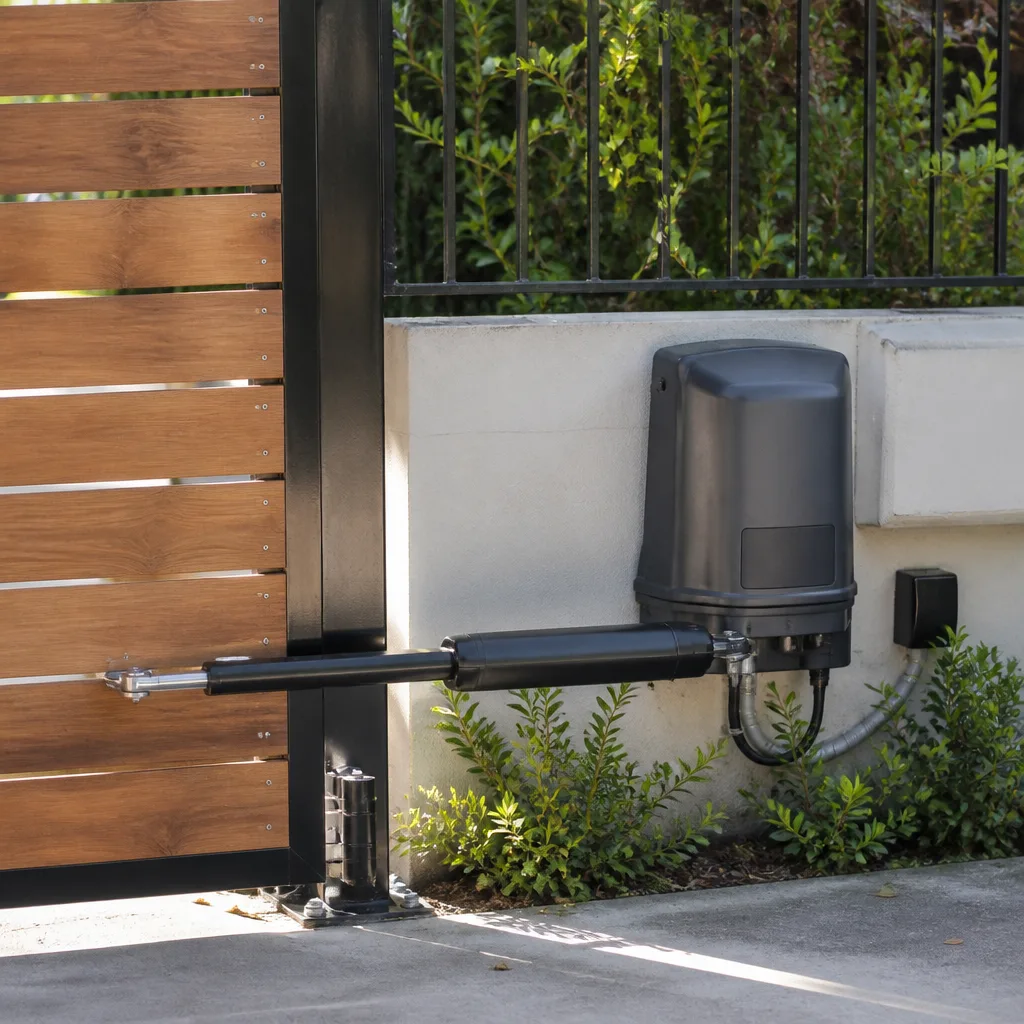
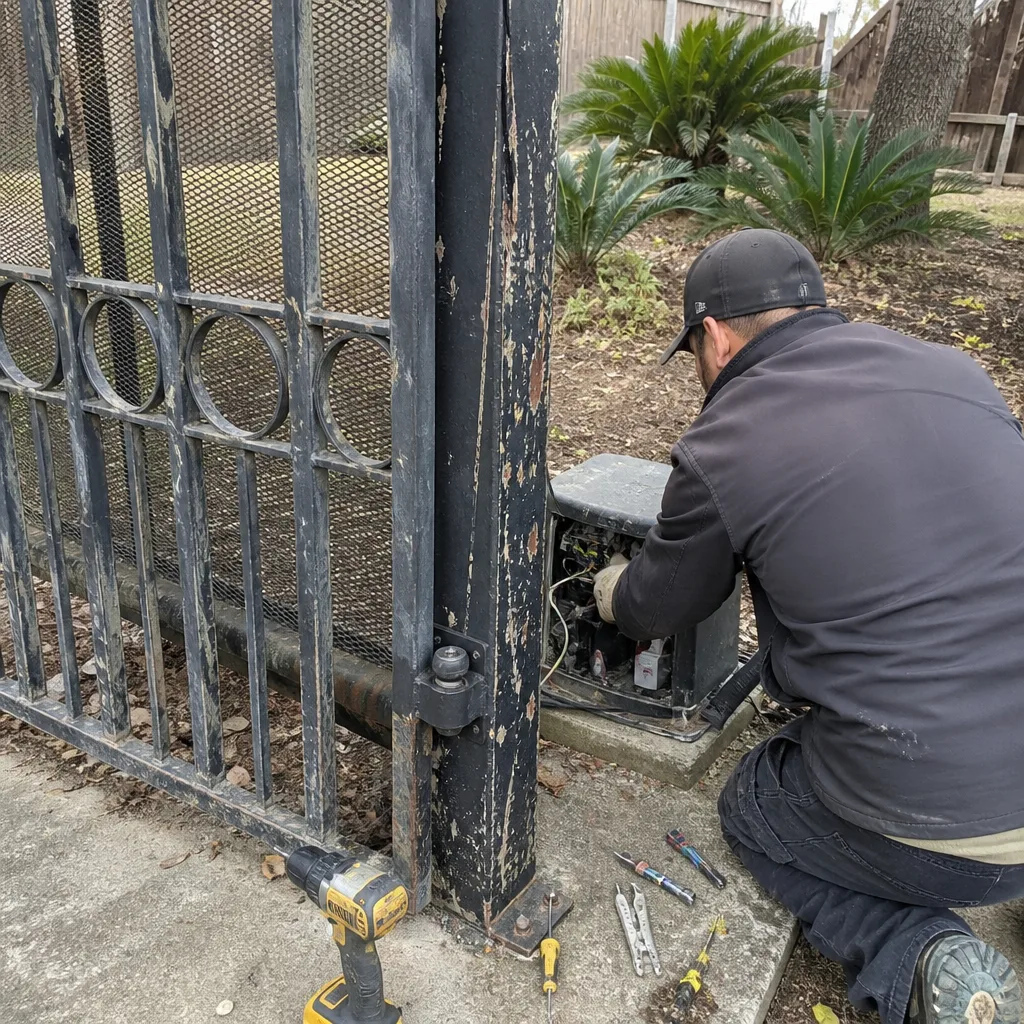 Before
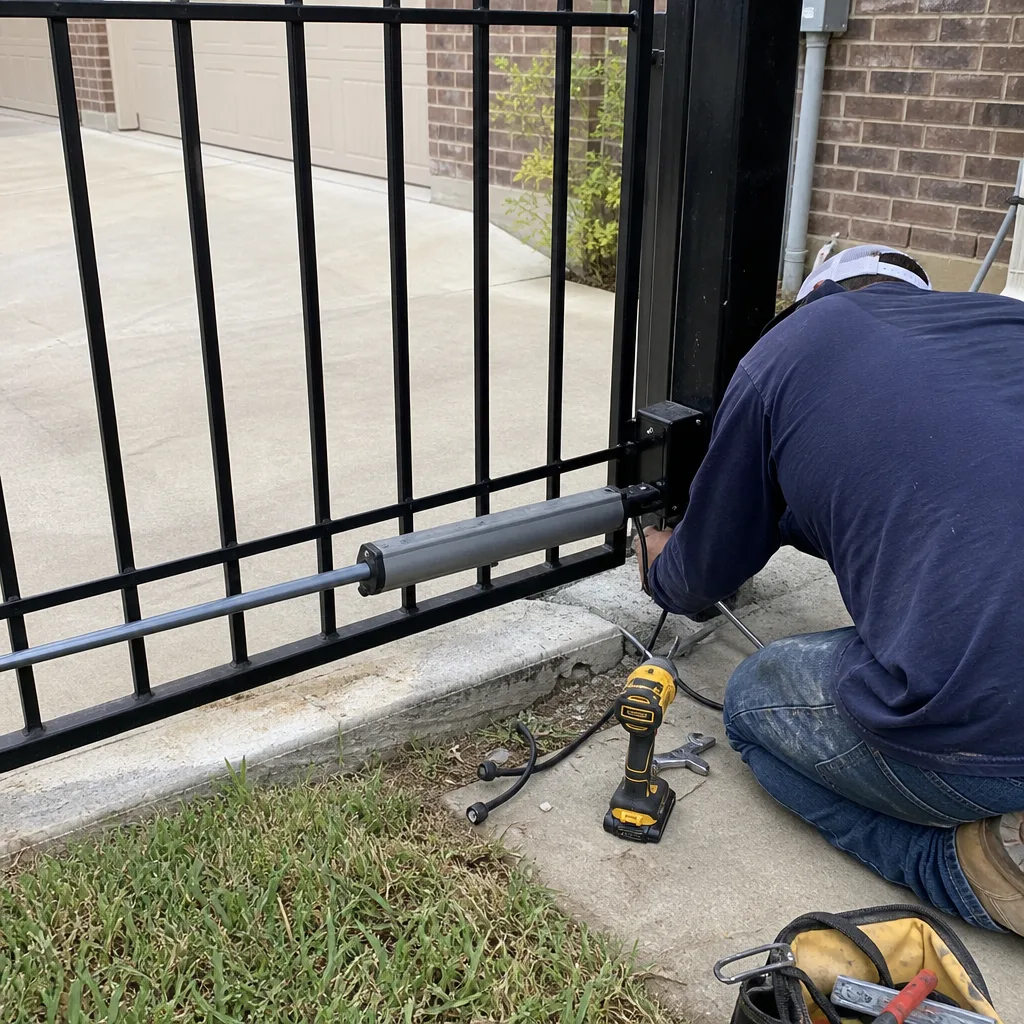 After
After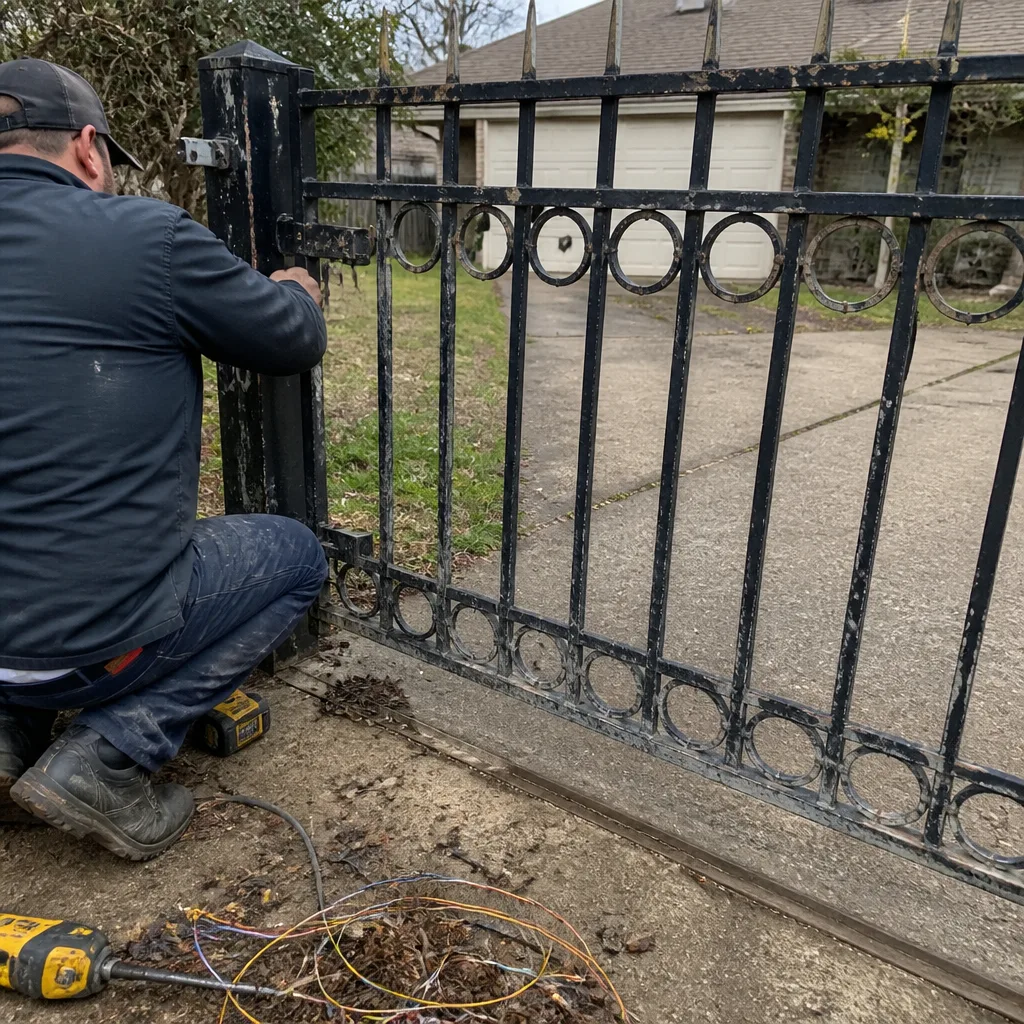 Before
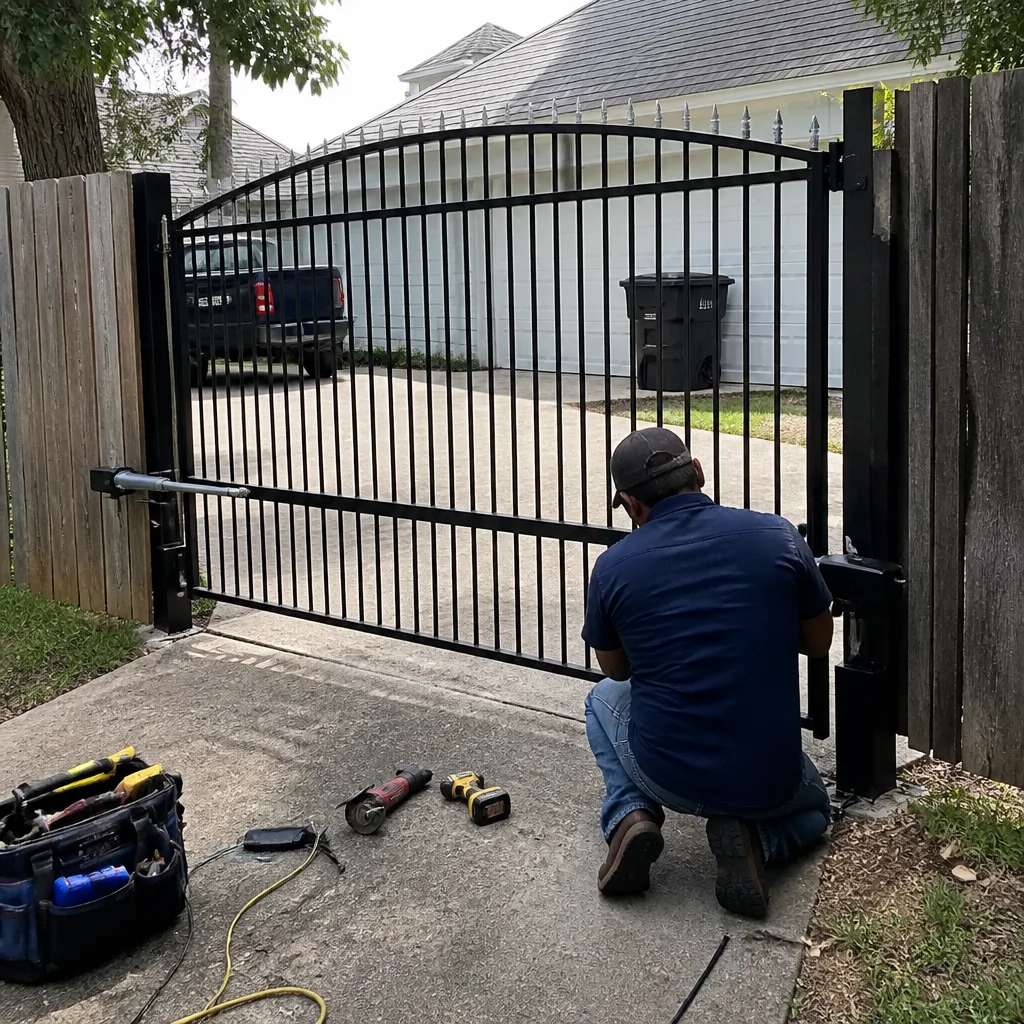 After
After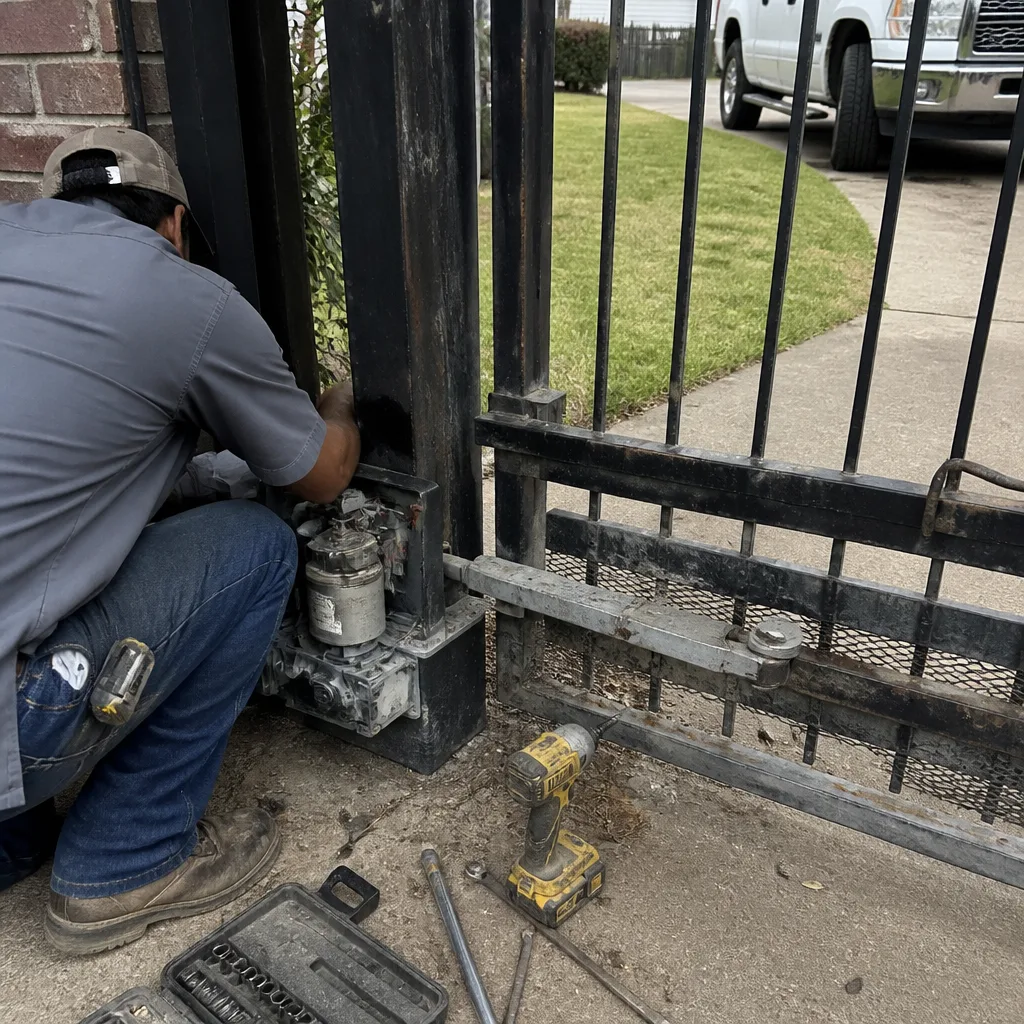 Before
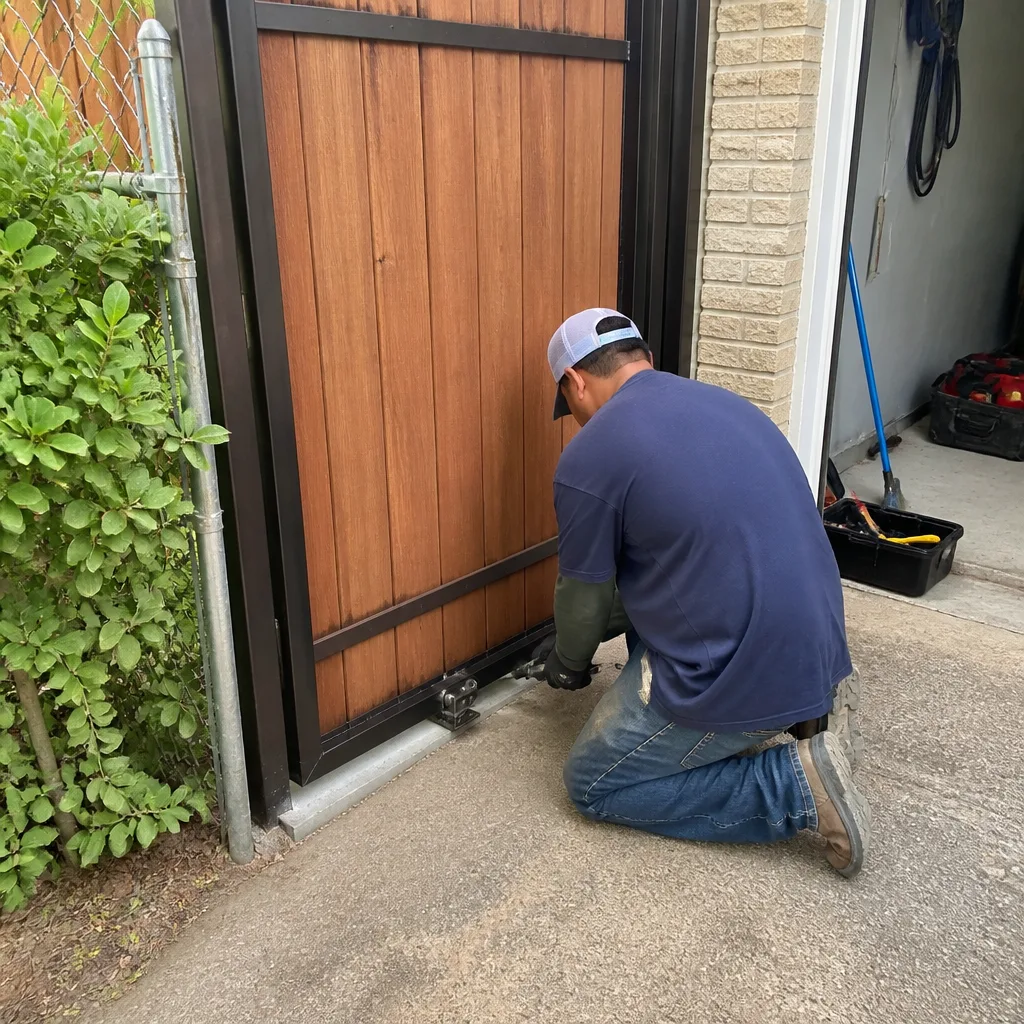 After
AfterThe Complete Guide to Gate Repair in Baytown
The average Baytown gate owner replaces the same motor twice before anyone checks the voltage supply feeding it. That’s a $900 repeat bill a $12 meter reading would have prevented. This guide walks through the three root causes behind most gate failures in Baytown, how to tell which one you have, and the repair decisions that follow. By the end, you’ll know what a technician should be looking for, what documentation you should receive, and when the gate is telling you it needs replacement rather than another repair.
Quick Answer
Most gate failures in Baytown trace back to one of three documented causes: corrosion at the hinge plate from Gulf humidity, controller board voltage drift, or limit-switch misalignment. Identifying which of these you’re dealing with determines every repair decision after it. A written diagnostic before any work is done prevents paying for symptoms instead of causes.
Table of Contents
- The Three Root Causes of Baytown Gate Failures
- How to Read a Gate’s Failure History from Physical Evidence
- Operator Failure vs. Structural Failure: Why the Difference Doubles Your Cost
- What a Complete Repair Record Should Contain
- Repair or Replace: A Decision Tree for Baytown Homeowners
- What Gate Repair Costs in Baytown
- Baytown-Specific Maintenance Intervals
- What You Can Safely Check Yourself (and What You Shouldn’t)
- Common Mistakes to Avoid
- When to Call a Professional
- Frequently Asked Questions
- The Bottom Line
BeforeAfterThe Three Root Causes of Baytown Gate Failures
After 22,000+ gate repairs since 2014, we can name the three things we find most often in Baytown driveways. Not “general wear.” Not “old age.” Specific, documentable failures that repeat across this city because of where we live.
Corrosion at the hinge plate. Gulf humidity works on steel hinge plates at a measurably faster rate than inland Texas cities. Baytown’s proximity to Galveston Bay and the ship channel means salt-laden air sits on metal surfaces for months at a time. The hinge plate is where the gate’s weight concentrates, and rust there changes the gate’s geometry. A gate that drags or binds is usually not a motor problem, it’s a hinge plate losing its dimensional integrity.
Controller board voltage drift. This is the failure we see misdiagnosed more than any other. The board reads incoming voltage and translates it to motor speed and travel distance. Over time, boards drift. The gate starts stopping six inches short of the close position. Or it reverses mid-travel for no apparent reason. Technicians who don’t meter the incoming voltage and compare it to spec replace the motor. The new motor does the same thing. The board was never checked.
Limit-switch misalignment. The limit switch tells the motor where “open” and “closed” are. When it drifts, the gate doesn’t know when to stop pushing. That’s when you hear the motor strain against the post, or the gate slams into the close stop. A limit switch can be reset in minutes if the technician knows what they’re looking at. If they don’t, you get sold a new motor for a $40 adjustment.
Why Baytown Specifically
Baytown’s climate combines three factors: high humidity year-round, salt content in the air from the bay, and a storm season that throws debris at gate hardware. Each one attacks a different component. Humidity attacks steel. Salt attacks electrical connections. Storm debris throws photo-eyes and limit switches out of alignment. A repair that doesn’t account for these three forces won’t last.
How to Read a Gate’s Failure History from Physical Evidence
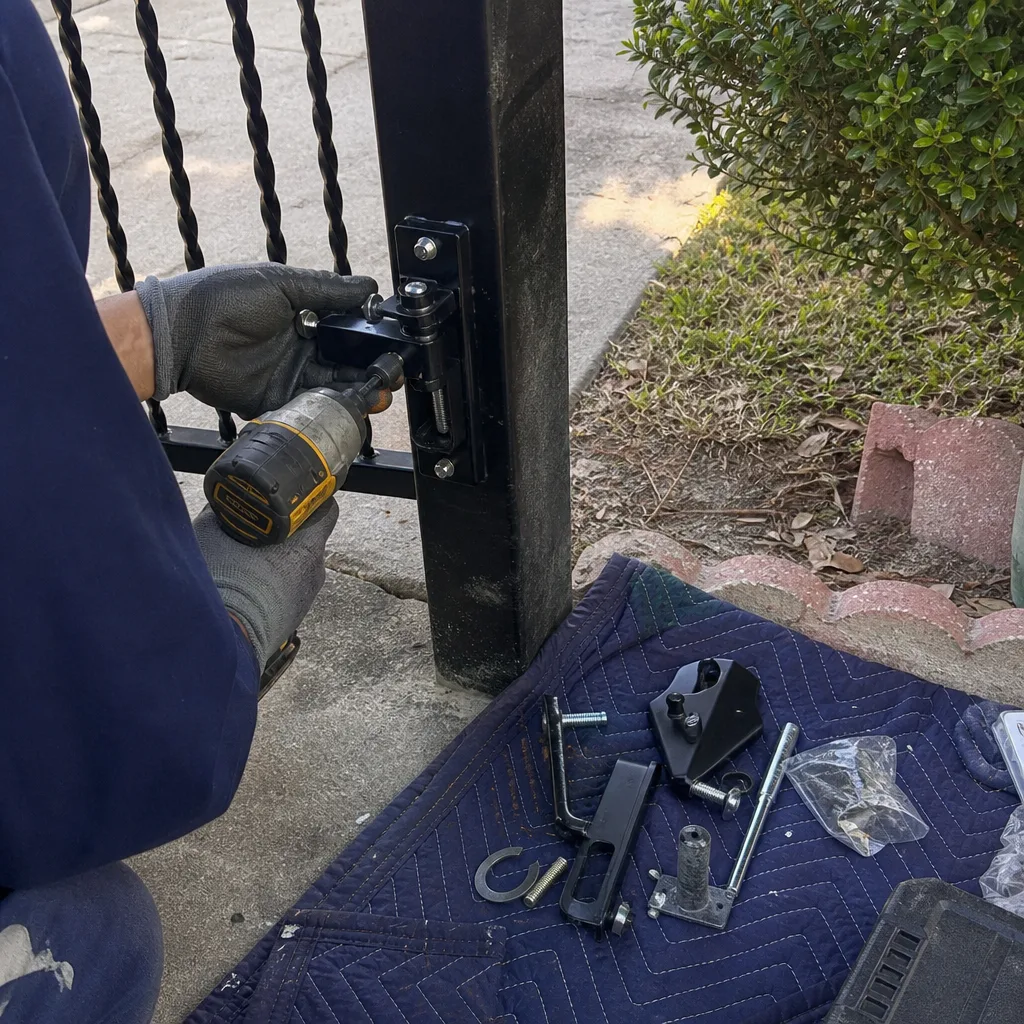
Every gate leaves a record. You just have to know what you’re looking at. Before you call anyone, walk out and look at your gate. The physical evidence will tell you more than a motor’s error code ever will.
Here’s what we look for on every Baytown call, in order:
- Rust patterns at the hinge plate. Even, brown oxidation is surface rust and mostly cosmetic. Flaking, pitted, or layered rust is structural. If you can see daylight through the plate or the bolt holes have stretched, the hinge plate needs replacement before any motor work matters.
- Cable wear paths. Open the operator cover (power off first, or call a professional) and look at the cables. A wear path where insulation has rubbed through suggests the gate was run repeatedly with a misaligned limit switch, allowing the cable to contact a moving edge.
- Concrete crack direction near posts. If the gate post leans or the concrete pad has cracked in a line leading away from the post, the gate’s weight is no longer being supported vertically. The operator is now doing structural work it was never designed for. This is a post reset, not a motor swap.
- Photo-eye alignment. Stand at the gate and look at the two photo-eye units (the infrared beam that stops the gate if something crosses the path). If one housing is tilted, that’s your reversing problem. Not the motor. Not the board. A misaligned beam.
- Limit switch position relative to wear marks. If the gate stops consistently at a point where the frame shows impact damage, the limit switch has been misaligned long enough to physically mark the gate.
This is the evidence-first approach we bring to every gate repair in Baytown. You don’t guess, and you don’t let anyone else guess either.
Operator Failure vs. Structural Failure: Why the Difference Doubles Your Cost
The single most expensive mistake in gate repair is treating a structural problem as an operator problem. Here’s the difference.
Operator failure means the motor, board, limit switches, photo-eyes, or remote receiver are not doing their job. The gate was installed correctly and the structure is sound, but the automation has failed. These repairs are usually contained: a board replacement, a limit switch reset, a new receiver.
Structural failure means the gate itself, the hinges, the post, or the concrete pad have shifted. The gate sags. The post leans. The hinge plate has corroded to the point where the gate’s weight is no longer distributed evenly.
Here’s why the misdiagnosis costs double:
- You pay to replace the motor because it “burned out” from working against a sagging gate.
- The new motor is installed on the same sagging gate and burns out again in six months.
- You pay for a second motor, and this time someone notices the hinge plate is the real problem.
- You pay for the structural repair that should have been done first.
- Total: two motors plus one structural repair, when one structural repair alone would have solved it.
In Baytown, structural failures are more common than inland because the humidity accelerates hinge plate corrosion. By the time the gate is visibly sagging, the hinge plate has usually been failing for a year or more. The gate has been wearing out motors the whole time.
This is why we document before and after conditions on every job. If the hinge plate is the root cause, that goes in the written record. The customer sees it. The next technician sees it. No one pays to rediscover it.
What a Complete Repair Record Should Contain
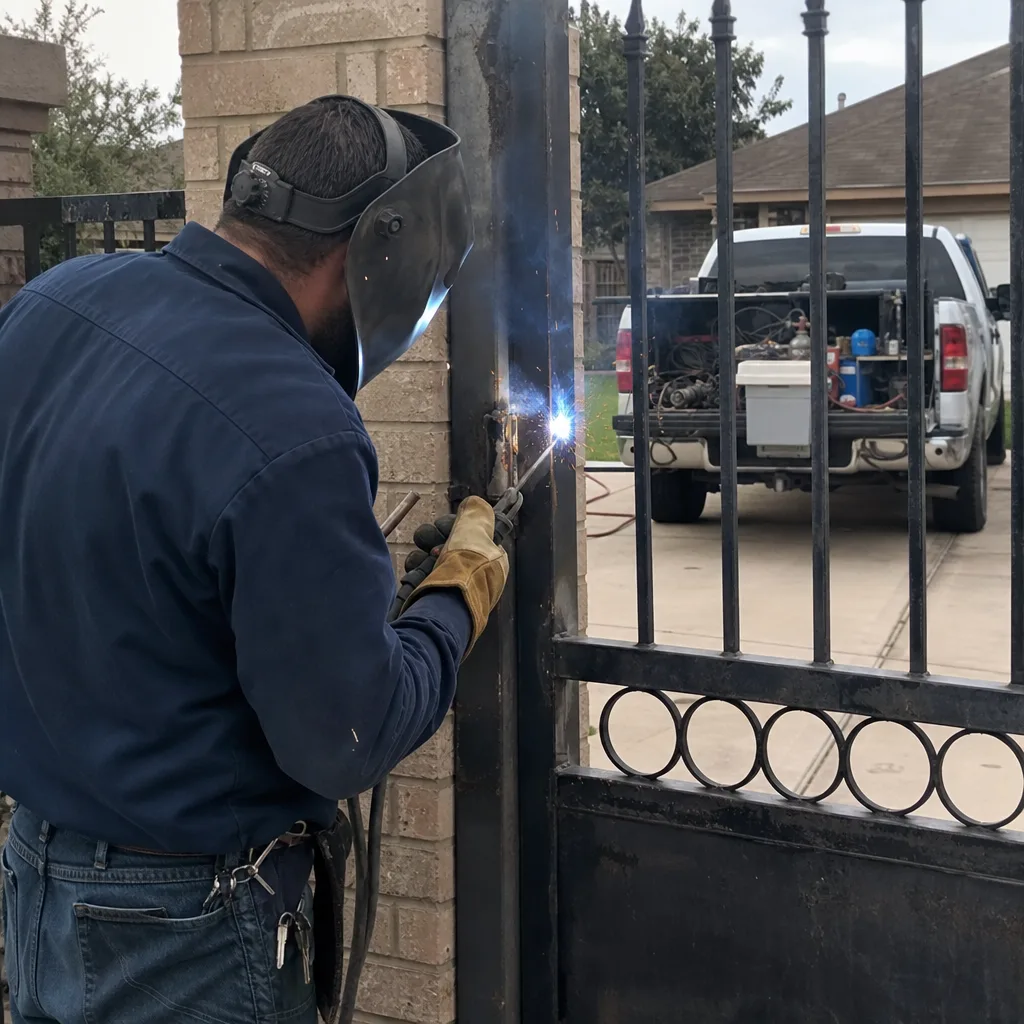
Documentation is the difference between a repair you understand and a repair you hope was done right. Every Baytown gate repair should leave you with a record. Here’s what a complete one contains, and why the absence of any item is a red flag.
A complete repair record includes:
- Written diagnosis. What the technician found, in plain language. Not “gate malfunction.” Specifically: “limit switch set 12 degrees past travel; leading edge contacting close stop.”
- Written price, agreed before work starts. Not an estimate range. A flat number. If the technician won’t write it down before touching the gate, find another technician.
- Wiring diagram, if wiring was touched. Any change to the way the gate is wired should be drawn. If the next technician comes out in two years, the diagram tells them what was done. Without it, they’re tracing circuits blind.
- Before and after photos. What the hinge plate looked like. What the board showed. What the new part looks like installed. Visual evidence removes all ambiguity.
- Limit-switch readings. Numeric settings, not “adjusted.” If the limit switch was moved, the new reading goes in the record. Then the next time the gate acts up, the technician can compare current reading to documented setting.
- Part numbers installed. Not “new board.” Which board. Model number. Manufacturer. If the board fails under warranty, you need that number.
We developed this documentation habit on commercial access-control work starting in 2014, and we brought it to every residential gate in Baytown because homeowners deserve the same record commercial property managers require. Under Clause 4 of our Haven Standard, every visit includes this photo record at no additional charge. If a company won’t leave you documentation, you’re paying for a repair you can’t verify.
This applies to any gate work, whether it’s a full gate installation in Baytown or a simple limit switch adjustment. The record is the proof.
Repair or Replace: A Decision Tree for Baytown Homeowners
Every gate reaches a point where the economics flip. The question is knowing where that line is. Here’s the decision path we walk Baytown customers through.
Step 1: Age of the gate
- Under 8 years old: Repair is almost always the right call unless the gate is a budget model that was undersized for its opening.
- 8 to 15 years old: The decision comes down to structure. If the gate frame is sound and the posts are plumb, repair. If the frame shows rust perforation or the post concrete has failed, replacement may cost less than nursing it along.
- Over 15 years old: Start with a structural inspection. In Baytown’s salt air, a 15-year steel gate has usually given all it has to give.
Step 2: Type of damage
- Hinge plate rust, repairable: Replace the hinge plate and continue using the gate. Total repair is a few hundred dollars.
- Hinge plate rust, gate frame compromised: The gate is pulling away from the hinge side. Replacement gate frame.
- Motor failure, structurally sound gate: Replace the motor or operator. This is a motor service, not a gate replacement.
- Board drift with no structural issue: Board replacement or recalibration. Affordable and common.
- Post lean, concrete cracked: This is a structural repair. The post must be reset. If the gate is old, now is the time to consider replacement.
Step 3: Documented repair frequency
- First repair on an older gate: Repair is reasonable. Give it a chance.
- Third repair within two years, same root cause: Something was never actually fixed. This is where documentation matters. If you have records showing the same hinge plate was “repaired” three times, it wasn’t repaired three times. It was patched three times.
- Repairs now totaling 60% or more of replacement cost: Time to look at replacement seriously.
Step 4: The cost comparison
Get real numbers. A complete gate replacement in Baytown, including a new frame, hinges, and a proper operator, typically runs higher than most people expect. See our Gate Repair Cost Breakdown: The Baytown Homeowner’s Reference for 2026 for typical ranges. But if your current gate needs a hinge plate replacement, a post reset, and a new motor within a 12-month window, the math favors replacement. We’ll write both numbers down for you and let you decide with the facts in front of you, not a sales pitch in your ear.
If you’re comparing repair vs. replacement on a motor issue specifically, start with our guide to gate motors and openers in Baytown.
What Gate Repair Costs in Baytown
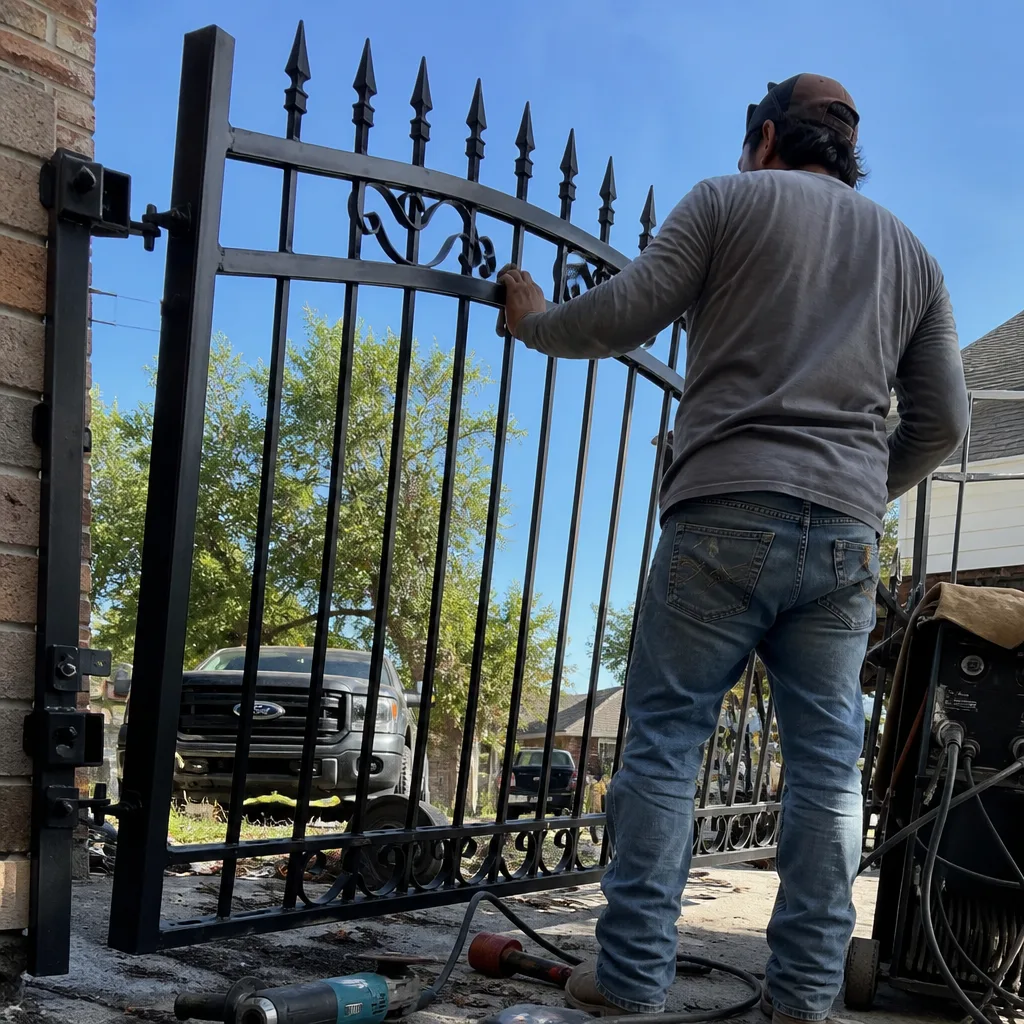
Here are the numbers we quote most often on Baytown jobs. These are flat, written prices. Not estimates. Not “starting from.” The price you agree to is the price on the invoice.
| Repair Type | Typical Price Range (Baytown) | Notes |
|---|---|---|
| Limit switch reset and calibration | $90-$180 | Same visit as diagnostic; no parts usually required |
| Photo-eye realignment | $80-$150 | Includes testing both eye units and checking for debris |
| Controller board replacement | $280-$650 | Varies by brand (LiftMaster, FAAC, BFT, Linear all differ) |
| Hinge plate replacement (single gate) | $350-$800 | Depends on gate weight; structural work quoted after inspection |
| Swing-gate motor replacement | $750-$1,400 | Includes arm, bracket, and recalibration |
| Slide-gate motor replacement | $1,100-$1,900 | Includes rack inspection and limit setup |
| Post reset (single post) | $650-$1,200 | Requires excavation and concrete work; weather-dependent |
| Full operator replacement with receiver | $1,300-$2,600 | Complete new unit, receiver, remotes, programming |
These ranges reflect what we actually bill in Baytown. The spread exists because a LiftMaster board is not a BFT board, and a 12-foot gate weighs more than an 8-foot gate. What doesn’t vary is this: the price is written down before we pick up a tool. If the job requires more work than the written price covers, we stop and write a new price for the additional work. You approve it before we continue.
That’s Haven Standard Clause 1, and it’s how every job works.
For a complete breakdown of repair pricing by gate type and brand, see our gate repair pricing guide for Baytown.
Baytown-Specific Maintenance Intervals
Baytown’s climate dictates a different maintenance schedule than what gate manufacturers print in their manuals. Those manuals are written for national averages. We’re not a national average. We’re 27 miles from the Gulf, with humidity that sits above 70% most mornings and storm season that runs from June through November.
Here’s what we recommend for Baytown gates specifically:
Monthly (2 minutes, do it yourself)
- Walk the gate through a full open/close cycle and listen. Changes in sound are the earliest warning sign.
- Check the photo-eyes for debris and spider webs. A web across the eye can interrupt the beam.
- Look at the hinge plate. Surface rust is normal. New flaking or pitting is not.
Quarterly (10 minutes)
- Clean the photo-eye lenses with a dry cloth.
- Inspect the gate track (slide gates) or hinge bolts (swing gates) for looseness.
- Apply a corrosion-inhibiting spray to exposed steel hardware. In Baytown, this is not optional.
Annually (technician visit)
- Pull the operator cover and inspect the board for moisture ingress and capacitor swelling.
- Meter the incoming voltage and compare to the operator’s spec sheet.
- Verify limit switch settings against the documented readings from the last visit.
- Lubricate chain drives and bearing points with the correct weight lubricant.
- Reset and photograph the limit positions so next year’s reading is comparable.
Annual inspection in Baytown is not a luxury. It’s the difference between catching a hinge plate at the surface-rust stage versus replacing it after it’s compromised. Most of the repairs we do in Baytown would have been cheaper and simpler with a 12-month inspection habit.
What You Can Safely Check Yourself (and What You Shouldn’t)
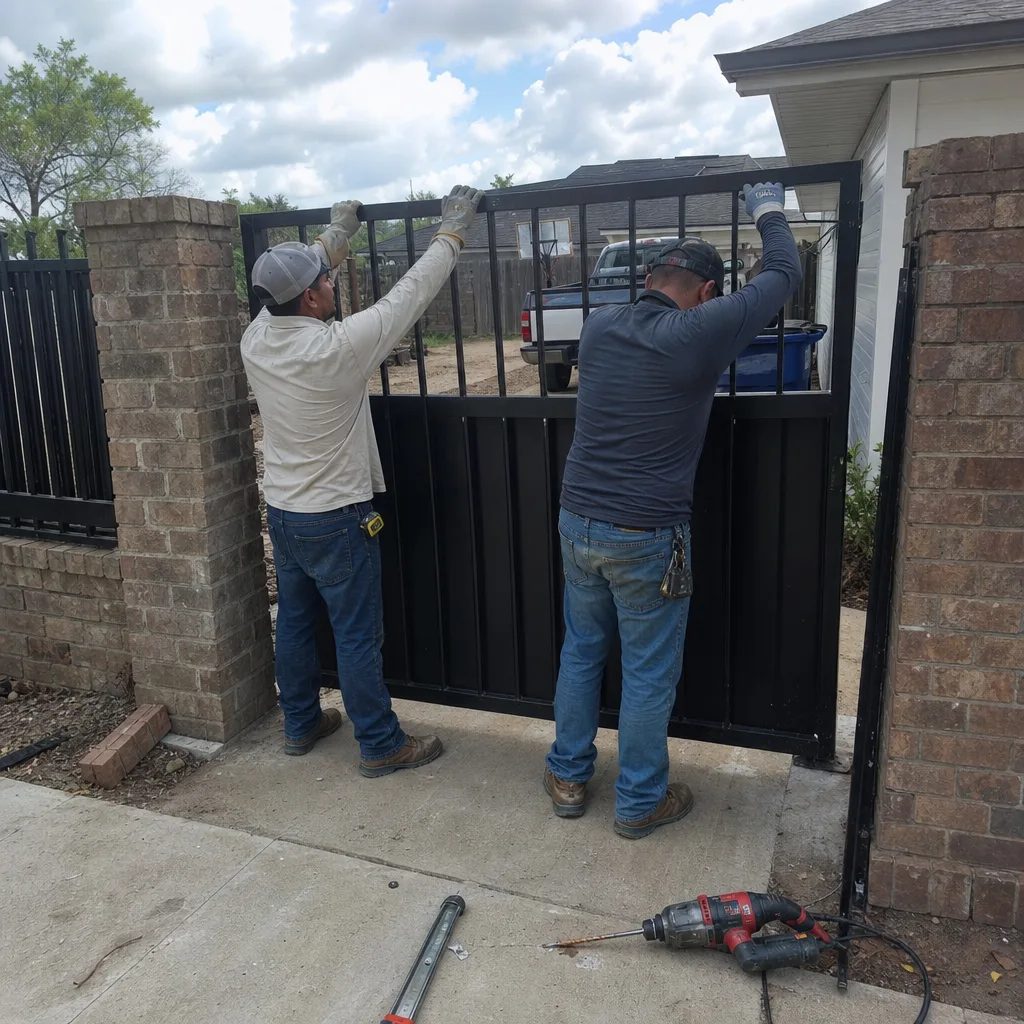
Gate systems combine significant weight with electrical current and stored energy. Some tasks are reasonable for a careful homeowner. Others require training, tools, and a healthy respect for what a gate can do to a hand.
Safe to do yourself
- Listen to the gate cycle and note anything unusual.
- Check photo-eyes for alignment and debris.
- Inspect hinge plates for visible rust and pitting.
- Confirm the gate closes fully without slamming or stopping short.
- Check the manual release function (with the operator switched off) to confirm the gate moves freely by hand.
Do not do these yourself
- Never adjust a limit switch without understanding the full travel path. A gate set too far past its travel limit will push against the post and can bend the gate, damage the arm, or injure someone standing near the path.
- Never open an operator cover while the unit is live. Gate motors use capacitors that hold charge even after power is cut. If you don’t know how to safely discharge a capacitor, stay out.
- Never remove a hinge plate from a gate under tension. The gate’s weight is bearing on that plate. Unbolting it without proper support can drop the gate on you or anyone nearby.
- Never reset a post with the gate still attached. This is heavy structural work. Call a professional with the equipment and the liability coverage.
A gate is a motor, a structure, and electricity all in one place. The photo-eye beam is an infrared device that prevents the gate from closing on people and vehicles. The limit switch controls travel boundaries. The manual release disengages the motor so the gate can be moved by hand. These are mechanics, and they follow rules. The risk isn’t that the rules are complicated. It’s that a gate is heavy enough and strong enough to do real harm when a rule is ignored.
Common Mistakes to Avoid
- Replacing the motor before checking voltage. Board drift and power supply issues look like motor failure. In Baytown, with humidity stressing electrical connections, a motor replacement without a voltage check is the most expensive coin flip in gate repair.
- Accepting a verbal estimate. If the price isn’t written down before the work starts, you don’t have a price. You have a conversation. Get it in writing.
- Skipping the annual inspection because the gate “works fine.” Gates fail gradually. The hinge plate rusts quietly. The board drifts slowly. The limit switch creeps. By the time you hear it, it’s a repair instead of maintenance.
- Lubricating the wrong parts with the wrong product. Some lubricants attract dust and grit, which accelerates wear on the components. Motor bearings, chain drives, and hinge pins each need specific lubricants. What works for a garage door is not always right for a gate.
- Patching a rusted hinge plate instead of replacing it. Welding over a corroded plate doesn’t restore its structural capacity. It buys months, not years, and the failure often happens at the edge of the weld, sometimes catastrophically.
- Throwing a generic receiver remote at a programming issue. Not all remotes talk to all receivers. If the remote and receiver aren’t matched, the gate will work intermittently, then fail, and you’ll think the new remote is defective when the old one was fine.
- Not documenting each repair. If you don’t have a record of what was done, the next technician is starting from zero. In Baytown, where gates see more corrosion than inland gates do, that means paying to rediscover a problem someone already found.
When to Call a Professional
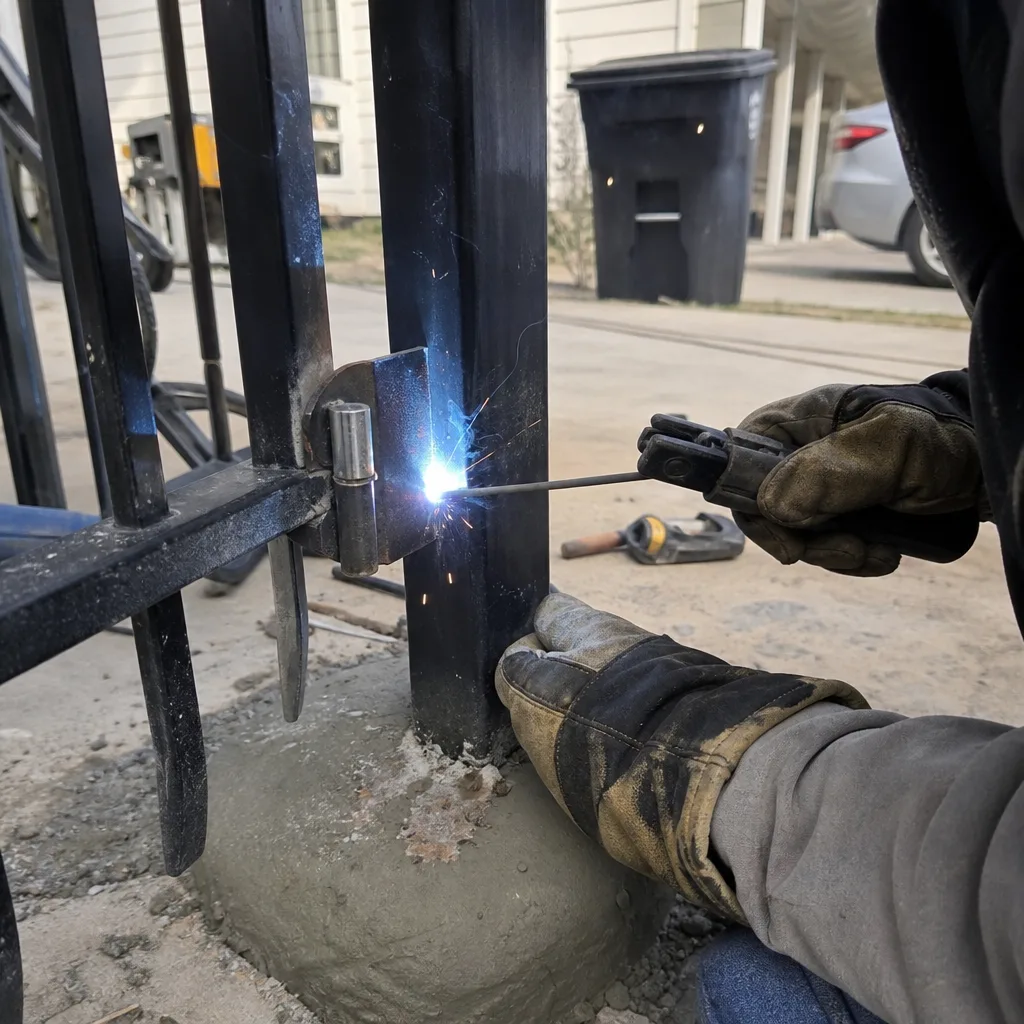
Call a gate repair professional the moment your gate stops behaving predictably. A gate that reverses mid-travel is a safety hazard. A gate that swings in a different arc than it did last month is losing structural integrity. A gate that makes any new sound when it runs is communicating a problem.
You should also call a professional if you’ve already had the same repair done twice and the problem keeps returning. That’s the signal that your current fixes aren’t addressing the root cause. Bring whatever records you have from the previous work. A good technician will want to see them.
Vance Gate Repair Baytown offers our Gate Repair services with free estimates in Baytown. We’ll inspect the gate, write down what we find, and hand you a flat price before any work starts. Call (346) 315-4812 to schedule. A live person answers.
Frequently Asked Questions
Most gate repairs in Baytown run between $90 and $650 for common issues like limit-switch resets, photo-eye realignment, and controller board replacement. Structural repairs, such as hinge-plate replacement or post reset, typically run from $350 to $1,200. The price is written down and agreed to before any work starts. Call (346) 315-4812 for a free estimate with a written price.
Yes. We maintain a same-day repair schedule for common operator failures like limit switches, photo-eyes, and receiver issues. Structural repairs and replacements that require parts or concrete work are scheduled for a later visit, with the price written and handed over before we start.
A gate that stops halfway and reverses is usually reacting to a safety input: the photo-eye beam thinks something is in the path, or the force sensor is reading resistance it shouldn’t. It’s rarely the motor. The most common cause in Baytown is photo-eye misalignment from storm debris. Call (346) 315-4812 and we’ll meter it, check the eyes, and write down what we find.
We service nine major automation brands including LiftMaster, FAAC, BFT, and Linear, plus several others. If your operator is on the gate, we’ll work on it. We don’t steer customers toward replacement when a repair is the right call. Bring the model number to the estimate and we’ll tell you exactly what parts cost.
Annually. Baytown’s Gulf humidity and salt air accelerate hinge-plate corrosion faster than inland Texas cities. A yearly inspection catches surface rust before it becomes structural, confirms voltage is within spec, and resets limit switches to documented positions. It’s cheaper than the repair it prevents.
Expect a written diagnosis, a flat price agreed before any work begins, the work performed, and a documented photo record left with you when the technician leaves. That record includes before and after photos, limit-switch readings, and part numbers installed. If a company won’t provide documentation, that’s a sign to call someone else.
The Bottom Line
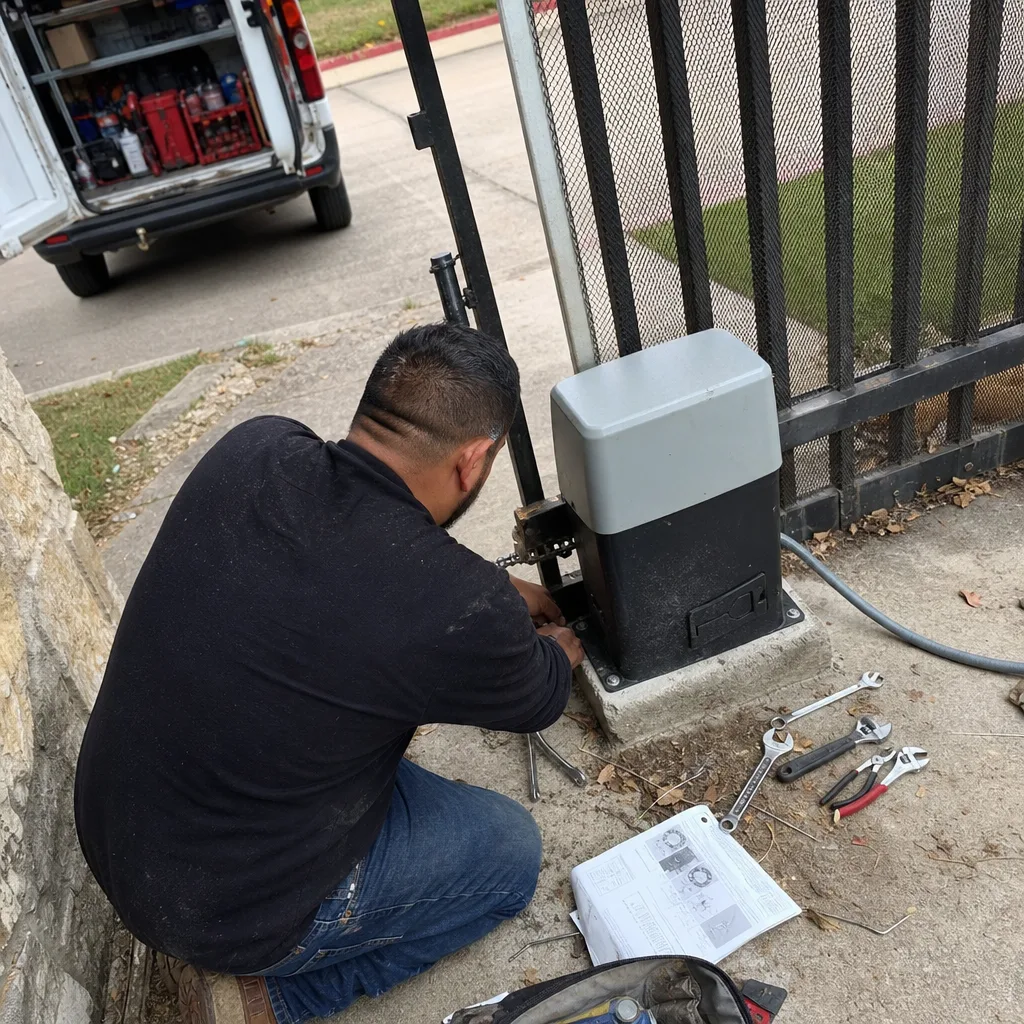
Most Baytown gate failures come down to three causes: hinge-plate corrosion from Gulf humidity, controller board voltage drift, and limit-switch misalignment. Know which one you have before you pay for any repair. Read the physical evidence on your gate. Compare operator failure against structural failure before replacing parts. Demand written documentation of every visit. And when the math on repairs passes 60% of replacement cost, sit down with real numbers and choose with the facts in front of you. For more guides & resources, visit our blog.
If your gate is acting up in Baytown, call a company that will name the problem, name the price, and hand you the record. Call Vance Gate Repair Baytown at (346) 315-4812 for a free estimate with a written price, or visit our Vance Gate Repair Baytown home page to learn more. A live person answers, any hour, any day.
Written by Adrian Vance, Owner at Vance Gate Repair Baytown, serving Baytown since 2014.