
Last updated September 20, 2026
Free on-site gate assessment - hinges, posts, and your LiftMaster or Nice gate operator checked before anything is quoted
The assessment is free and the quote is the invoice.

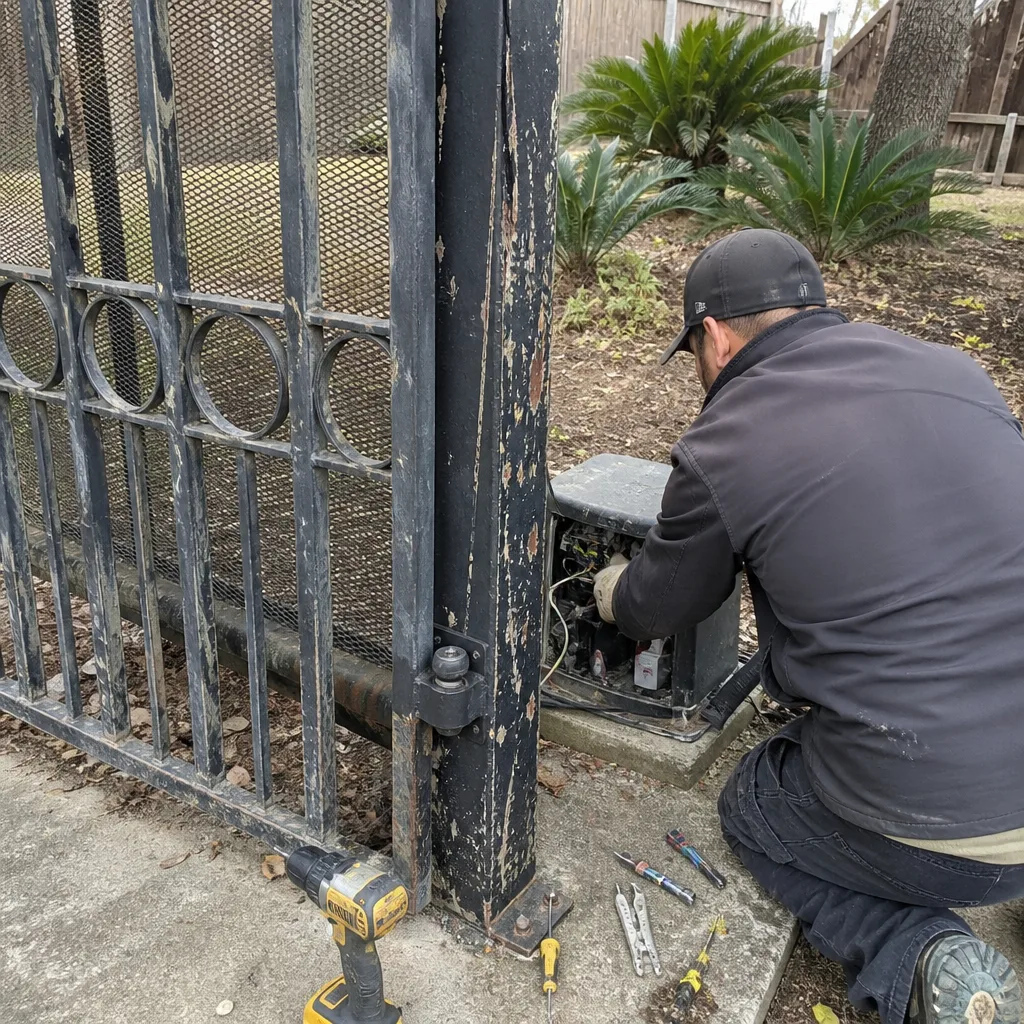 Before
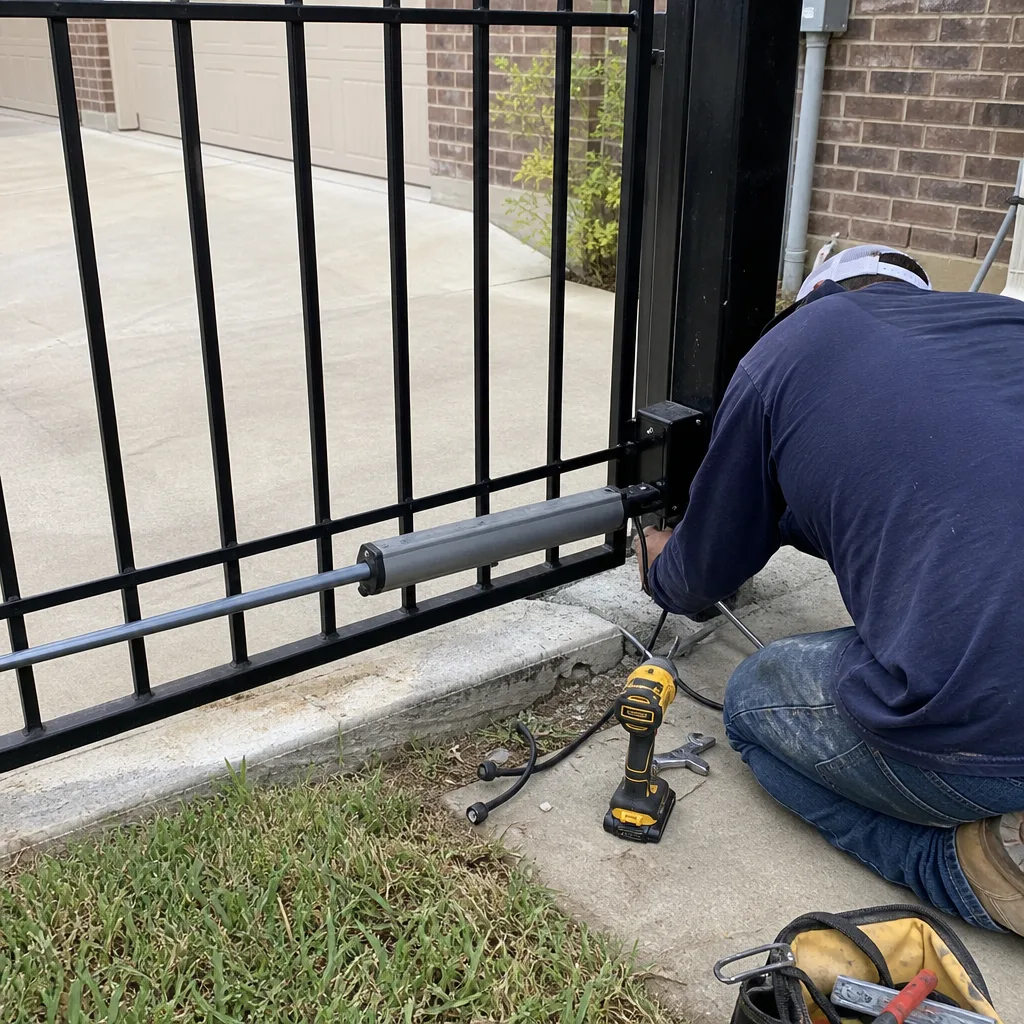 After
After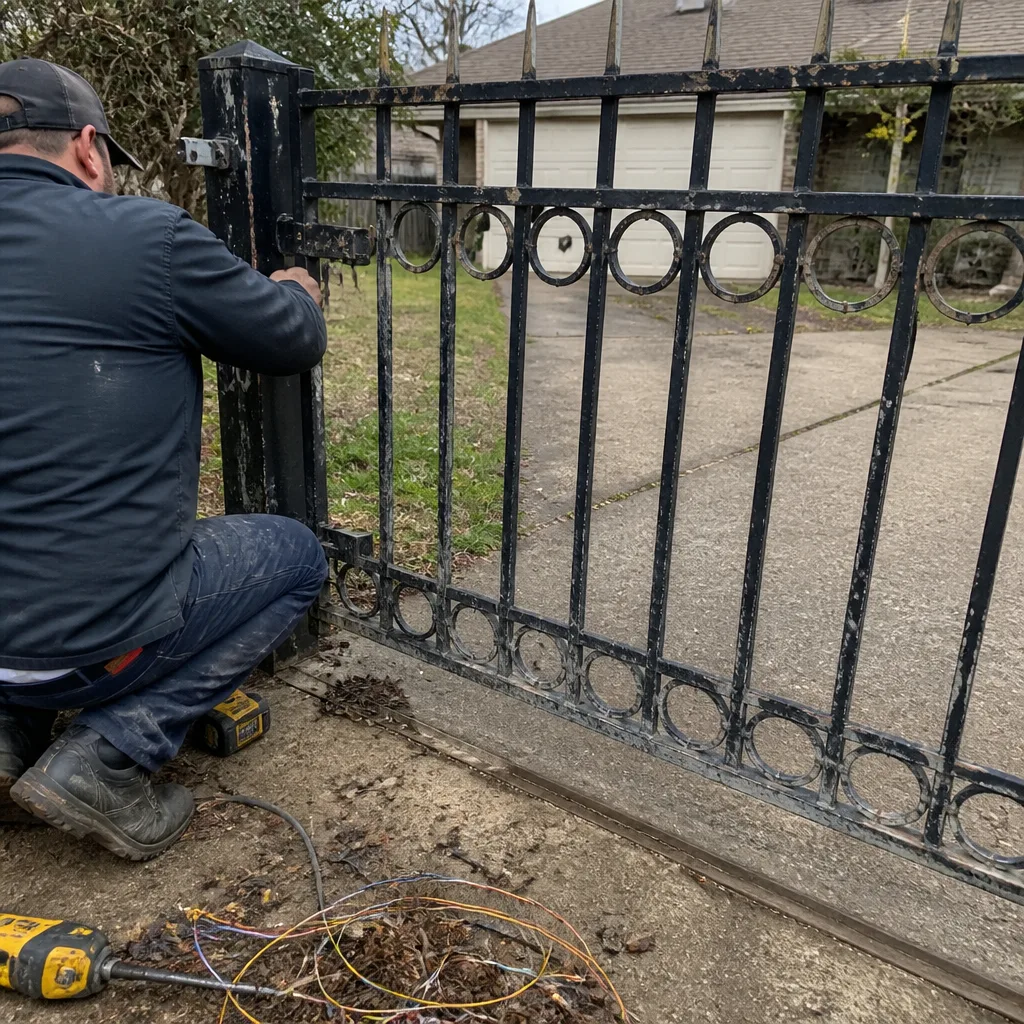 Before
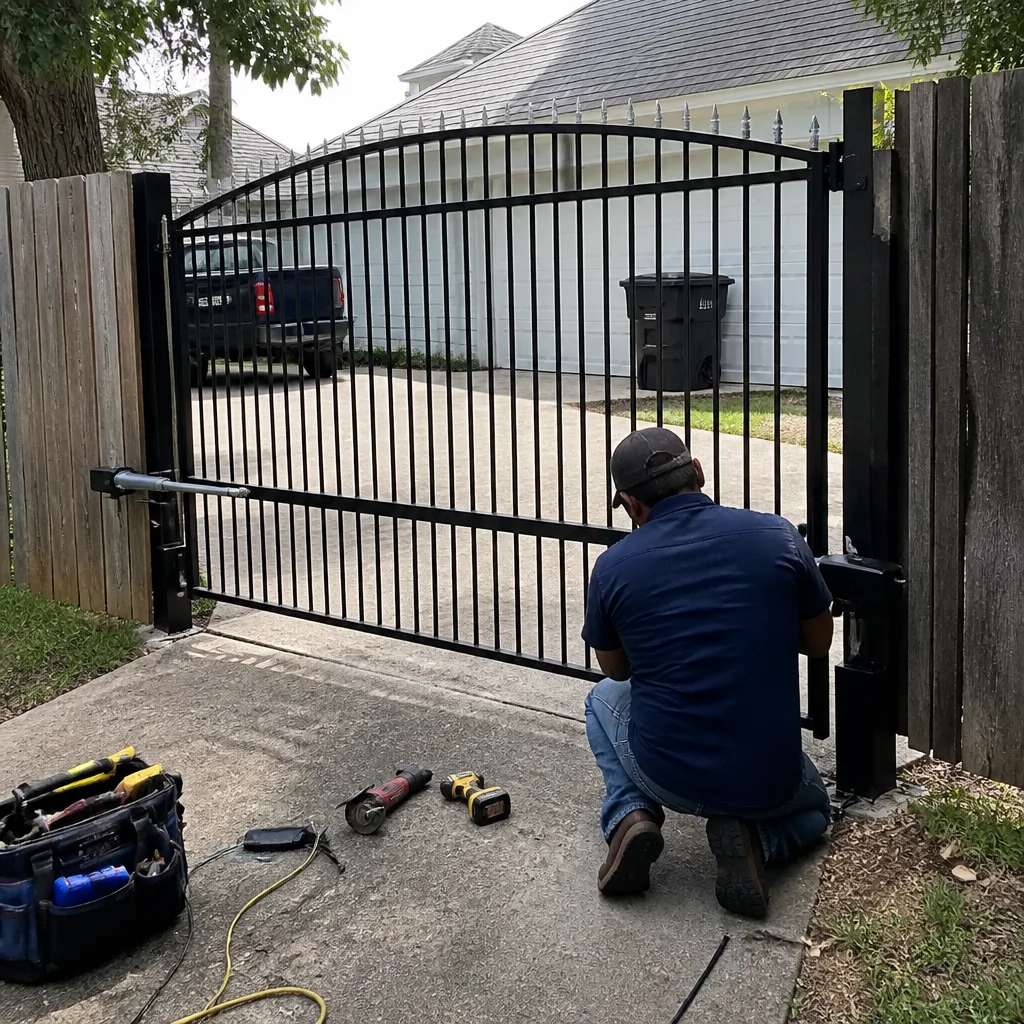 After
After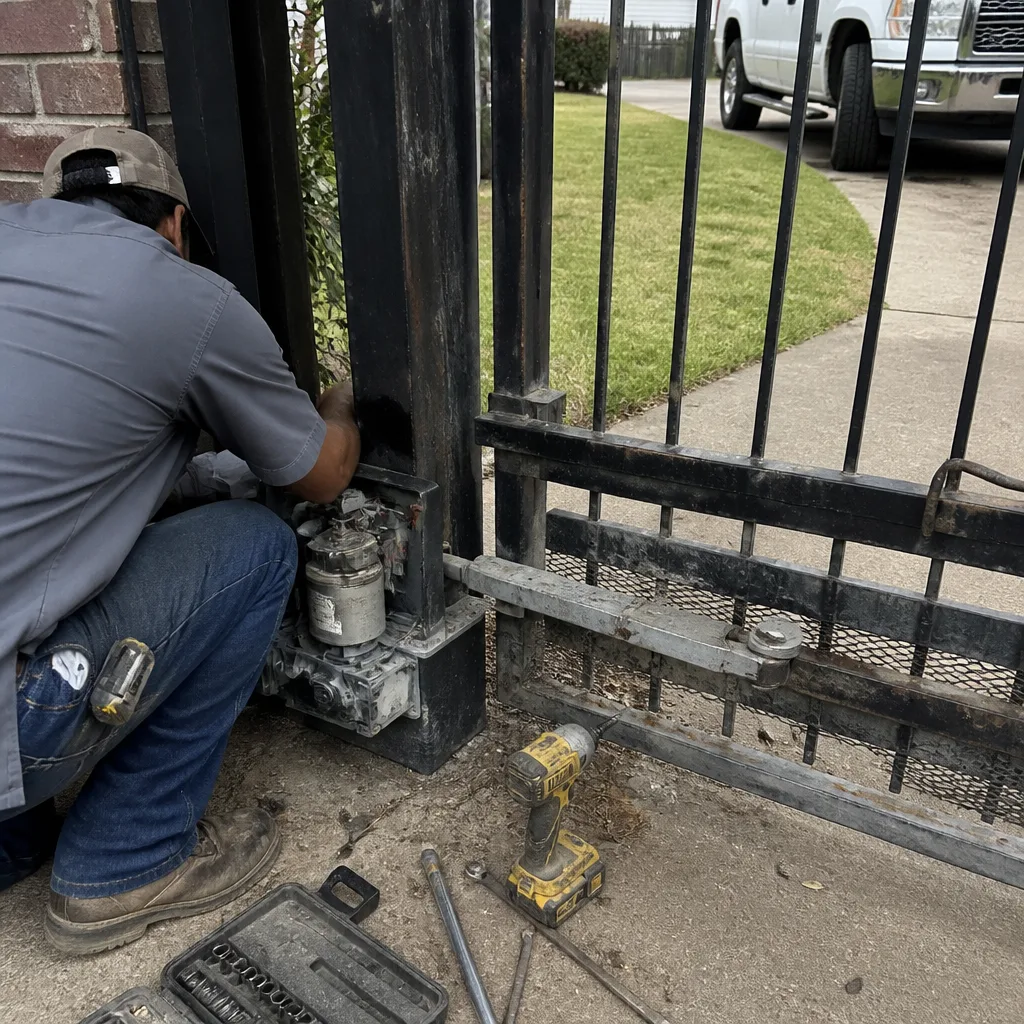 Before
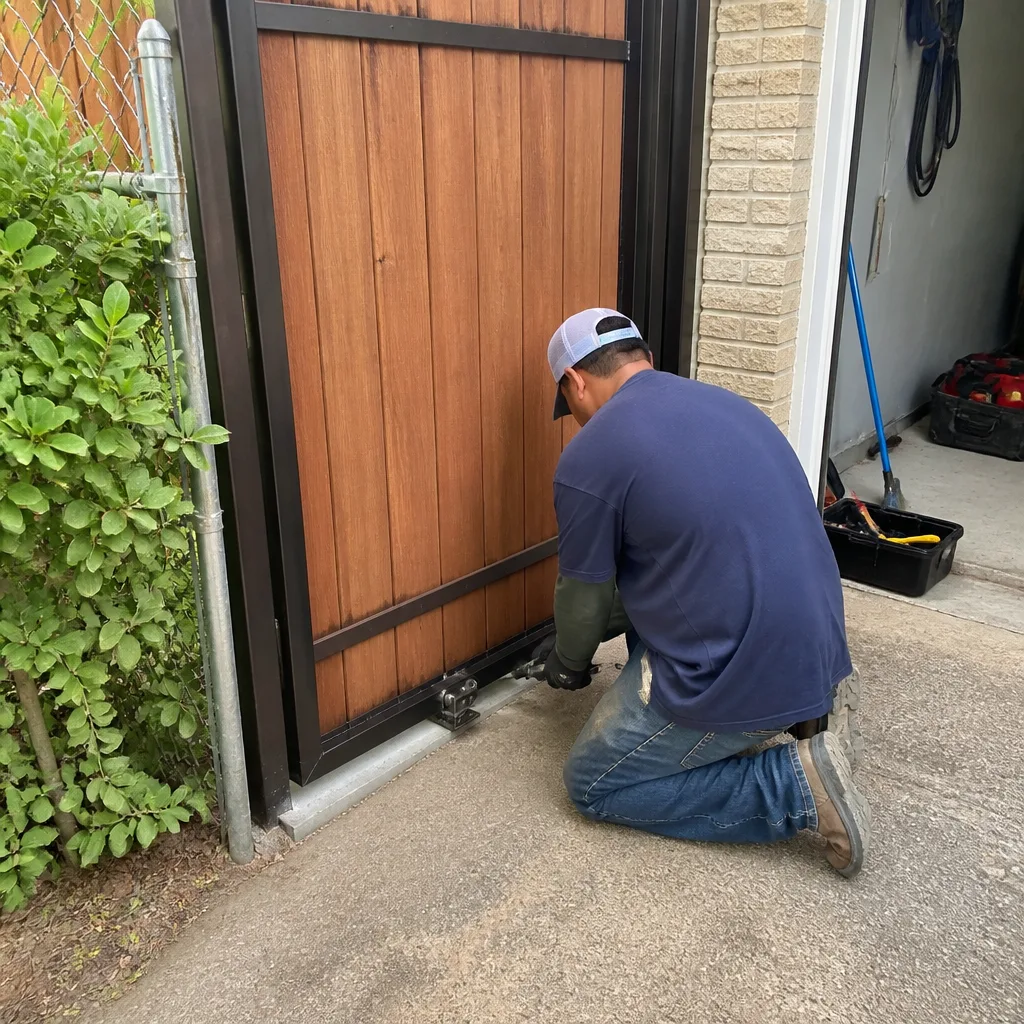 After
AfterGate Repair Warning Signs: A Baytown Homeowner’s Reference Guide
Most gate failures in Baytown don’t begin with a bang. They begin with a two-second hesitation that you barely register, a faint grinding sound at the same spot in the arc every single time, or a remote that works from the driveway but not from the street. Each of these is a data point. Together, they form a diagnosis that a trained technician can read weeks before the system quits. This guide translates those physical symptoms into specific mechanical and electrical diagnoses, because a gate that hesitates today is almost never a “wait and see” situation-it’s a Gate Repair call waiting to happen. It’s a money decision waiting to be made, and the difference between catching a limit-switch adjustment at $150 and replacing a burned-out control board at $600 is measured in days, not months.
Quick Answer
Gate repair warning signs in Baytown fall into four categories: slow or labored cycle times, reversal mid-travel, grinding or scraping at specific arc positions, and reduced remote range. Each points to a different component, and none of them resolve on their own. A slow gate often indicates a failing capacitor or increasing mechanical resistance; a reversing gate points to a misaligned photo-eye or a limit switch drifting out of position; grinding usually means hinge-plate wear or a carrier trolley out of alignment; and shrinking remote range is nearly always moisture-related corrosion at the receiver antenna or control board.
Table of Contents
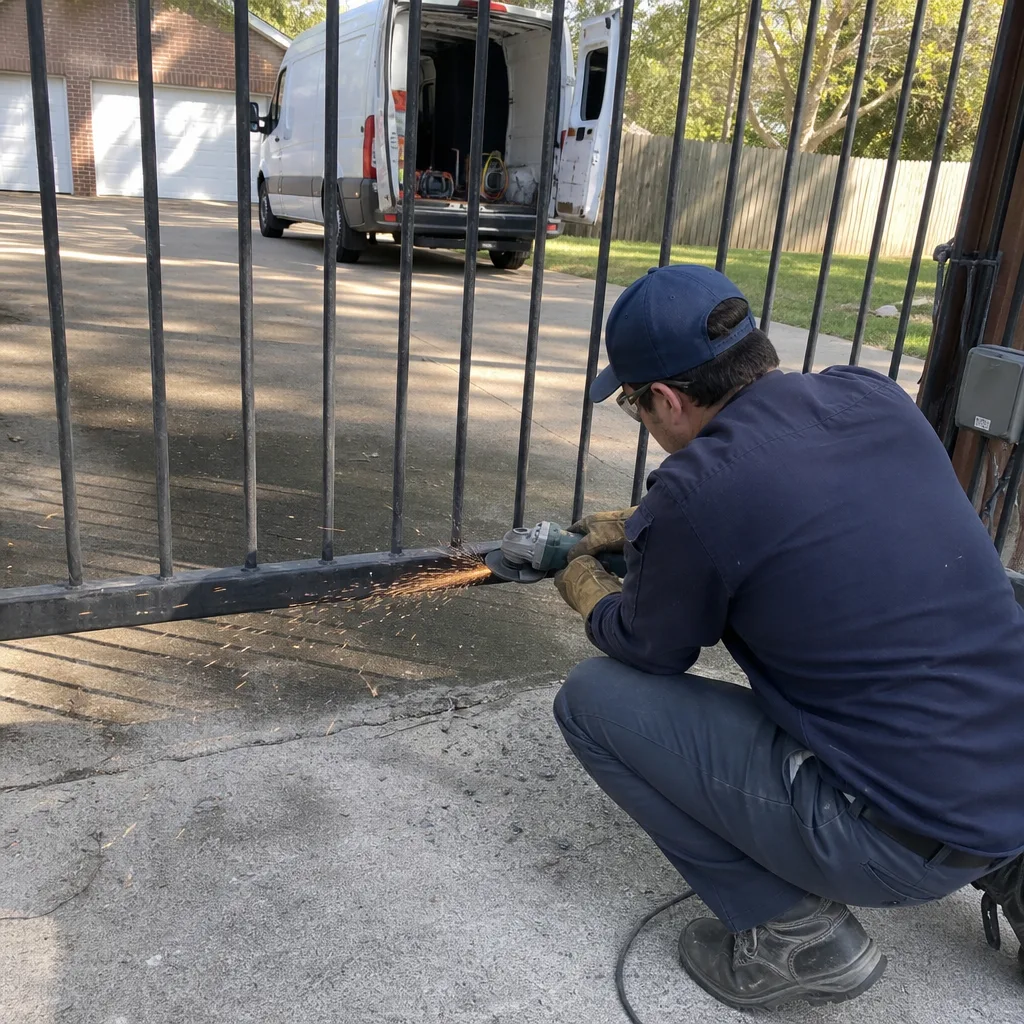
- 1. Slow Open Cycle: What a Hesitating Gate Is Actually Telling You
- 2. Reversal Mid-Travel: Photo-Eyes, Limit Switches, and False Stops
- 3. Grinding at Specific Arc Positions: The Geometry of Wear
- 4. Remote Range Reduction: When Your Gate Ignores You From the Street
- 5. Baytown-Specific Warning Signs: Rust Bleed, Standing Water, and Gulf Coast Humidity
- 6. How to Photograph and Log a Warning Sign Before You Call
- 7. Normal Wear vs. Warning Signs: A Defined Threshold
- 8. Signs That Mean Stop Using the Gate Today
- Common Mistakes to Avoid
- When to Call a Professional
- Frequently Asked Questions
- The Bottom Line
BeforeAfter1. Slow Open Cycle: What a Hesitating Gate Is Actually Telling You
A gate that takes a noticeable pause before moving, or that moves through its travel noticeably slower than it did six months ago, is not “getting old.” It’s reporting a measurable condition: either the capacitor that starts the motor is losing its ability to hold a charge, or the mechanical resistance on the gate leaf has increased beyond what the operator was sized for. Both are measurable. A technician with a clamp meter can record amp draw during the cycle and compare it to the manufacturer’s specified range, and the number tells you which problem you have.
Here’s what we see in Baytown on a regular basis. A homeowner calls and says the gate “feels sluggish.” We arrive, measure the voltage at the operator with the motor under load, and find it dipping below the nominal 115V or 230V the board expects. That’s frequently corrosion at a wire nut or a junction-box connection that has been breathing Gulf Coast humidity for a decade. Other times the voltage is fine, and the amp draw tells the real story: the motor is working harder than it should because a hinge bearing is wearing out and adding friction at the pivot point. Grease can mask that problem for a while, which is part of the problem. It masks it, but it does not fix it.
Under The Haven Standard, this kind of visit produces a written record. The technician logs the voltage reading, the amp draw at start and mid-travel, and photographs the meter. If the capacitor is weak, that’s a part replacement typically in the $80 to $150 range on most gate motor and opener systems in Baytown. If the amp draw is elevated because of hinge wear, the repair might mean new bearings at the hinge plate, which usually runs between $200 and $400 per hinge depending on the gate’s size and material. Either way, you get the number in writing before any work begins.
The two-second hesitation at the start of the cycle is the signature symptom of a capacitor problem. When the capacitor can’t discharge enough stored energy to overcome initial inertia, the motor stalls briefly and then lurches into motion. That stall-and-lurch pattern is hard on the motor windings, which is why a $100 capacitor job left for a year becomes a $600 board-and-motor replacement. The gate is telling you something. The question is whether you record the message or ignore it.
2. Reversal Mid-Travel: Photo-Eyes, Limit Switches, and False Stops
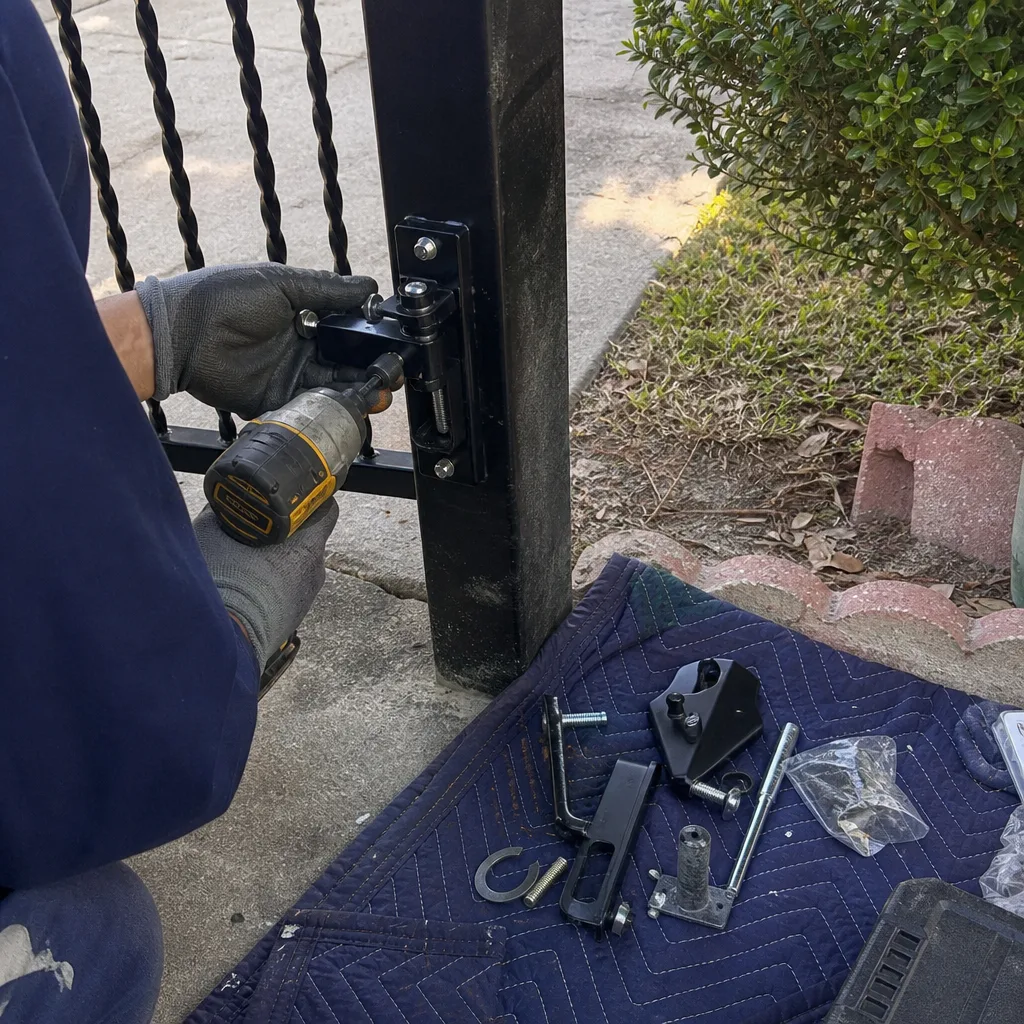
A gate that reverses direction mid-travel is triggering a safety input or hitting a limit switch that has drifted out of position. The two most common culprits are the photo-eye (the infrared beam that stops the gate if something crosses the path) and the limit switch (the mechanical or magnetic sensor that tells the operator the gate has reached the end of its travel). Both are adjustable, both drift over time, and both produce a reversing gate when they fail.
The diagnostic distinction is timing. If the gate reverses at the same point in the arc every time, that’s a limit-switch problem. The switch has moved, or the magnet that triggers it has shifted, and the control board now sees that position as the end of travel. The board thinks the gate is done, so it reverses. A technician resets the limit switch and photographs the new position, and the problem is solved. That’s a service call that typically runs under $200 on most residential operators.
If the gate reverses inconsistently, or when something is near the gate path, the photo-eye is the suspect. Photo-eyes work in pairs: one sends an infrared beam, the other receives it. When the beam is interrupted, the gate stops. When the beam is misaligned by as little as two inches, the receiver doesn’t get the signal and the control board interprets that as an obstruction. The fix is alignment, confirmed with a meter, and typically under $150. But here’s what Baytown homeowners should know: photo-eye alignment doesn’t drift on its own. Something moved it. A lawn mower bumped the post, a windstorm pushed the gate slightly, or the mounting bracket is corroding and flexing. If we align the eye and don’t address what moved the post, we’ll be back. The written record from a gate repair visit in Baytown should say what was aligned and what was photographed, so the next technician doesn’t have to re-diagnose the same problem.
A third possibility, less common but real, is a board-level fault where the safety input circuit is reading a phantom obstruction. On older DoorKing and Elite boards, a failing relay can produce intermittent reversal behavior that defies mechanical explanation. That diagnosis requires a board bench test, which a qualified shop does before recommending replacement. The board replacement on those systems typically runs $450 to $700, and a technician who suggests it without bench-testing the board first is guessing at your expense.
3. Grinding at Specific Arc Positions: The Geometry of Wear
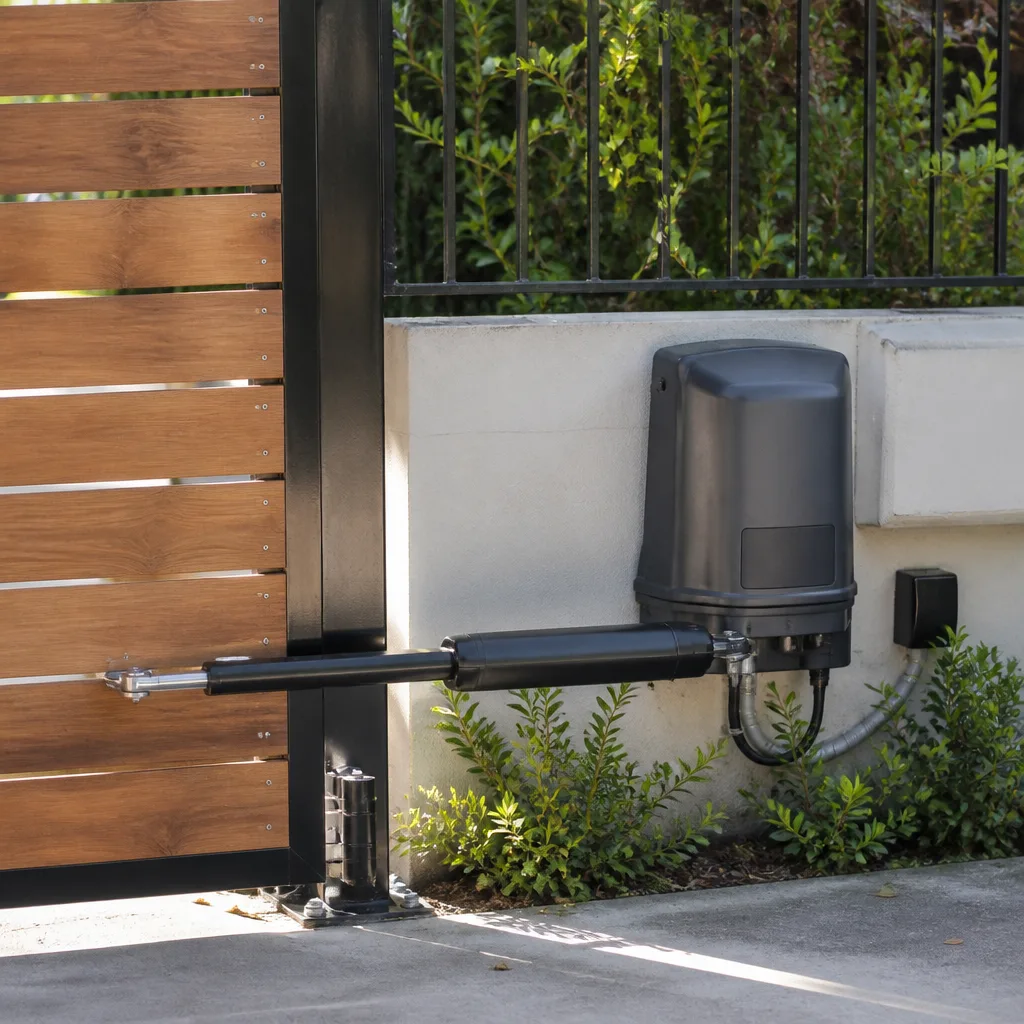
Grinding is not a generic symptom. It is a location-specific symptom, and the location tells you the component. Grinding that happens at the beginning of the cycle points to the motor gear or the drive belt tension. Grinding that happens mid-arc points to the carrier trolley or the chain rail. Grinding that happens near the fully open or fully closed position points to the limit mechanism or, on hydraulic operators like some FAAC and BFT models, the internal bypass valve chattering against debris.
Here’s a Baytown example we’ve documented more times than we can count. A homeowner has a chain-drive operator on a steel driveway gate, and they hear a metallic scraping sound around the 45-degree mark every time the gate opens. The chain is not the problem. The problem is that one hinge bearing is wearing faster than the other, which skews the gate leaf slightly, which pulls the chain off its sprocket at that specific point in the arc. The chain shudders against the sprocket guard, and the sound is grinding. A visual inspection of the chain would find nothing wrong, because the chain is fine. The hinge is the problem. That’s why symptom-location mapping matters. It saves you from paying someone to replace a chain that doesn’t need replacing.
We see this pattern on LiftMaster and Mighty Mule residential operators regularly. The gate’s geometry changes as hinges wear, and the operator compensates by working harder, which accelerates wear on the gear and the motor. The grinding is a symptom of a system-level problem, not a component-level problem. A written diagnostic under Clause 4 of The Haven Standard includes a photo of the hinge plate with the wear pattern visible, a note on the chain alignment, and a recommendation that addresses the root cause, not the symptom.
Grinding can also be produced by debris in the gear track. Baytown yards have live oaks and pecans, and a twig lodged in a gear tooth produces a rhythmic grinding sound that changes as the gear rotates. That’s a cleaning problem, but it’s worth checking before assuming the worst. A flashlight inspection of the gear track takes two minutes and costs nothing.
4. Remote Range Reduction: When Your Gate Ignores You From the Street
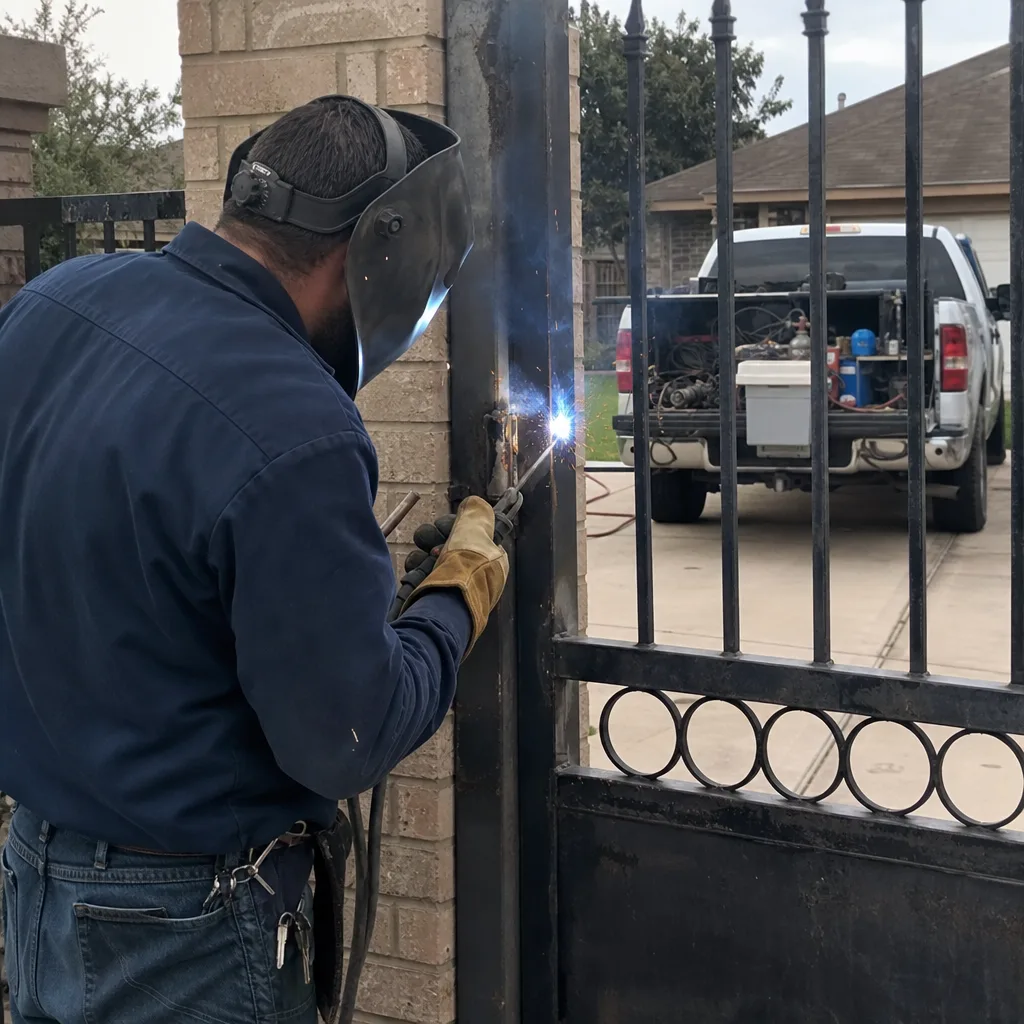
Remote range reduction is the most commonly ignored warning sign in residential gate automation, and it’s also the cheapest to fix if you catch it early. A remote that used to open the gate from 60 feet away and now only works from 20 feet away is not “low batteries.” It might be batteries, and you should change those first, but if fresh batteries don’t restore the range, the problem is almost always at the receiver.
The receiver antenna on most residential operators is a length of wire inside the control box. Over time, that wire can corrode at its connection point, or the control box can accumulate enough dust and moisture to partially shield the signal. In Baytown, where humidity sits above 70 percent for most of the summer, corrosion at the antenna terminal is a common failure. The fix is often as simple as cleaning the connection and re-securing the antenna, a repair that runs under $100. But if the corrosion has spread to the receiver module itself, the module replacement typically ranges from $120 to $250 on brands like LiftMaster, Mighty Mule, and Ghost Controls.
There’s another cause worth knowing about, and it’s specific to the modern home: interference. Wireless doorbells, security cameras, LED lighting transformers, and even some smart-home hubs operate on frequencies close to the 318MHz or 433MHz bands that many gate remotes use. If a neighbor installed a new wireless device recently and your range dropped, frequency congestion might be the cause. A technician with a spectrum analyzer can check what’s broadcasting near your gate’s frequency, and the fix is sometimes as simple as switching the remote to a different channel or upgrading to a rolling-code remote that handles interference better.
The reason range reduction matters beyond the inconvenience: it is often the first observable symptom of moisture intrusion at the control board. The board sits inside a housing that is sealed against weather, but seals age, and a board that is slowly getting damp will fail in stages, starting with receiver sensitivity. If your range is shrinking, open the control box and look for condensation, white residue on the board, or rust on the antenna terminal. If you see any of those, that’s a scheduled-repair situation, not a wait-and-see situation. Find more detail on our Vance Gate Repair Baytown home page or call for a documented inspection.
5. Baytown-Specific Warning Signs: Rust Bleed, Standing Water, and Gulf Coast Humidity
Baytown’s climate accelerates certain gate failures in ways that don’t show up in a generic gate-repair guide. The three environmental factors that matter here are humidity, salt air proximity, and heavy clay soil that drains poorly after the storms that roll through from the Gulf. Each one produces a characteristic warning sign.
Rust bleed at the hinge plate is not cosmetic. When you see orange-brown staining running down from the hinge area, water has been penetrating the weld or the fastener holes. The stain is iron oxide, which means the metal is losing material. On a steel gate, rust bleed at the hinge means the hinge plate is losing structural metal, and the gate leaf is slowly sagging. That sag increases resistance at the operator, which shortens the life of the motor. The rust bleed is a warning sign that needs attention before the hinge plate cracks, at which point the gate may need to be taken down and re-welded, which is a different and more expensive job than treating corrosion at the surface.
Standing water at the operator base is a timeline problem. Most swing-gate operators in Baytown are mounted on a concrete pad at the gate post. If water is pooling around the pad after rain, it means the pad has settled or the surrounding soil has shifted. Every time the water rises, it finds its way toward electrical conduits, wire connections, and the bottom seal of the control box. You might not see a symptom from inside the house, but the gate is being poisoned from below. Re-grading the drainage or adding a French drain channel costs a few hundred dollars. Replacing a control board that has been sitting in intermittent moisture for a year costs three or four times that. If you see standing water there, photograph it and log it.
Humidity and condensation inside the control box. We’ve already mentioned this in the context of remote range, but it deserves its own mention. Baytown’s summer humidity means the air inside an unheated control box can reach dew point at night and condense on the cool metal surfaces inside. Repeated cycles of condensation and drying leave a white mineral deposit on circuit boards, which is conductive when wet and corrosive over time. If you open your control box and see a chalky white film on the green circuit board, that board is on a clock. You have a repair window measured in weeks, not months. A board replacement on most residential operators runs between $400 and $650, including the part and labor, and the newly installed board should be sealed with a moisture-resistant conformal coating to survive Baytown conditions.
The good news is that all of these are checkable by a homeowner with a flashlight and ten minutes. That’s the whole point of this guide: the warning signs are visible, sometimes literally written in rust and chalk, if you know what you’re looking at.
6. How to Photograph and Log a Warning Sign Before You Call
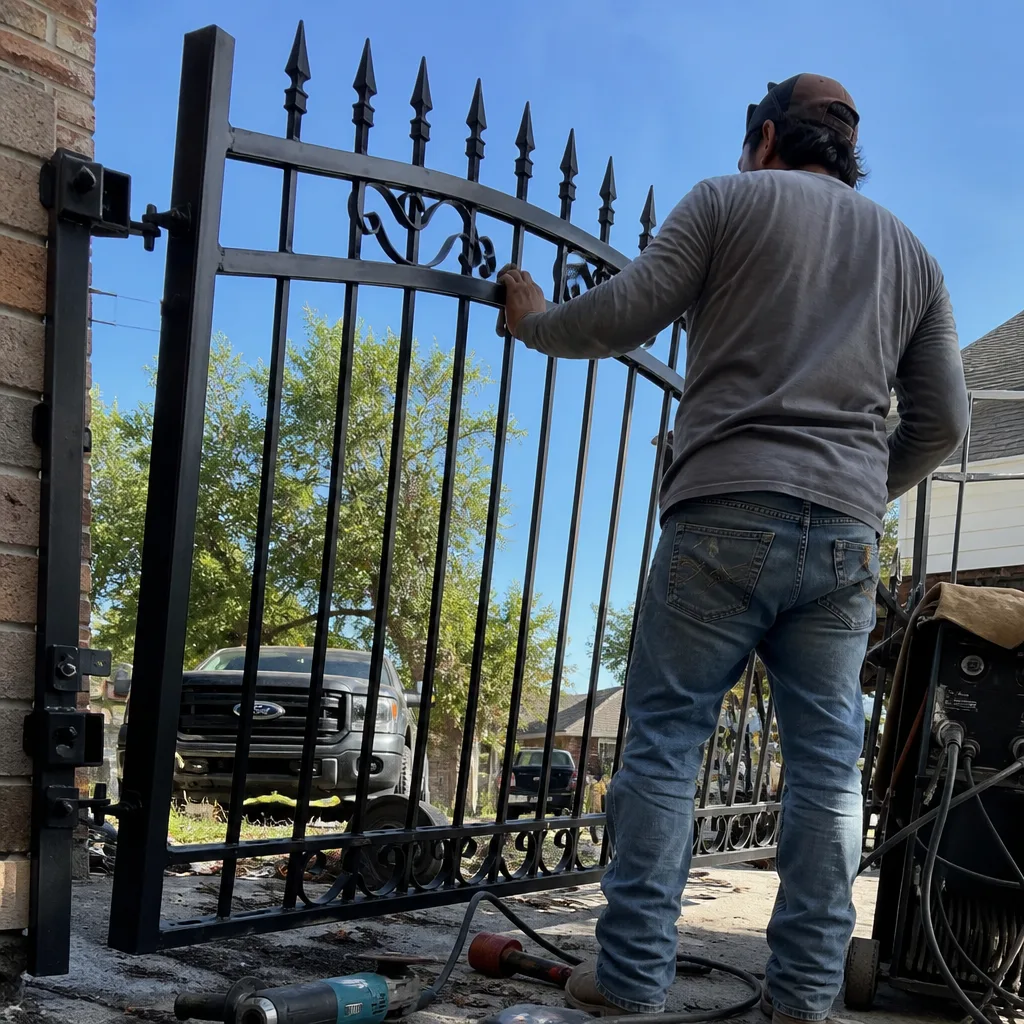
A well-photographed warning sign saves diagnostic time, which saves you money. If you call a gate company and can describe exactly what the gate is doing and provide photos of the equipment, the technician can often identify the likely component before arriving, which means fewer billable diagnostic hours and a more accurate first-trip fix rate.
Here’s the method we recommend to Baytown homeowners who want to document a gate problem before calling:
- Photograph the operator, not the gate. Open the control box, if it’s safe to do so without touching any wiring, and take three photos: the full board, a close-up of any corrosion or discoloration, and a close-up of the wire connections at the terminal block. These three photos let a technician see the board model, the general condition, and whether there’s obvious water intrusion.
- Log the cycle time. Use your phone’s stopwatch to time the gate from full closed to full open. Do this three times and note the average. Most residential swing gates should complete a cycle in 12 to 18 seconds. A gate that takes 25 seconds or more is reporting excessive mechanical load or a failing capacitor.
- Note the exact position of grinding or hesitation. If the symptom happens at a specific point in the arc, don’t describe it as “makes a sound sometimes.” Describe it as “grinds at about 45 degrees on the opening stroke, every time, for about three seconds.” That sentence tells a technician more than a paragraph of vague description.
- Photograph rust bleed and standing water. If you see rust at the hinge plate or water pooling at the operator base, photograph it from two angles: a wide shot showing the context and a close-up showing the detail. The wide shot tells the technician what they’re looking at; the close-up tells them how bad it is.
- Video the gate cycling. A 30-second video of the gate opening and closing, filmed from the side so the operator and the gate leaf are both visible, is the single most useful diagnostic artifact you can provide. It captures speed, hesitation, grinding sounds, and any reversal behavior in one file.
Why this matters in Baytown specifically: a company with a commercial access-control background expects to work from documentation. That’s how Adrian Vance ran commercial jobs starting in 2014, and it’s how Vance Gate Repair Baytown works today. The photo log you take before calling is the foundation of the photo record you’ll receive after the visit. Every adjustment, every part number, every meter reading gets photographed and left with you under Clause 4 of The Haven Standard. You get evidence, not just a bill.
7. Normal Wear vs. Warning Signs: A Defined Threshold
Every gate wears. That’s not a problem; it’s physics. The question is where the normal wear ends and a warning sign begins, and most homeowners don’t have a defined threshold for making that call. Here’s one.
Normal wear looks like this: Surface rust on unpainted hardware that does not spread, a slight darkening of the grease at the hinge points, remote batteries that need replacing every 12 to 18 months, and a slow drift in the gate’s fully closed position of a quarter-inch over two years. None of these are urgent. All of them are worth noting and addressing at the next scheduled maintenance visit.
Warning signs look like this: Any change that is noticeable without measurement. If you can see the gate sagging, that’s not normal wear. If the cycle time has doubled, that’s not normal wear. If the gate reverses when nothing is in its path, if the remote range drops from 60 feet to 20 feet, if there’s rust bleed at the hinge, if you see condensation or white residue inside the control box, if the gate starts and then stops before completing its cycle, those are all warning signs. The threshold is simple: if you could measure it with a ruler, a timer, or a photograph, and the number has changed, that’s a signal.
The value of a defined threshold is that it removes the temptation to “wait and see.” Waiting and seeing is how a $100 capacitor replacement becomes a $600 board replacement, and how a hinge bearing replacement becomes a gate removal and re-welding job. Baytown’s environment compresses the timeline. Salt air and humidity accelerate corrosion, and a problem that would take three years to become catastrophic in a dry climate might take 18 months here. The threshold for acting should be correspondingly lower.
8. Signs That Mean Stop Using the Gate Today
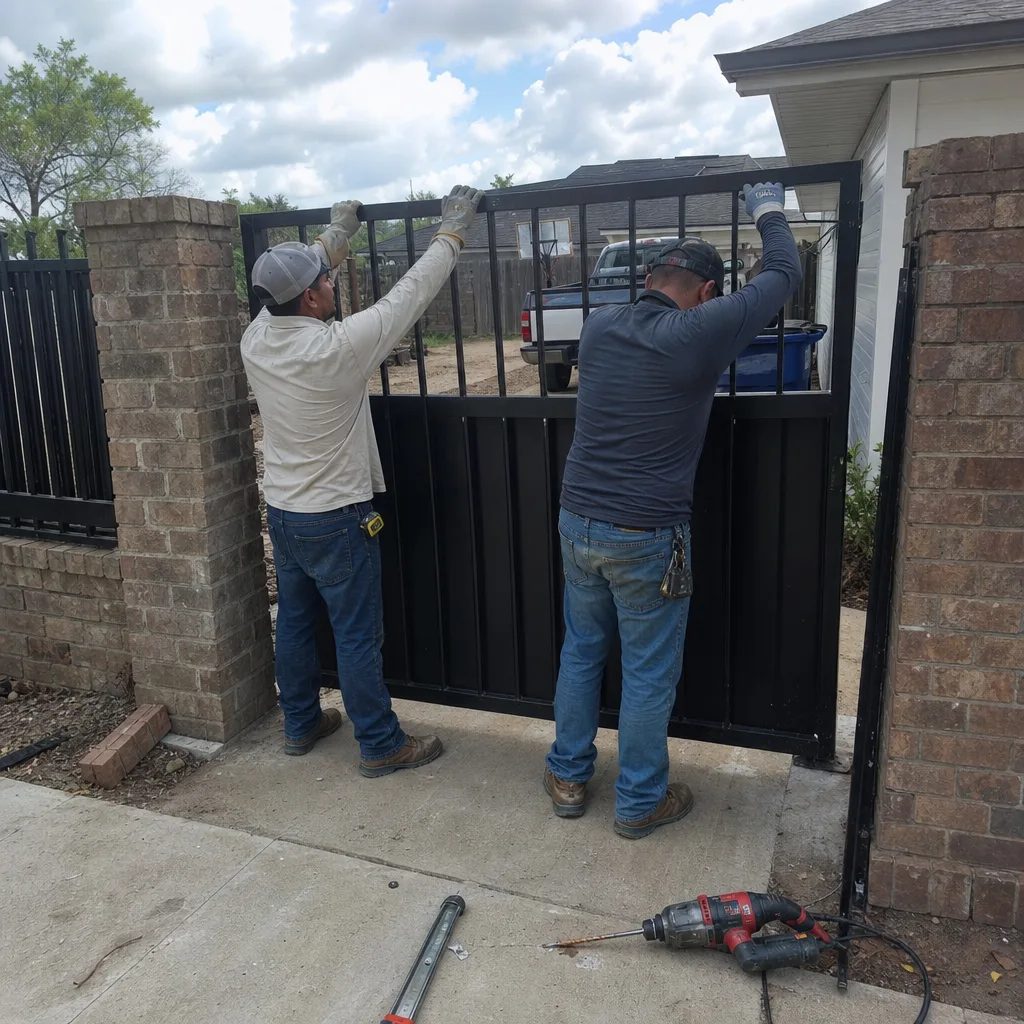
Most warning signs allow a scheduled repair window. You can log the symptom, photograph it, call a technician, and get on the schedule within a few days. But there are a handful of signs that mean the gate is no longer safe to operate, and you should treat it as out of service until a professional inspects it.
- The gate reverses direction and does not stop. If the gate cycles back and forth without settling, the limit switch or the control board has failed in a way that the safety inputs can no longer stop the cycle. The gate can injure someone or damage a vehicle that happens to be in the path.
- The gate leaf has visible sag or the hinge welds are cracked. A sagging gate with a cracked hinge weld can fall off its mountings. That’s not a repair scenario; that’s a safety hazard. The weight of a steel driveway gate is hundreds of pounds.
- You smelled burning or saw smoke from the operator. A burning smell means the motor windings or the control board are overheating. Continued operation can cause a fire. Cut power to the operator at the breaker and leave it off.
- The safety photo-eye is not responding. Most operators can be tested by blocking the photo-eye beam with a piece of cardboard while the gate is closing. If the gate doesn’t stop and reverse, the safety system is not functioning. The gate will close on anything in its path, including a child or a pet.
- Water is visibly inside the control box. If there’s standing water or obvious moisture inside the operator housing, the unit is at risk of short-circuiting. Cut power and don’t operate the gate until it’s been dried, inspected, and sealed.
If any of these conditions apply, the gate is out of service until a qualified technician has inspected it. Don’t attempt to operate it manually without knowing how to disengage the operator safely, because a gate under tension from a failing spring or a hydraulic system can move unexpectedly. Call and describe what you’re seeing. We do gate installation in Baytown as well as repair, so if the diagnosis points to replacement, you get a written scope either way.
Common Mistakes to Avoid
- Greasing the grinding away. Adding grease to a hinge that is already wearing out masks the symptom without fixing the underlying bearing failure. The grinding will come back, and by then the hinge plate may be damaged beyond repair.
- Assuming a slow gate is “just cold weather.” Baytown doesn’t get cold enough to thicken gate lubricant to the point of slowing a properly functioning operator. If the gate is slow, something is wrong. Cold weather might reveal a marginal capacitor, but it didn’t create it.
- Replacing the remote before checking the batteries or the receiver. Many homeowners buy a new remote when the range drops, only to find the new remote has the same problem. The receiver was always the issue. That’s a $40 mistake that doesn’t fix anything.
- Ignoring rust bleed as a cosmetic problem. In Baytown’s humid, salt-adjacent air, rust bleed at the hinge plate is active metal loss. Paint over it and you’ve hidden the evidence while the structural metal continues to degrade underneath.
- Fixing the photo-eye without checking what moved it. Photo-eyes don’t drift into misalignment on their own. If you align the eye and call it done, whatever moved the mounting post is still there, and the eye will be out of alignment again within weeks.
- Waiting to photograph the symptom until after calling the technician. The worst time to document a gate problem is when the technician is standing there and the gate decides to work perfectly. Photograph and log the symptom when it happens, not when you think you’ll remember to.
- Operating a gate with a non-functional safety system because “it never misses.” The photo-eye is there to stop the gate from closing on things you can’t see, like a neighbor’s cat or a child on a bicycle. “It never misses” is what everyone says before it misses.
When to Call a Professional
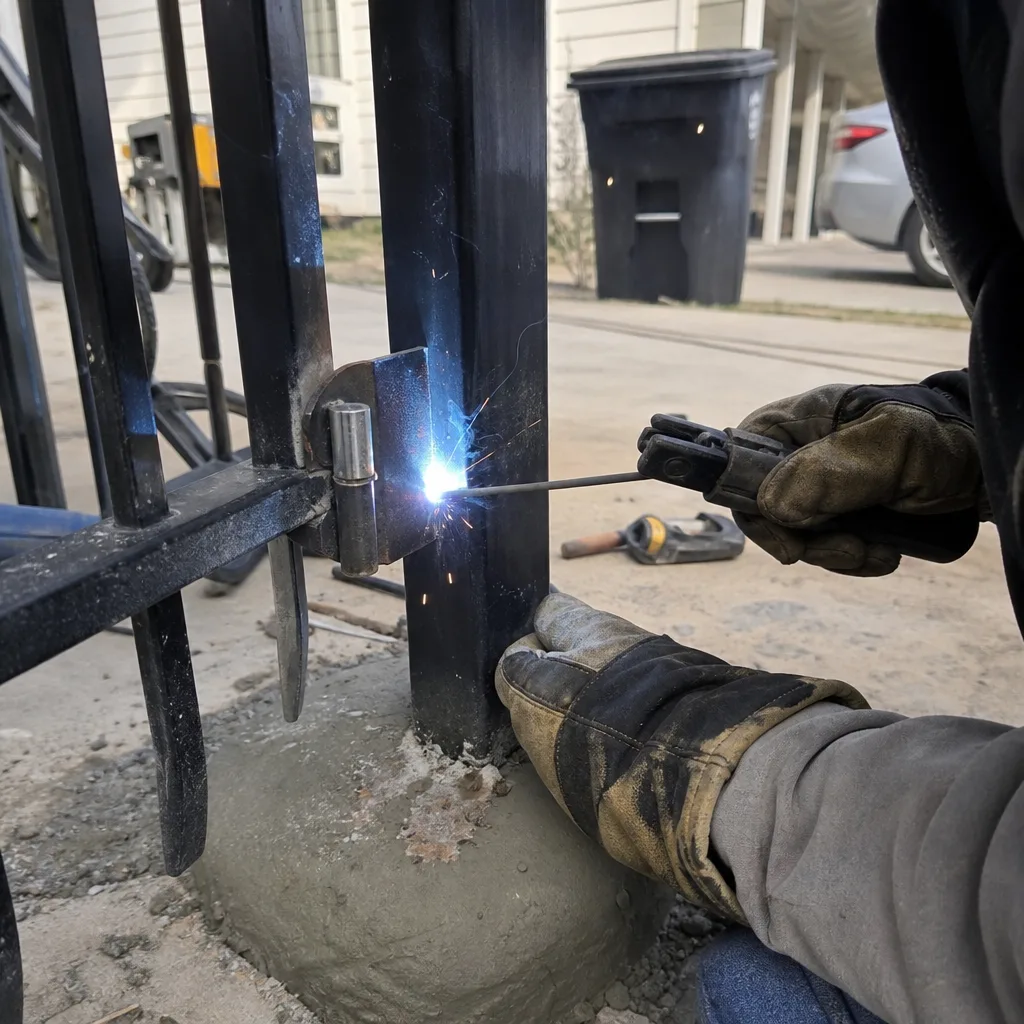
Any of the warning signs in this guide is a legitimate reason to schedule a professional inspection. The ones in the “Stop Using the Gate Today” section are reasons to call immediately. If you’re seeing a slow cycle, intermittent reversal, grinding at a specific arc position, or declining remote range with no battery solution, you have a repair window that is still open. Use it. Vance Gate Repair Baytown offers free estimates in Baytown, and the written price you get covers the entire job before any work starts. Call (346) 315-4812, describe the symptom, and if you’ve taken photos or video, say so. The more evidence we have before we arrive, the faster the diagnosis goes and the less you pay for diagnostic time.
Frequently Asked Questions
Gate repair costs in Baytown typically range from $120 to $650 depending on the component. A limit-switch adjustment or photo-eye alignment usually runs $120 to $200, a capacitor replacement $80 to $150, a receiver module replacement $120 to $250, and a control board replacement $400 to $650 including parts and labor. Hinge bearing replacement runs $200 to $400 per hinge. These are the prices you should expect to see in writing before any work begins. Call (346) 315-4812 for an exact quote on your specific gate and symptom.
For emergency conditions like a gate that won’t stop cycling, visible smoke, or a safety system failure, we prioritize same-day response. For non-emergency repairs like slow cycle times or range reduction, we typically schedule within one to three business days. A live person answers the phone 24/7 at (346) 315-4812, so you’ll know immediately when we can be there.
We service nine major gate automation brands including LiftMaster, DoorKing, Elite, Mighty Mule, FAAC, BFT, Linear, Viking, and Ghost Controls. We don’t steer you toward replacing a working operator just because we didn’t install it. Whatever motor is on your gate, we can likely diagnose and repair it, and the written price covers the specific repair, not a sales pitch for a new system.
A full gate installation in Baytown includes the gate leaf or leaves, hinge plates and posts set in concrete, the operator and control board, safety photo-eyes, the power run from your electrical panel to the operator, and programming of remotes and keypads if included. The written scope covers every line item, and the price is fixed before work starts. Installation timelines vary based on whether the gate is custom-fabricated or stock, but you’ll know the schedule before you sign anything.
Yes. The power run from the electrical panel to the gate operator is part of the installation scope, and we handle the connection and wiring of safety edges, photo-eyes, and any accessory devices like keypads or intercoms. The documentation we leave includes a wiring diagram so any future technician can see exactly what was connected and how.
Run through the checklist in the “Stop Using the Gate Today” section of this guide. If the gate does not reverse when something blocks the photo-eye beam, if it cycles without settling, if there’s visible smoke or burning smell, if the gate leaf is sagging visibly, or if water is inside the control box, stop using it and call (346) 315-4812. If none of those apply but you’re seeing slow cycles, grinding, or reduced range, you have a repair window and should schedule an inspection before the symptom gets worse.
The Bottom Line
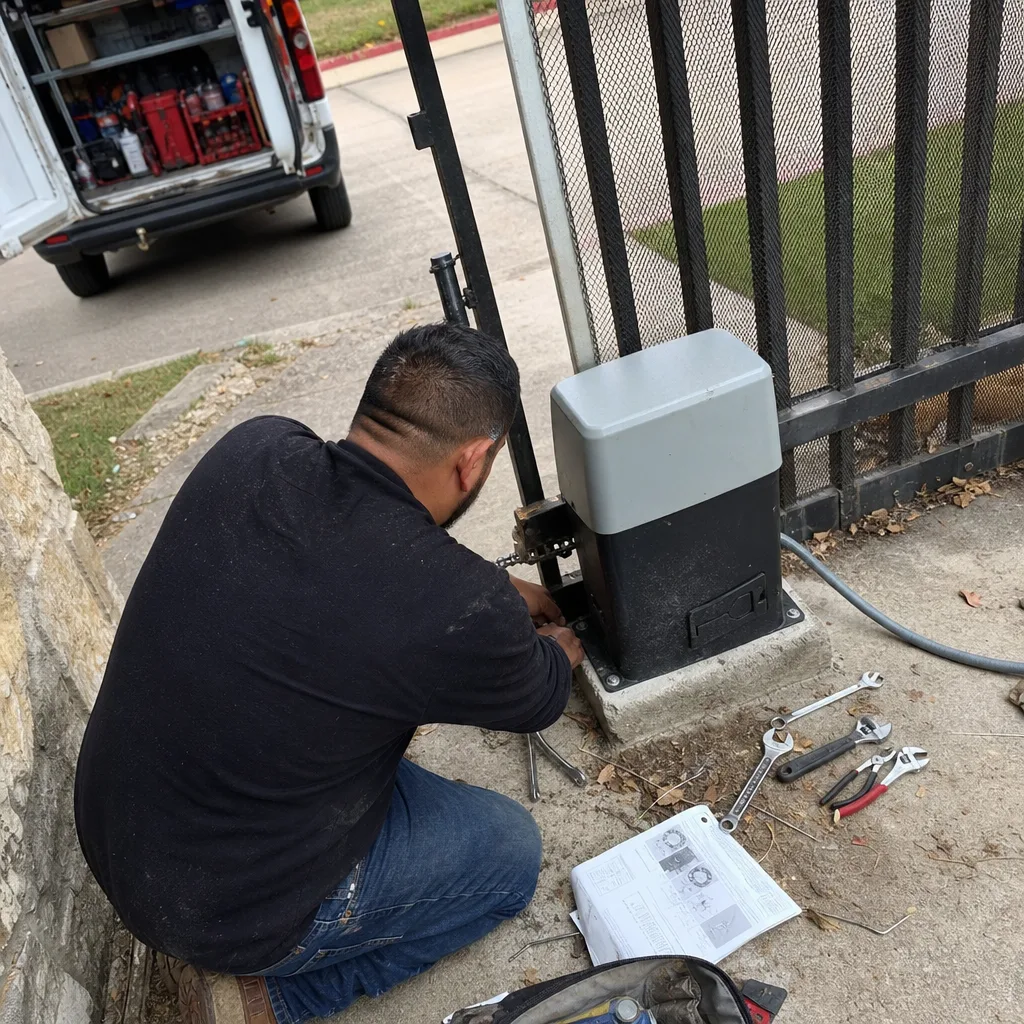
A gate in Baytown doesn’t fail in silence. It reports its problems through slow cycles, reversals, grinding at specific arc positions, and shrinking remote range. Each symptom maps to a specific component, and the repair cost is nearly always lower when the symptom is addressed early. The discipline is in documenting what you see: photograph the rust bleed, time the cycle, note the grinding position, and call with evidence ready. The Haven Standard exists so that Baytown homeowners never pay twice to rediscover the same problem, and never sign a bill they didn’t see coming. For more guides & resources on gate maintenance and repair, visit our blog. If your gate is showing any of the warning signs in this guide, call (346) 315-4812 for a free estimate. You’ll get a written price before any work starts and a documented record when the technician leaves.
Written by Adrian Vance, Owner at Vance Gate Repair Baytown, serving Baytown since 2014.