
Last updated September 20, 2026
Free on-site gate assessment - hinges, posts, and your LiftMaster or Nice gate operator checked before anything is quoted
The assessment is free and the quote is the invoice.

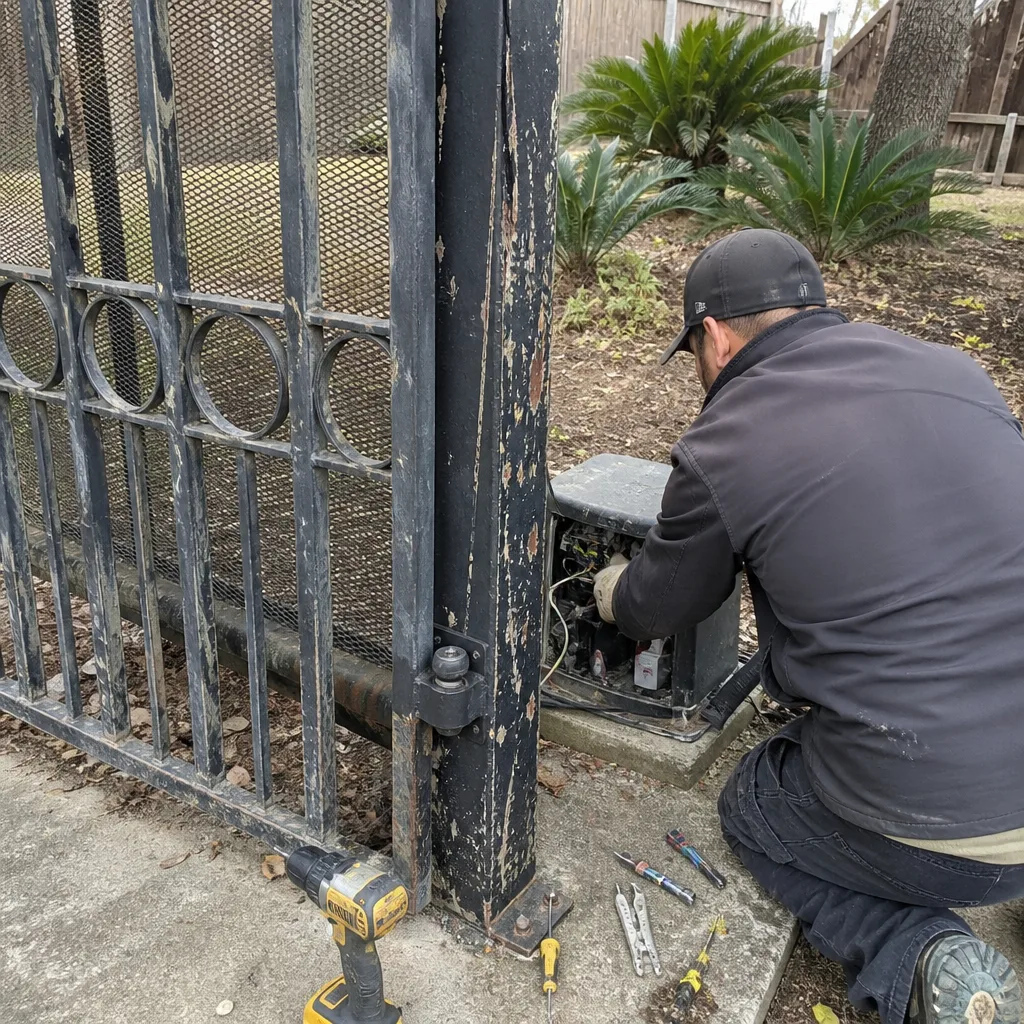 Before
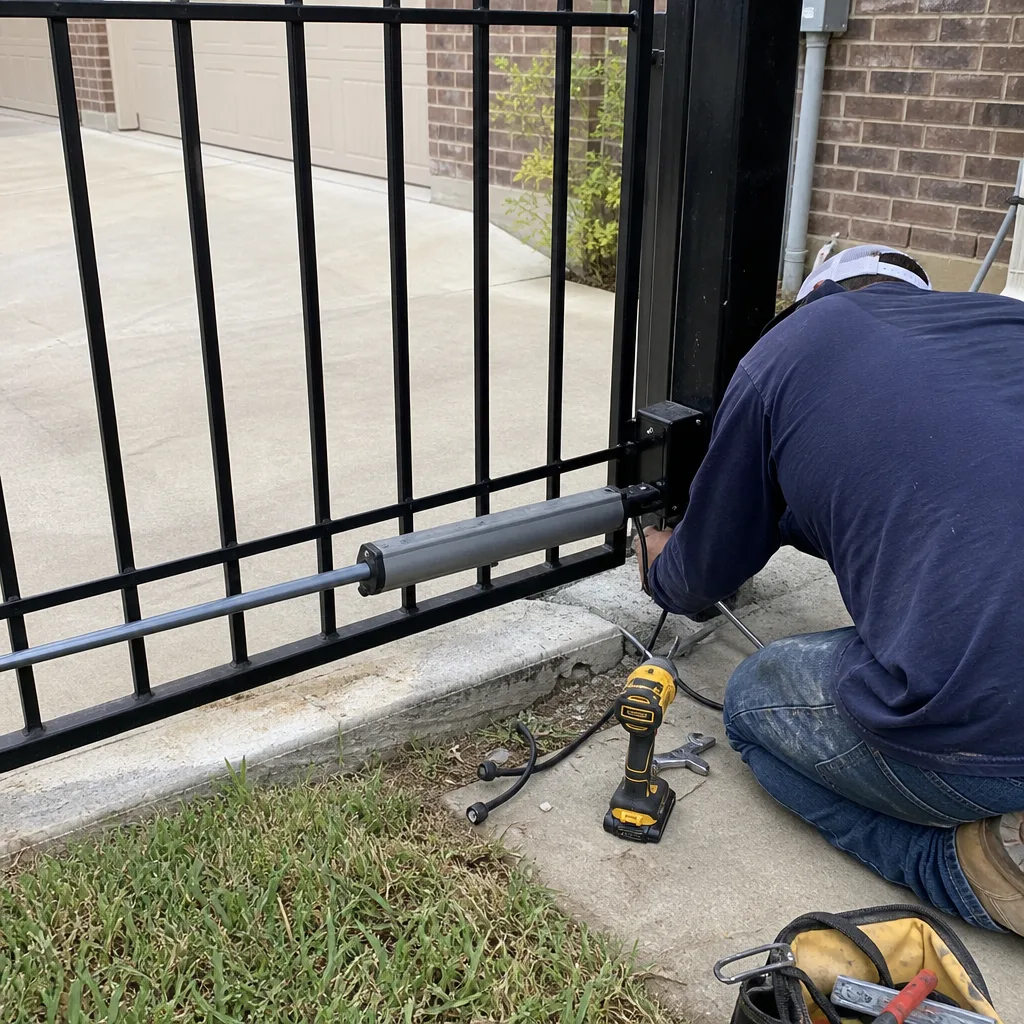 After
After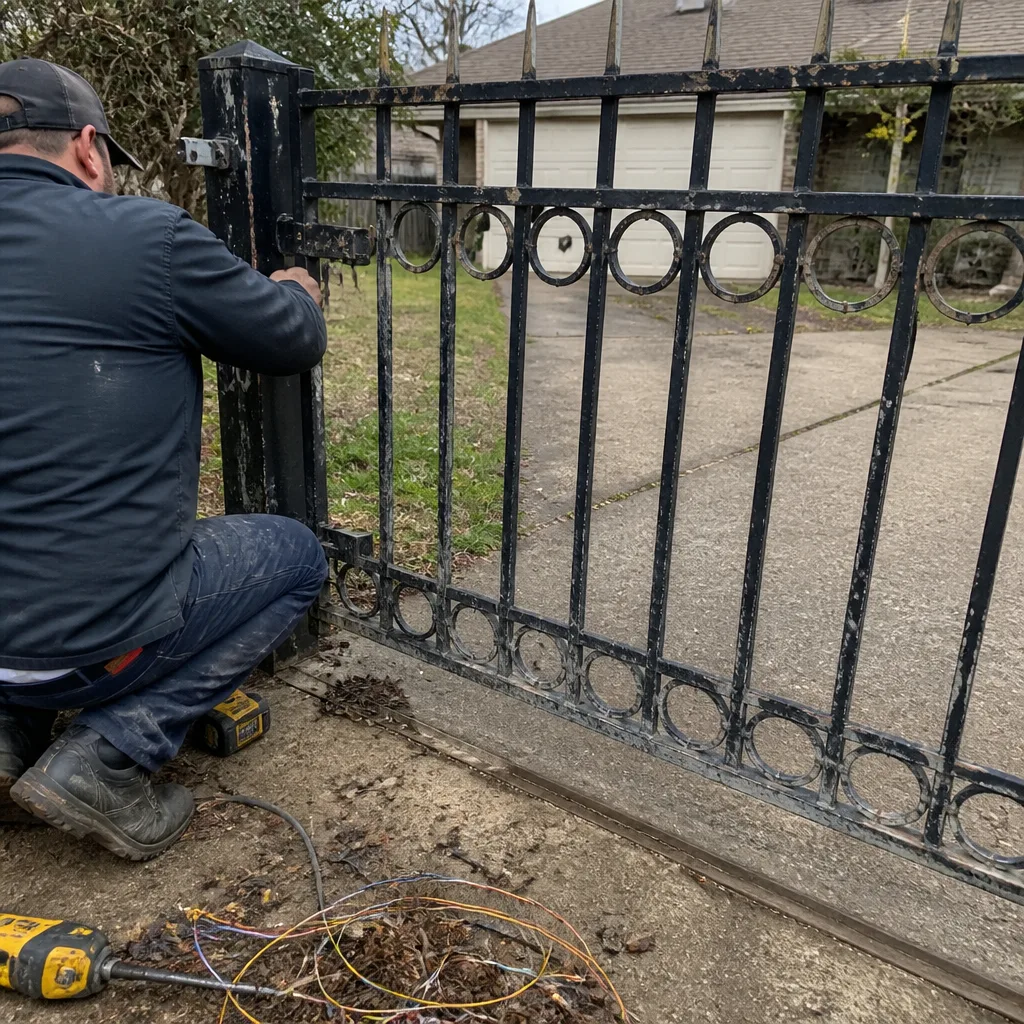 Before
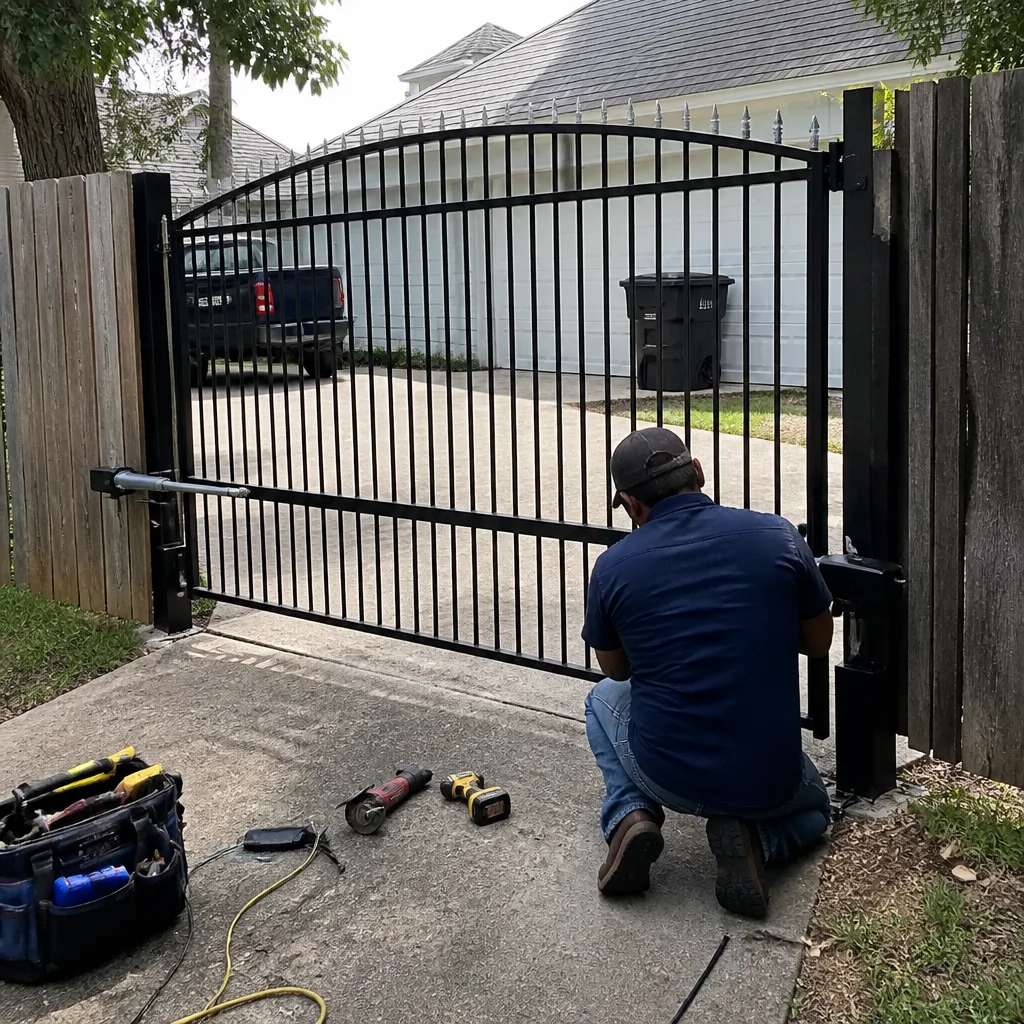 After
After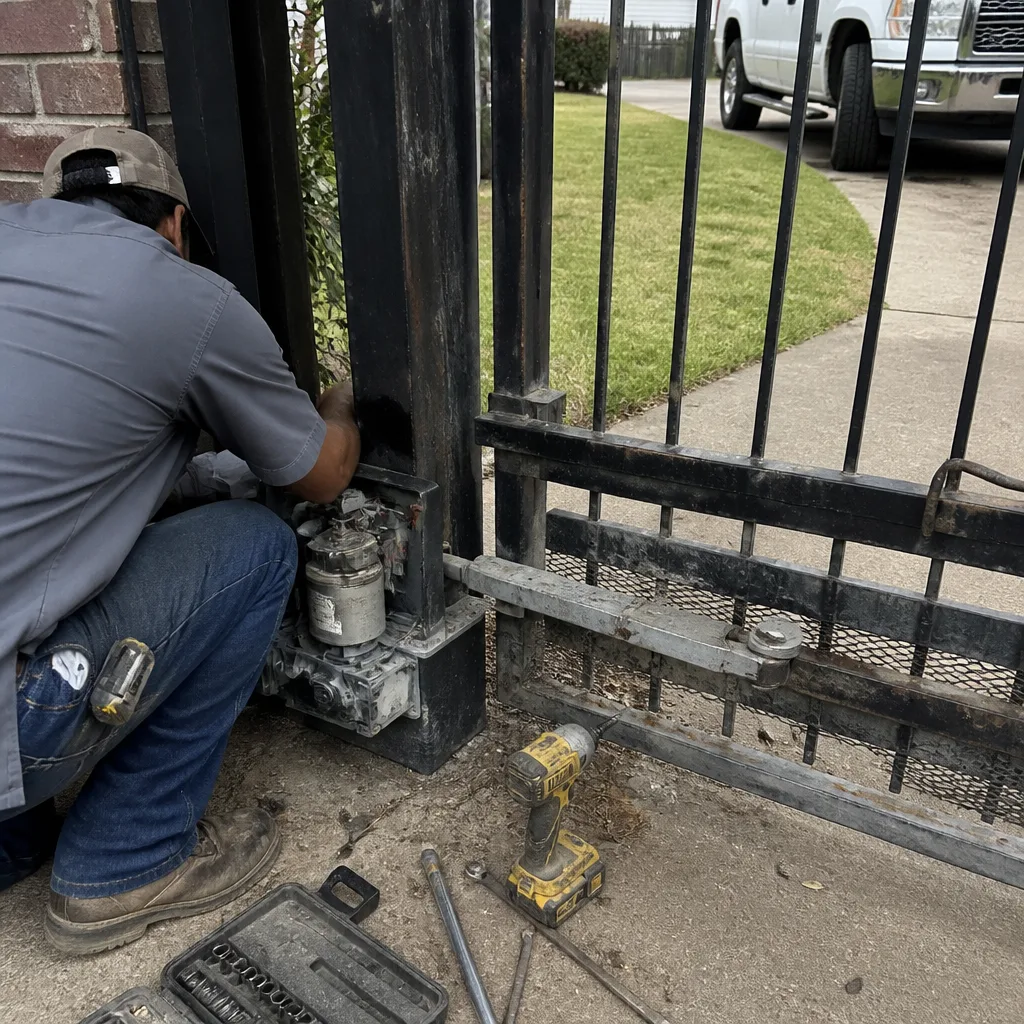 Before
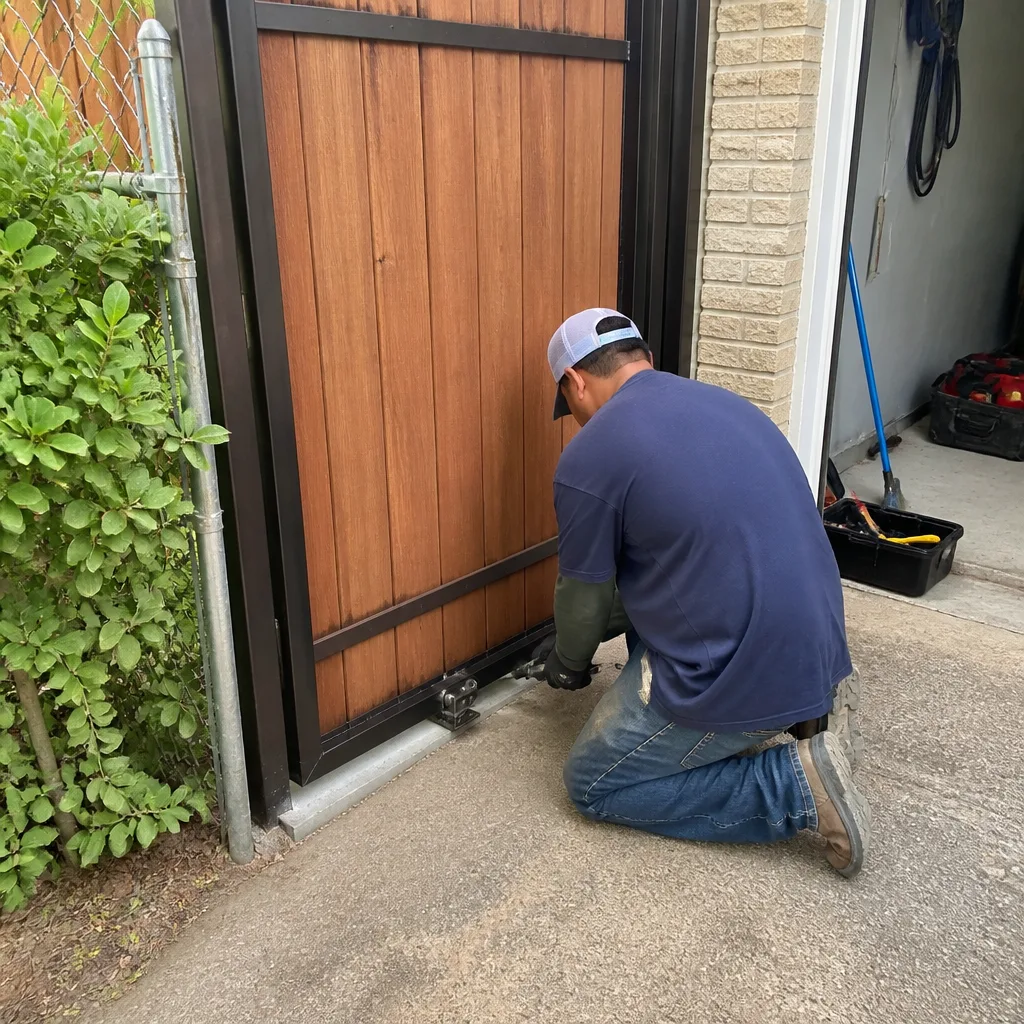 After
AfterSeasonal Gate Repair Care for Baytown: Year-Round Homeowner’s Guide
February 2021 changed how every serious gate technician in Baytown thinks about seasonal maintenance. In a 72-hour window, that freeze damaged more gate operators across the city than the prior three years of ordinary wear combined. Hydraulic fluid thickened past its operating range. Battery backups that had never been load-tested fell flat. Weld points that had quietly fatigued for years finally gave way under thermal contraction. The lesson wasn’t that Baytown gates were poorly built. It was that homeowners were prepping for the wrong calendar. This guide lays out what a Baytown gate actually goes through across the year, when to act, what to check, and what to leave to a professional with the right test equipment. For a deeper dive into professional services, see our Gate Repair page.
Quick Answer
Baytown gate maintenance runs on two stress periods and two work windows, not four seasons. Prep the gate for hurricane-driven humidity and wind loading in April and May, inspect it after every named storm that passes within 60 miles, harden it for freeze risk in December, and use February and March to reset corrosion and document the system’s baseline. Done consistently, this calendar prevents roughly 70% of the failures we see on residential gates in Baytown. For more guides & resources on maintaining your gate, visit our blog.
Table of Contents
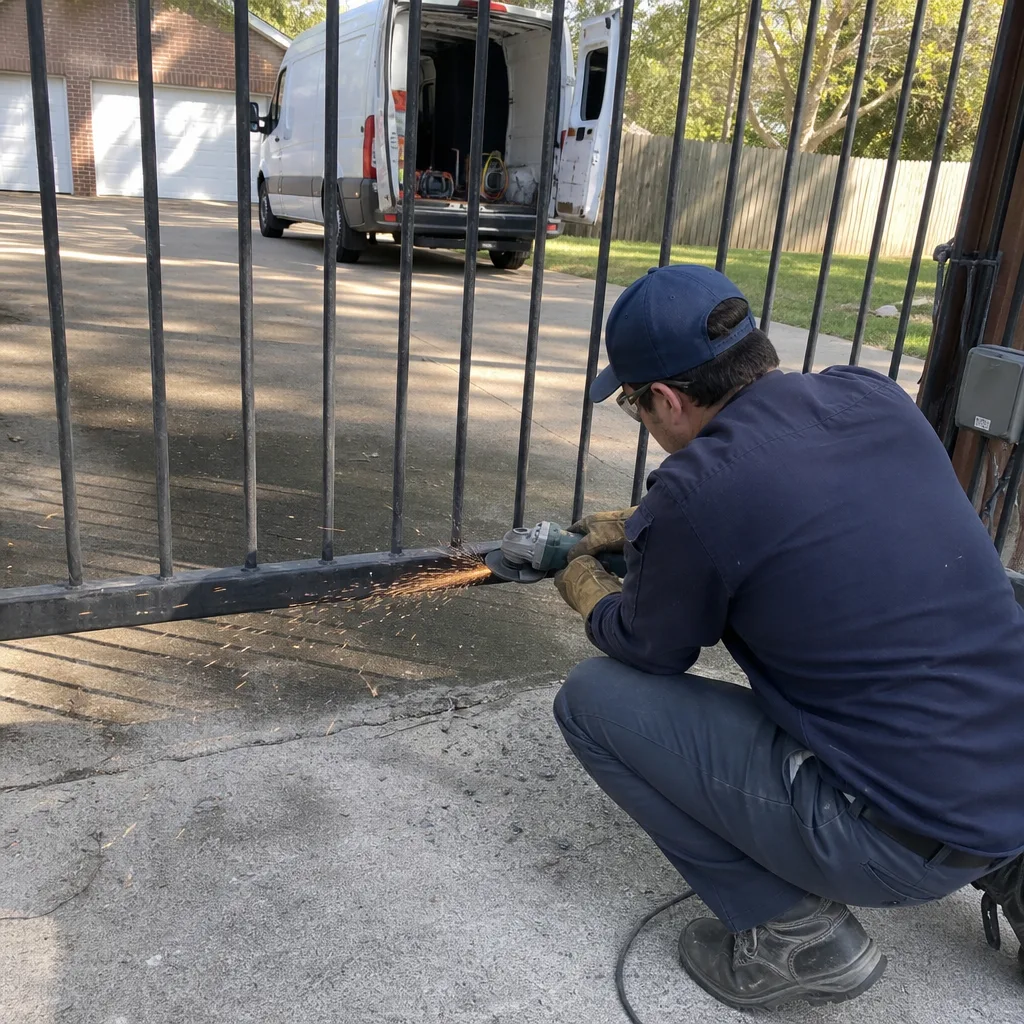
- Baytown’s Real Stress Calendar: Two Peaks, Two Windows
- Pre-Hurricane Season Prep (April-May): The Load Test That Prevents Most Failures
- Post-Storm Inspection Protocol (June-November): The 48-Hour Rule
- Freeze Prep (December-January): What Actually Fails in Baytown
- Corrosion Reset (February-March): The Underrated Window
- Documenting a Seasonal Baseline: Written Proof of Deterioration
- Cost Timing: When Baytown Gate Work Is Cheapest, and Why May Is Not
- What Seasonal Gate Work Costs in Baytown
- Common Mistakes to Avoid
- When to Call a Professional
- Frequently Asked Questions
- The Bottom Line
BeforeAfterBaytown’s Real Stress Calendar: Two Peaks, Two Windows
Most seasonal maintenance guides assume a northern climate with four distinct seasons. Baytown ignores that assumption. The city sits near the Gulf Coast at roughly 30 feet above sea level, which means three things for every gate on every lot: sustained humidity that never drops low enough to dry out condensation inside operator housings, a hurricane season that brings wind loading and pressure changes from June through November, and periodic freeze events that arrive without warning and leave before anyone can react. That combination produces two stress peaks and two maintenance windows, and they do not line up with the equinox.
The first stress peak runs from June through September, when humidity and storm pressure expose every ingress point on the operator housing, every unsealed connection, and every spot where paint has worn off the gate frame. The second stress peak is the freeze window, historically December through February but most damaging when temperatures stay below freezing for 48 hours or more, as they did in February 2021. The maintenance windows are the calmer periods before each peak: April and May for storm prep, and the six to eight weeks after the last freeze for corrosion control and baseline documentation.
Think of it as a farm calendar with two planting seasons and two harvests. Baytown homeowners who follow a northern spring-fall checklist end up lubricating hinges in October when the real work was August’s storm damage, and checking battery voltage in March when the battery already died quietly in January. The calendar below is what we actually follow on gates across Baytown, from barndoor slide gates off Highway 146 to small swing gates in the older neighborhoods north of I-10.
Pre-Hurricane Season Prep (April-May): The Load Test That Prevents Most Failures
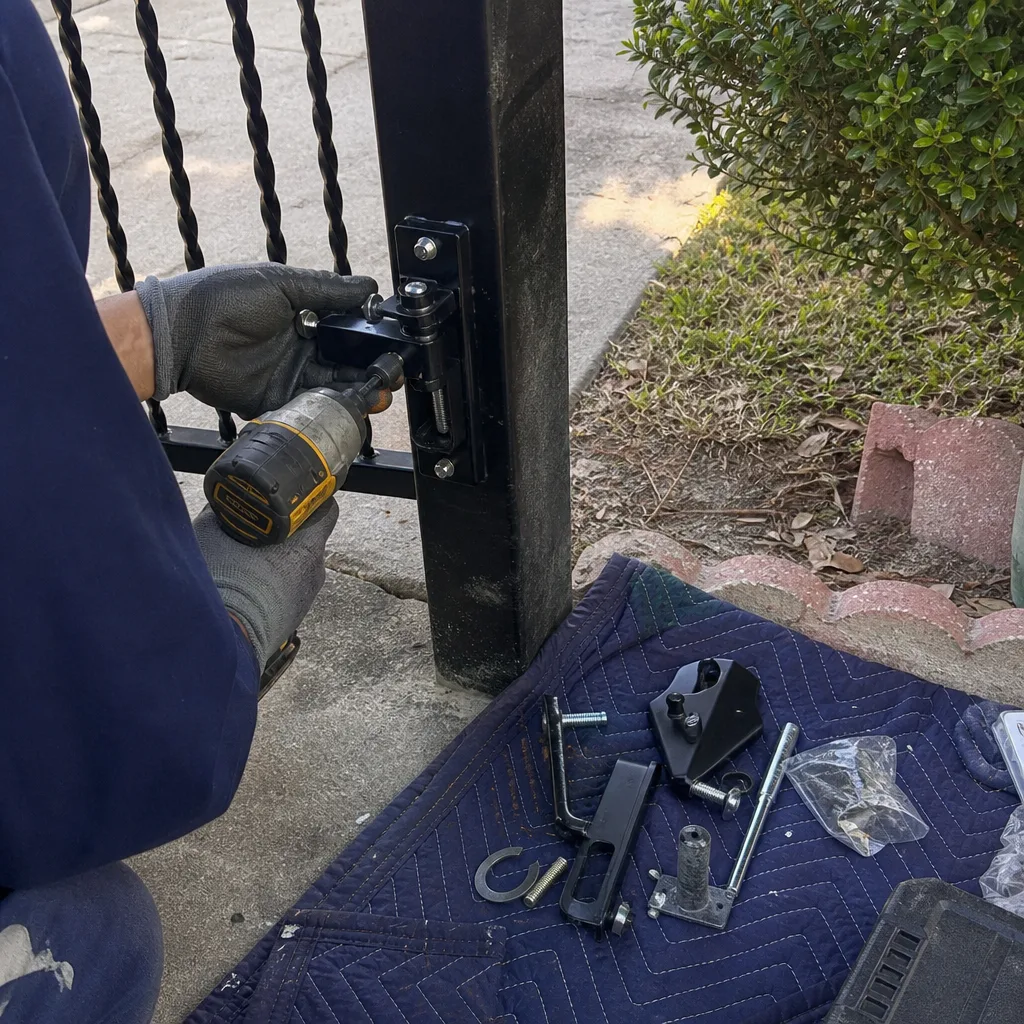
April and May are when Baytown gate work should happen before the weather forces it. By late May, the air is already carrying storm-moisture levels, and any deferred maintenance becomes an active vulnerability. The prep work falls into three categories, and each has a pass/fail criterion, not a vague instruction to inspect.
- Battery backup load test. A gate opener’s battery backup is not a convenience. It is the difference between a gate that holds its position during a power outage and a gate that drifts open or locks shut when the grid drops. The test is simple: disconnect AC power at the breaker, run the gate through a full open-close cycle, and measure the time. If the cycle takes longer than 110% of the gate’s normal speed, the battery is failing under load and should be replaced. A battery that passes this test in April will almost always survive a storm-season outage in July. One that has never been tested will fail on the first real outage, because that is the first time it has ever been asked to work.
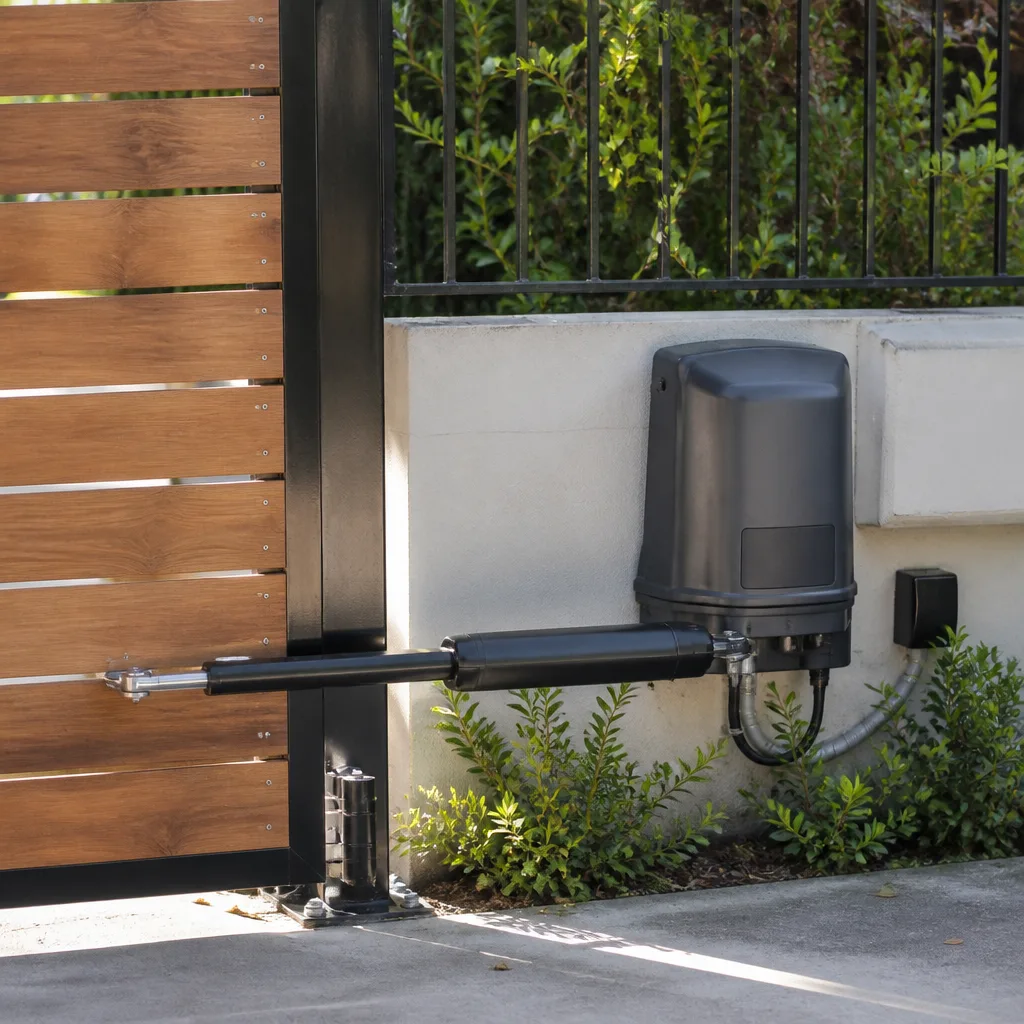
- Operator mount bolt torque check. Hurricane-force wind loads transfer through the gate leaf into the operator mount. Bolts that are even slightly loose eat their threads during a storm and fail suddenly mid-cycle. The pass/fail is specific: no fastener should move at its rated torque. If a carriage bolt on the operator mounting plate turns at all, the mount needs new hardware and a thorough inspection of the plate itself. We have seen bolts pulled 40% of the way out of concrete posts after a single Category 1 storm because the threads were already compromised in May.
- Gate stop integrity. The mechanical stop, not the motor’s limit switch, is what actually halts the gate at full travel. A stop that has cracked or pulled loose means the limit switch becomes the stop, and limit switches are not built for that impact. The pass/fail is visual: no visible gap between the stop and the post, no rust staining running down from the weld, no deformation. If the stop wiggles by hand, it fails. Replace it before July.
We also look for one thing most homeowners never think about: whether the gate’s drain holes are clear. Baytown sees sudden downpours that drop two inches in an hour, and a gate frame that holds water becomes a corrosion cell from the inside. A piece of wire pushed through every drain hole takes ten seconds and prevents a winter’s worth of internal rust.
This is the work that gate repair in Baytown calls “storm hardening,” and it is the single highest-value maintenance any homeowner can do in April. The alternative is discovering the failure at 2 a.m. during a landfall warning.
Post-Storm Inspection Protocol (June-November): The 48-Hour Rule
Every named storm that passes within 60 miles of Baytown leaves evidence on the gate. The question is whether anyone looks before the evidence becomes a failure. Our post-storm protocol is built around a 48-hour rule: after any storm with sustained winds over 45 mph, inspect the gate within two days. The reasoning is simple. Salt-laden Gulf rain water sitting on an exposed electrical connection causes corrosion that compounds with each subsequent storm. A terminal that is inspected and dried within 48 hours usually needs nothing more than cleaning and dielectric grease. The same terminal left for three weeks becomes a high-resistance point that eventually takes out the controller board.
The post-storm inspection has four steps, in order of importance:
- Visual sweep of the operator housing. Open the cover and look for water ingress. Any standing water, white mineral residue, or condensation fogging inside the housing means the gasket failed and the housing needs resealing. Do not run the gate again until this is dried and addressed, because water inside a powered housing is how boards die.
- Photo-eye alignment check. High winds flex posts and shift photo-eyes out of alignment. The symptom is a gate that stops mid-cycle and closes only with constant pressure. Re-aligning the beam is often a five-minute fix, but only if it is caught early. A misaligned photo-eye left for months forces the homeowner to hold the button through every cycle, which trains the operator to ignore its safety logic.
- Lubrication refresh on hinges and chain drive units. Baytown’s storm rain washes lubricant off faster than any other weather event. Hinges that squeak a week after a storm were marginal before it and dry after it. For chain-drive slide gates, a light reapplication of the manufacturer-specified lubricant restores smooth travel and prevents the chain from eating its own sprocket.
- Debris clearance across the travel path. Branches, leaf piles, and wind-blown trash collect in gate tracks and under swing gate leaves. Anything that drags against the gate while it moves increases the operator’s amperage draw and shortens motor life. Clear the path, then run a full open-close cycle and listen. A gate that sounds the same before and after the storm is a gate that weathered it.
For homeowners with slide gates, the post-storm check includes the track itself. Baytown’s gumbo soil heaves after heavy rain, and a track that has shifted even half an inch causes the gate trucks to bind. The gate will feel like it is working harder, and it is. The repair is straightforward when caught early and expensive when the wheels have worn flat from dragging.
Freeze Prep (December-January): What Actually Fails in Baytown
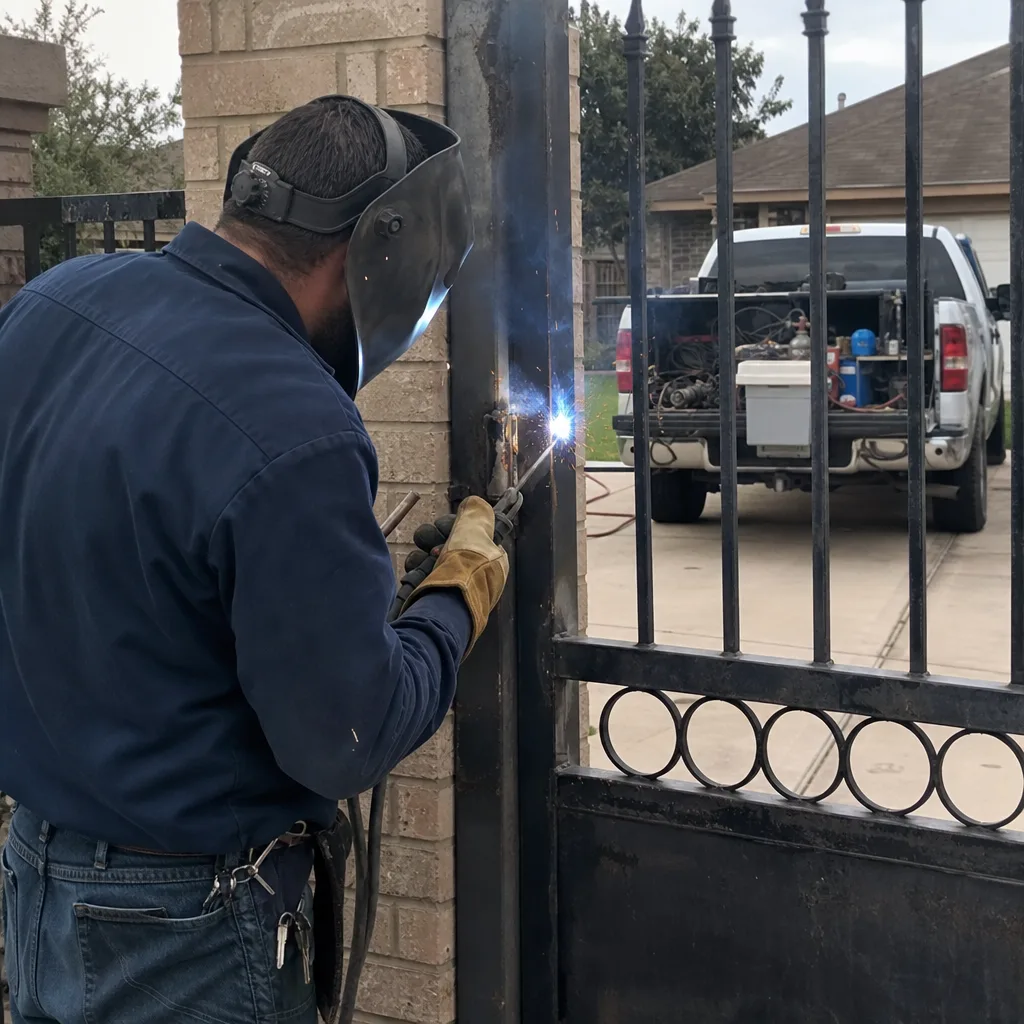
The February 2021 freeze taught Baytown something that northern technicians already knew: gate operators do not fail because of cold itself. They fail because cold changes the behavior of everything around them. Hydraulic fluid thickens. Rubber seals lose compliance and let water past. Battery chemistry slows. Metal contracts and exposes fatigue cracks that were invisible at 60 degrees. The homeowner’s job in December is to identify which of these vulnerabilities applies to their specific gate and address it before the temperature drops below 30 degrees.
For hydraulic operators, which are common on heavier swing gates in Baytown, the critical task is checking the fluid level and appearance. If the fluid is cloudy or milky, it contains water, and water in hydraulic fluid becomes a freeze risk. At 25 degrees, water-thinned fluid thickens unpredictably and the gate runs slower or not at all. A fluid drain and refill in mid-December costs far less than a pump replacement after a hard freeze. The pass/fail is visual: clear fluid passes, any cloudiness fails.
For battery backup systems on any operator brand, including the FAAC and LiftMaster units we service regularly across Baytown, the December check is a repeat of April’s load test. But now the stakes are different. If the battery fails in April, there is time to replace it. If it fails in January during an ice event, the homeowner is standing in the cold trying to manually release a frozen gate. The test is identical, and the consequence of skipping it is not.
Freeze damage shows up in specific ways after the fact, and recognizing them early matters because the next freeze is rarely far behind. The signs include: a gate that runs fine on warm days but stalls on cold nights, a hydraulic manifold that seeps fluid only when the temperature drops, a chain that jumps teeth because the operator mount shifted as the concrete contracted, and control boards that throw error codes only below freezing. Each of these is a traceable mechanical or electrical fault, not an act of weather. Each is repairable. None repairs itself.
The most useful December task a Baytown homeowner can do is run the gate through ten full open-close cycles on the coldest afternoon of the month. Listen. Watch the travel speed. If the gate hesitates, slows, or sounds labored on cycle eight, that is evidence of a developing problem. A gate in good condition does the same work on cycle eight as it does on cycle one. If it does not, gate motor and opener service in Baytown should happen before the next cold front, not after it.
Corrosion Reset (February-March): The Underrated Window
Once the last freeze has passed and before April’s humidity returns, Baytown gets a brief window of comparatively dry air. This is the corrosion reset period, and it is the most consistently underused maintenance opportunity on the local calendar. The task is not to make the gate look good. It is to remove the salt and oxidation that accumulated during hurricane season and seal the metal against the coming spring rains.
The reset starts with a wash. Plain water and a soft brush over the gate frame, hinges, and operator housing removes the Gulf salt film that has been building since June. This is not cosmetic. Salt is an electrolyte, and an electrolyte film on a steel gate is what makes rust progress even when the gate is dry to the touch. After the wash, inspect every weld, every bolt head, and every place two pieces of metal meet. Surface rust that appears during February is the earliest, cheapest form of gate repair in Baytown. Deep rust that gets painted over in April is a future weld job.
For gates with exposed moving parts, February is when lubrication gets redone with a product rated for the full range of Baytown temperatures. The expensive part is not the lubricant. It is the labor of cleaning the old contaminated lubricant out first. Skipping that step just mixes new grease into old grit, and the grit wins.
We also recommend checking sacrificial anodes on underground operators and grounding lugs on every gate in this window. Baytown soil is aggressive on buried metal, and a grounding lug that has corroded to the point of pitting is no longer doing its electrical job. The visual check takes two minutes with the housing cover off. The repair, when needed, is a few dollars and prevents a controller board from being the next thing that corrodes.
The corrosion reset is also the right time for what we call the spring baseline, which feeds the documentation routine described in the next section. A gate that gets cleaned, lubed, and photographed in late February has a record of its post-winter condition. That record is what makes the following year’s deterioration visible.
Documenting a Seasonal Baseline: Written Proof of Deterioration
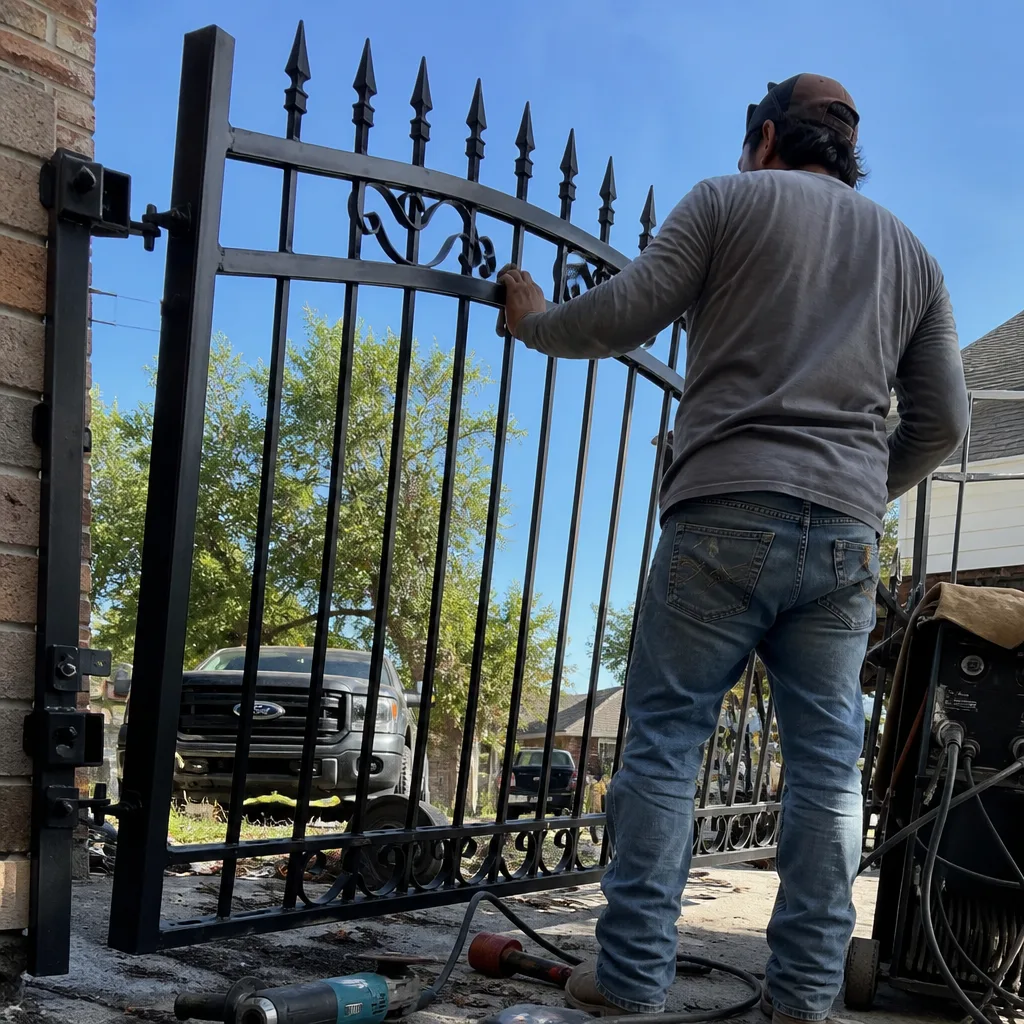
The most common phrase we hear from Baytown homeowners is “the gate seems slower than it used to be.” It is a feeling, not a measurement, and it is almost always wrong about when the slowing started. A documented seasonal baseline replaces that feeling with numbers. It is the difference between replacing a motor because it actually failed and replacing a motor because someone finally noticed it had been degrading for two years.
The baseline has four components, and each takes less than five minutes to record in a notebook or phone file:
- Open-close cycle time, measured in seconds. Time the gate from fully closed to fully open, and back. A gate that runs the same cycle in 18 seconds in March and 23 seconds in July has a measurable problem. A gate that has no recorded time has no evidence until it stops.
- Amperage draw at the operator. Many operators display current draw on the board. If yours does, write it down. Rising amperage over time is the earliest warning of binding hinges, track drag, or a failing capacitor. The number itself matters less than the trend.
- Photographs of the four corners of the operator mount. Four photos, taken from the same angles every season, show rust streaks, paint cracking, and fastener movement that the eye misses when the gate is in motion. The photos from our own service records have caught dozens of problems before they became symptoms.
- Battery test date and result. Write down the date, the load test result, and the battery’s age. A battery that tested marginal in April and is still in the gate in October is a known risk, not a surprise.
None of this requires special tools. A phone camera and a stopwatch are enough. The only hard part is consistency, and that is why we anchor the baseline to the corrosion reset window. Do it in late February or March every year, and within two years you will have a written record of exactly how your gate behaves when healthy. The record is what tells you when something actually changed.
This habit is what gate installation in Baytown should leave behind on every new gate, and it is what the best repair work always includes: a documented record of what was found, what was set, and what was installed. We file a photo log on every job, and we recommend homeowners keep their own copy. No future technician should have to guess what a gate looked like when it was working properly.
Cost Timing: When Baytown Gate Work Is Cheapest, and Why May Is Not
Gate work in Baytown has a real off-season, and it is not when most homeowners expect. The cheapest time to book repairs and maintenance is February and March, the corrosion reset window. Demand drops after the freeze risk fades and before hurricane awareness kicks in. Technicians have open schedules, parts suppliers are fully stocked, and the work that gets done in this window has months of mild weather to settle in before the next stress period.
The most expensive time is the 30 days before hurricane season peaks, roughly late May through June. Every homeowner remembers their gate exists at the same moment, which is the moment the first Gulf storm appears on radar. The industry’s parts pipeline, especially for older Mighty Mule and Elite operator boards, stretches from days to weeks in exactly that window. A board replacement that costs $400 and takes two days in February costs the same $400 but takes ten days in June, often with a rush freight charge attached. The delay is the real cost.
There is a second cost window worth understanding: the period immediately after a freeze event. Demand spikes overnight, and every freeze exposes the same failures across hundreds of gates at once. Hydraulic seals, batteries, and circuit boards all fail in clusters. If your gate survived the February 2021 freeze without damage, you were either fortunate or you had prepared the previous December. If it did not survive, you were one of the hundreds of Baytown homeowners all calling for the same parts at the same time. The fix to a crowded market is timing. Off-season work is faster and identical in quality.
The financial logic is simple: a $150 maintenance visit in March prevents a $600 emergency call in June, and it does so at a time when the technician can actually explain the findings because they are not rushing to the next flooded-gate call. The season does not change the price of a service, but it changes the availability of the service and the speed of the parts behind it. Both matter when the gate is the only thing standing between the street and the backyard.
What Seasonal Gate Work Costs in Baytown
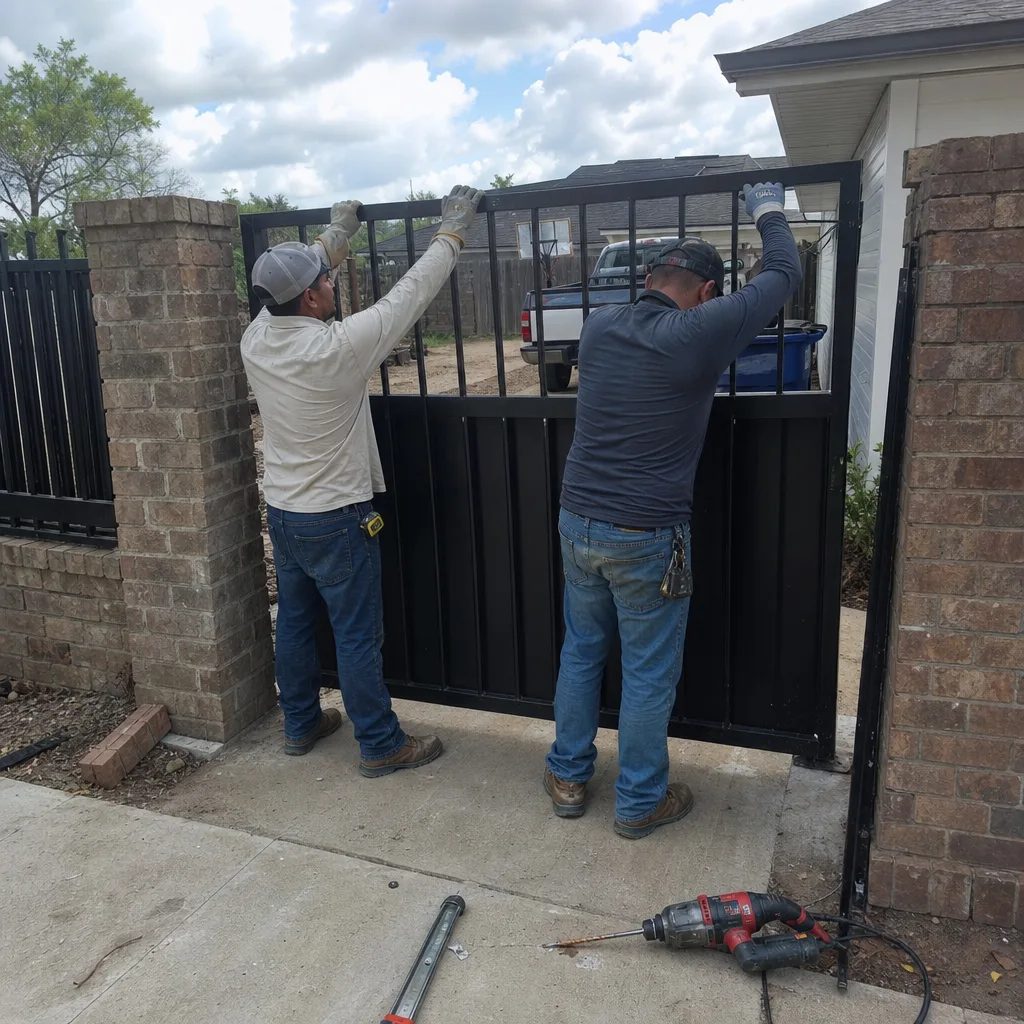
Baytown gate maintenance pricing follows the same logic as the repair market: written, flat, and agreed before work begins. Here are the current ranges for the seasonal tasks described in this guide, based on the work we quote daily across Baytown:
- Seasonal maintenance visit (inspection, lubrication, battery load test, photo-eye alignment): $95-$160, depending on gate type and operator access
- Hydraulic fluid drain and refill: $180-$260, parts and labor
- Battery backup replacement: $120-$340, depending on operator brand and battery capacity
- Gate stop replacement (welded steel stop): $140-$220 per stop
- Operator mount bolt replacement and torque: $90-$180
- Post-storm inspection with full photo documentation: $85-$140
- Track adjustment for slide gates (post-soil-heave): $150-$280
Every one of these numbers is written down and handed over before a tool is picked up. The price does not change between the quote and the invoice. That is the whole point of the way we work, and it applies to seasonal maintenance exactly as it applies to emergency repair. If a gate needs something outside the original scope, the additional work is documented, priced, and approved before it starts.
Common Mistakes to Avoid
- Lubricating a gate that has not been cleaned first. New grease on top of old grit creates a grinding paste that accelerates wear. Clean, then lubricate, in that order. Every time.
- Testing the battery backup by unplugging the gate for ten seconds. A ten-second test proves the battery exists. It does not prove the battery can run the gate through a full cycle under load. A battery that passes the short test and fails the full test is the most common false confidence in Baytown gate maintenance.
- Painting over rust without removing it. Rust continues to grow under paint. The only proper prep is mechanical removal to bare metal, then a rust-inhibiting primer, then paint. A rattle-can cover job in February becomes a weld repair by August.
- Ignoring the gate stop because the motor’s limit switch works. The operational question is not whether the limit switch can stop the gate. It is whether the limit switch should have to. A mechanical stop that fails transfers all impact energy to the limit switch, and the limit switch is the cheapest, most fragile part of the system. Keeping the stop whole protects everything upstream of it.
- Treating February’s low demand as a sign of low urgency. The best time to do gate work in Baytown is when nobody else is doing it. Availability, turnaround, and attention all improve in the off-season. Waiting until the first June storm report turns a one-week repair into a three-week problem.
- Skipping the photo record because “the gate looks fine.” The photo record exists to compare against the future, not to describe the present. A gate that looks fine today is the benchmark. Without the benchmark, next year’s “seems slower” has nothing to be measured against.
When to Call a Professional
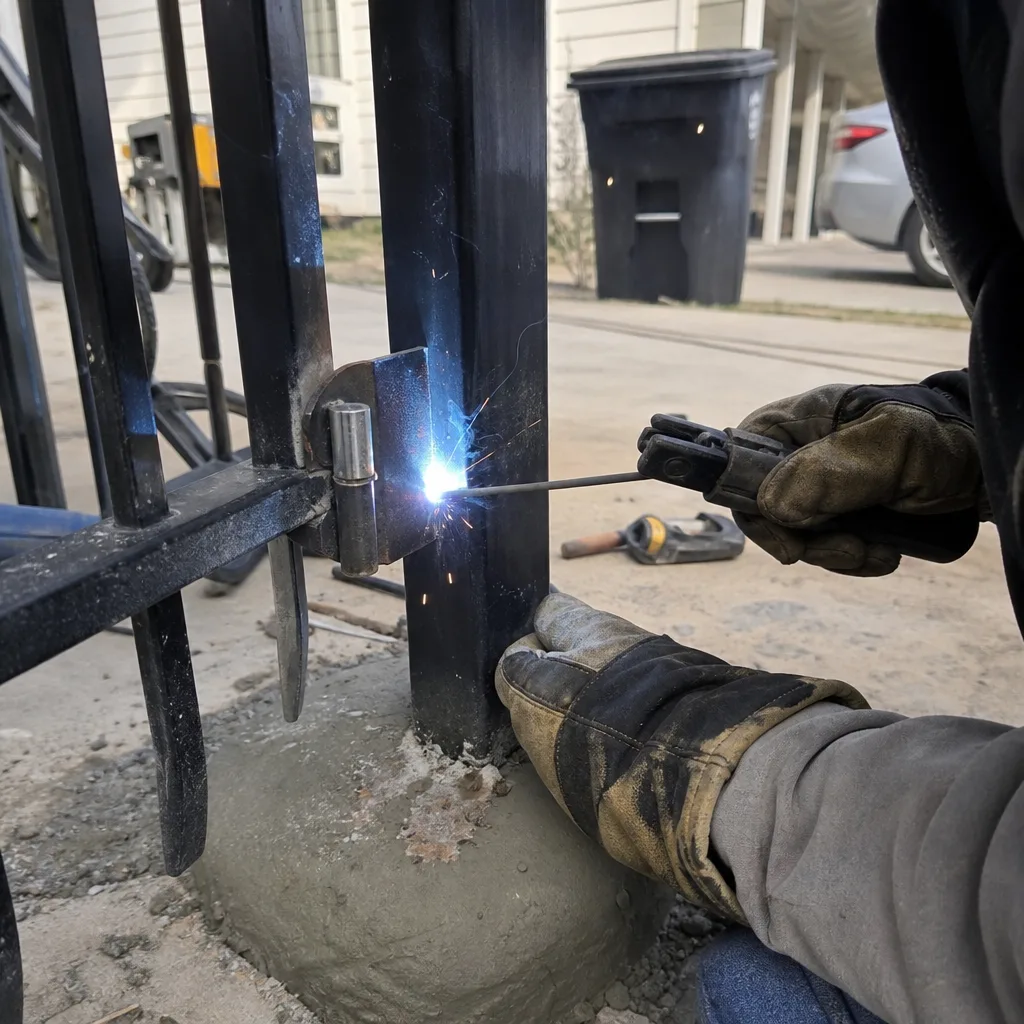
Most of this guide is doable by a careful homeowner with a phone camera and a notebook. But some conditions and repairs should not be attempted without the right equipment and experience. Call a professional when the operator shows visible water inside the housing, when the gate stalls under load, when the mount plate has cracked or pulled away from its concrete, when a hydraulic line is seeping fluid, or when the gate changes speed from one cycle to the next. These are symptoms of underlying mechanical or electrical failure, not maintenance lapses, and the wrong intervention usually makes them worse. A gate with an intermittent fault is also a safety concern, and a gate with a compromised stop or mount is a potential injury waiting for a specific set of circumstances. Vance Gate Repair Baytown offers free estimates across the city, with a written price and a documented photo record on every visit. Call (346) 315-4812 and you will reach a live person who can tell you what the problem is, what it costs, and when it can be fixed.
Frequently Asked Questions
Twice a year is the right interval for most Baytown gates: once in April or May for pre-hurricane hardening, and once in February or March for the post-freeze corrosion reset. Gates with heavy use, slide gates with exposed track, and hydraulic systems benefit from a third light inspection in September, after the first strong storm of the season has passed. Call (346) 315-4812 to schedule the work, and the written price comes before the job begins.
The battery backup is the most common hurricane-season failure, mostly because it was never load-tested before the season started. A battery that has sat unexercised for years will fail on the first real power outage, and the gate will drift open or lock in place. The fix is the April load test described above. It takes fifteen minutes and costs almost nothing compared to the alternatives.
No. Most years, Baytown’s freeze windows are too short to do real harm. The damage happens when temperatures stay below freezing for 36 hours or more, which is rare but not hypothetical in this region. The February 2021 event was the most damaging in decades, and it taught the entire local industry which components fail first. December prep is cheap insurance against an event that may not come every year but does come eventually.
Inspect it within 48 hours, focusing on water inside the operator housing, photo-eye alignment, debris in the travel path, and lubrication on hinges and chain drives. Document what you find with photos. If the gate runs the same before and after the storm, it weathered it. If it runs slower, louder, or differently at all, the storm exposed a problem that will not fix itself. Call (346) 315-4812 for a diagnosis and a written quote.
A full seasonal maintenance visit in Baytown, including inspection, lubrication, battery load testing, and photo-eye alignment, typically runs $95 to $160 depending on gate type and operator access. Hydraulic fluid service runs $180 to $260. Battery replacement runs $120 to $340 depending on the operator brand. Every price is written down and agreed before the work starts.
Most of the documentation and inspection work in this guide is doable by a careful homeowner. The battery load test, operator mount torque check, hydraulic fluid inspection, and photo documentation require no special tools. But any condition involving water inside a powered housing, hydraulic leaks, or structural movement in the mount or gate stop should be handled by someone with the right equipment and the right test gear. These are not maintenance tasks, they are repairs.
The Bottom Line
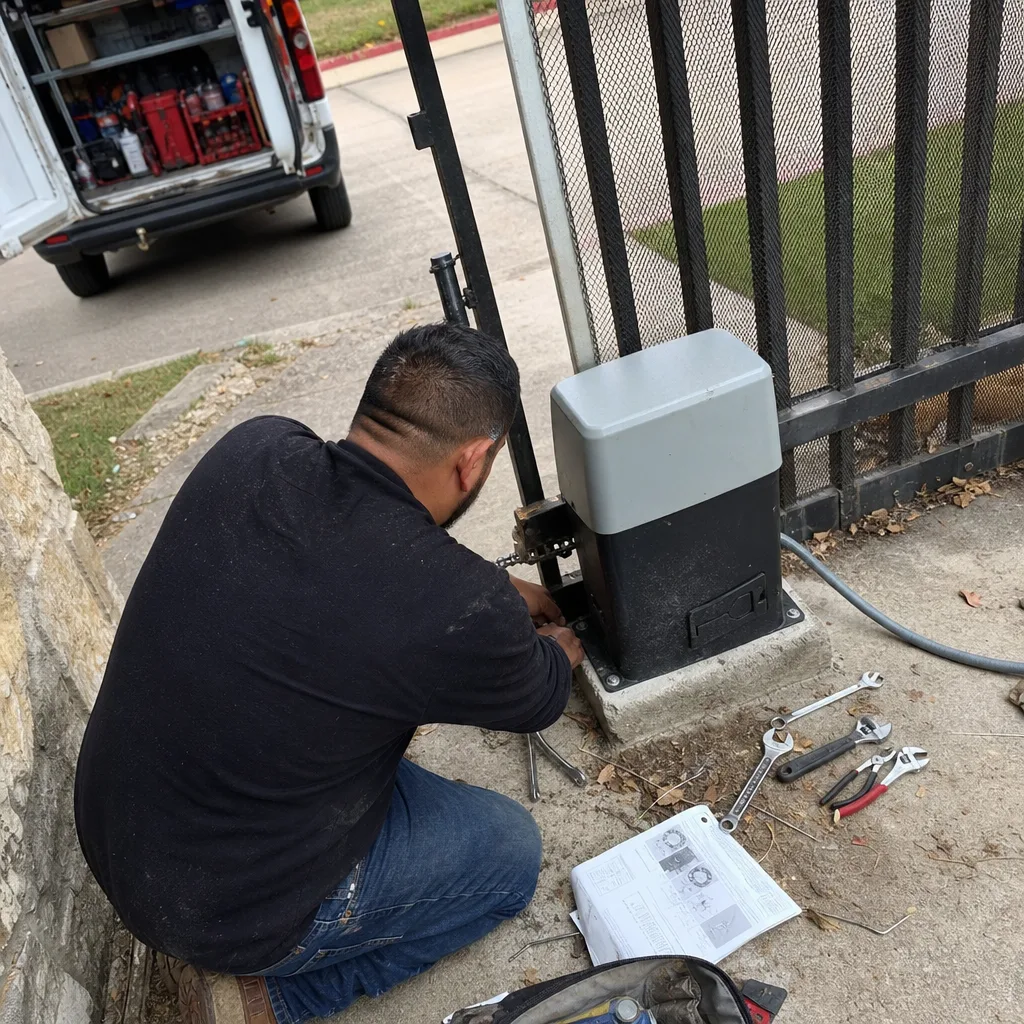
Baytown gates fail on the Gulf’s calendar, not the one hanging on the wall. April and May are for storm hardening: load-test the battery backup, torque the operator mount, check the gate stops. June through November is reactive: inspect within 48 hours after every storm, clear the debris, dry the housing, realign the photo-eyes. December is for freeze prep, and February is for corrosion reset and baseline documentation. A homeowner who follows this cycle and writes down the numbers will catch most failures while they are still cheap and quiet. The gate will still age. It should age on a schedule you understand.
Written by Adrian Vance, Owner at Vance Gate Repair Baytown, serving Baytown since 2014.