
Last updated September 20, 2026
Free on-site gate assessment - hinges, posts, and your LiftMaster or Nice gate operator checked before anything is quoted
The assessment is free and the quote is the invoice.

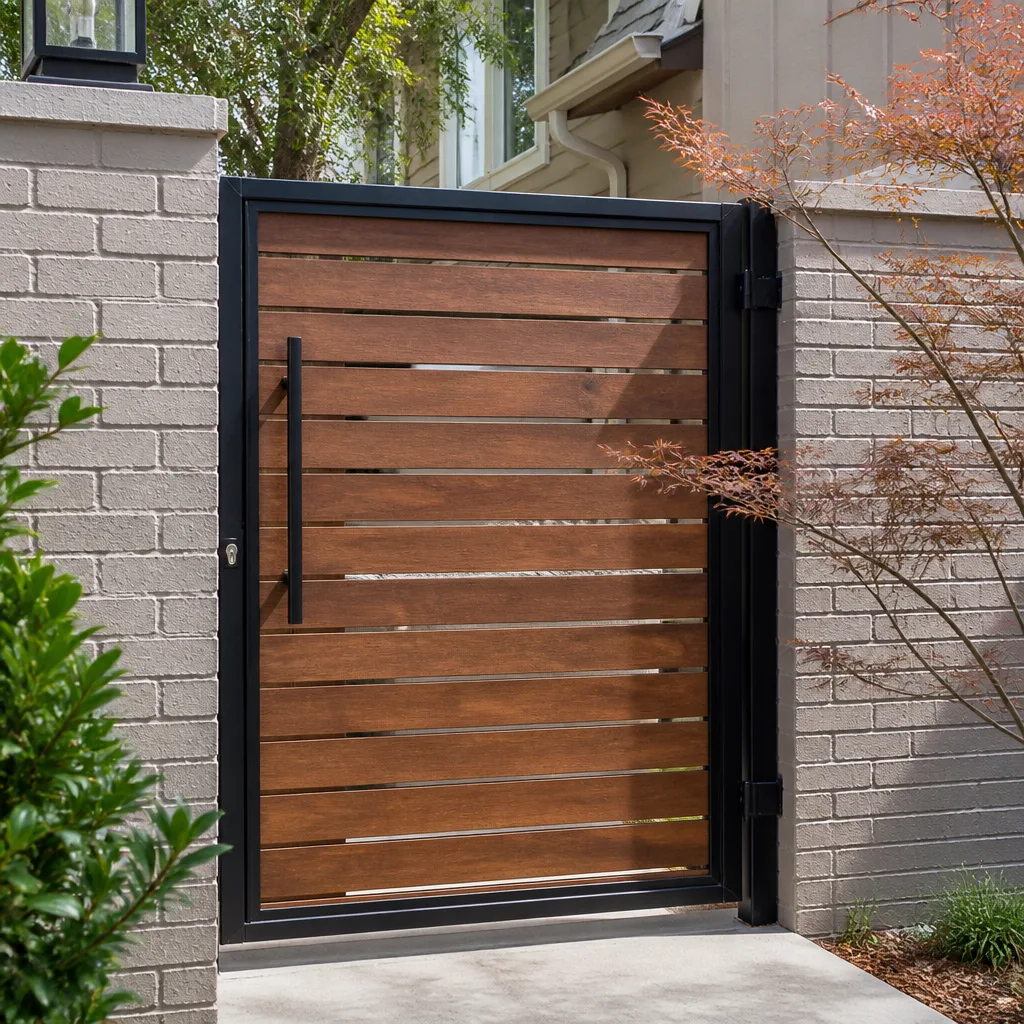

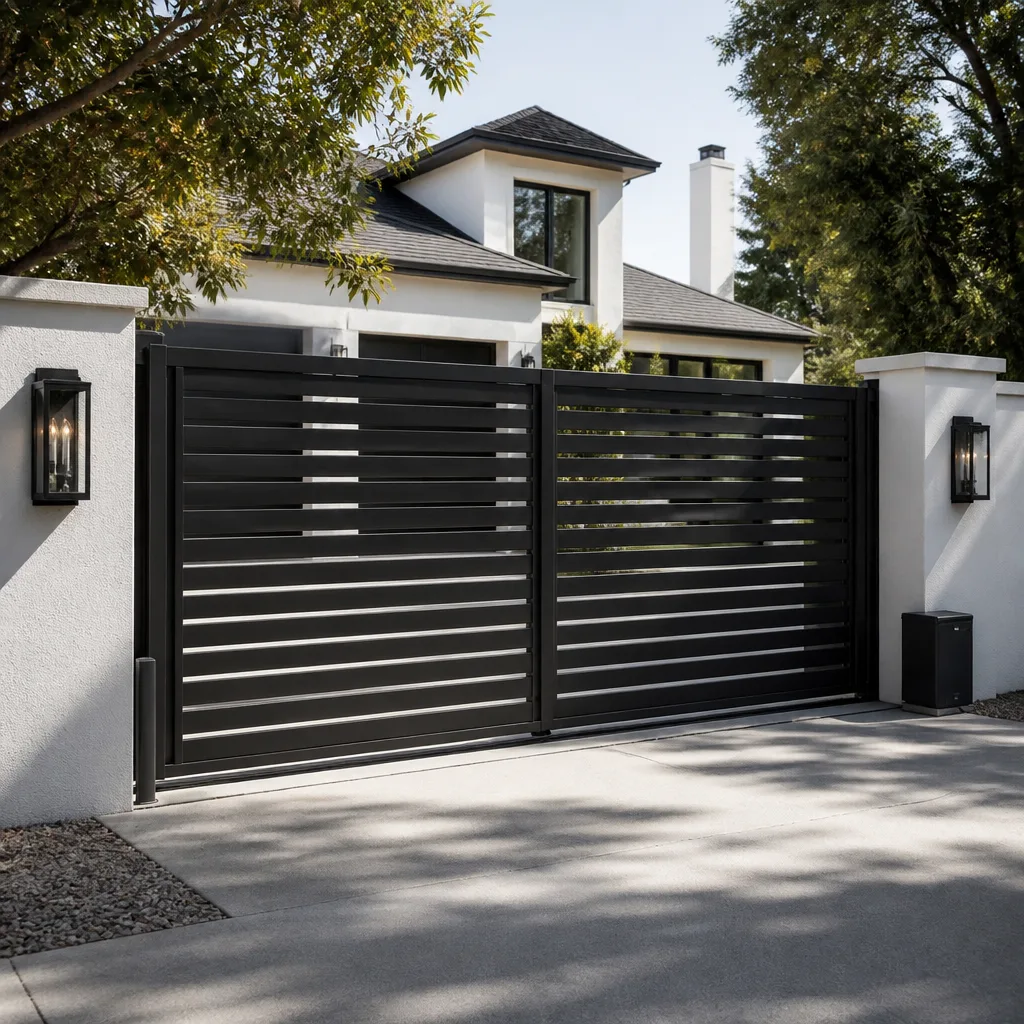
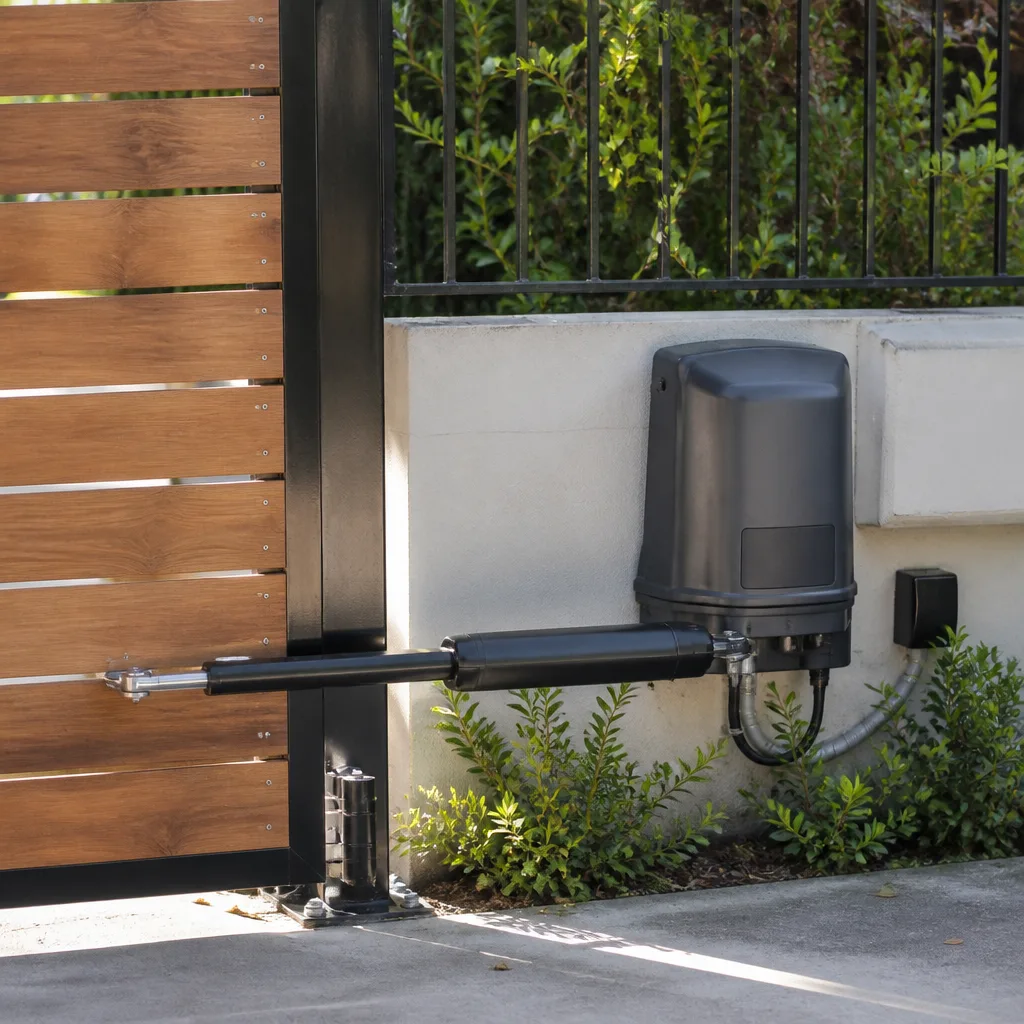
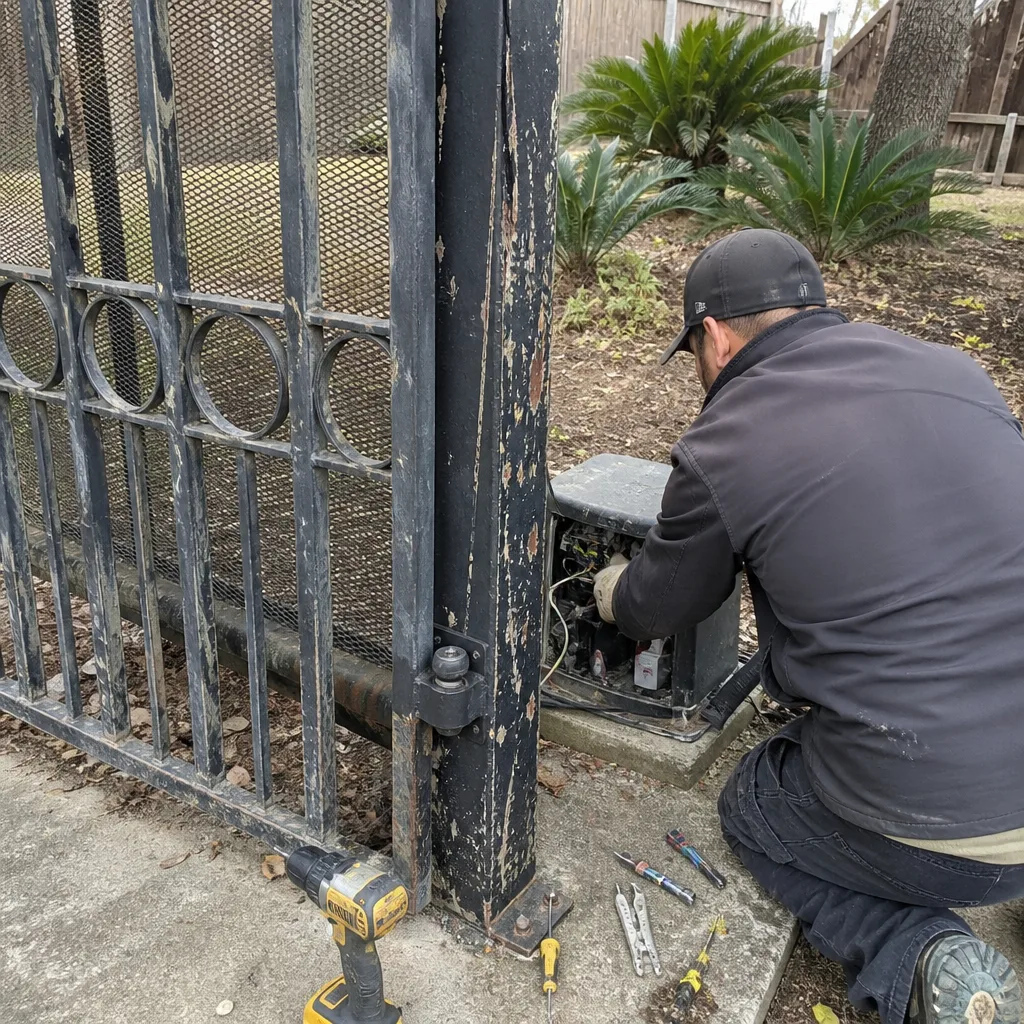 Before
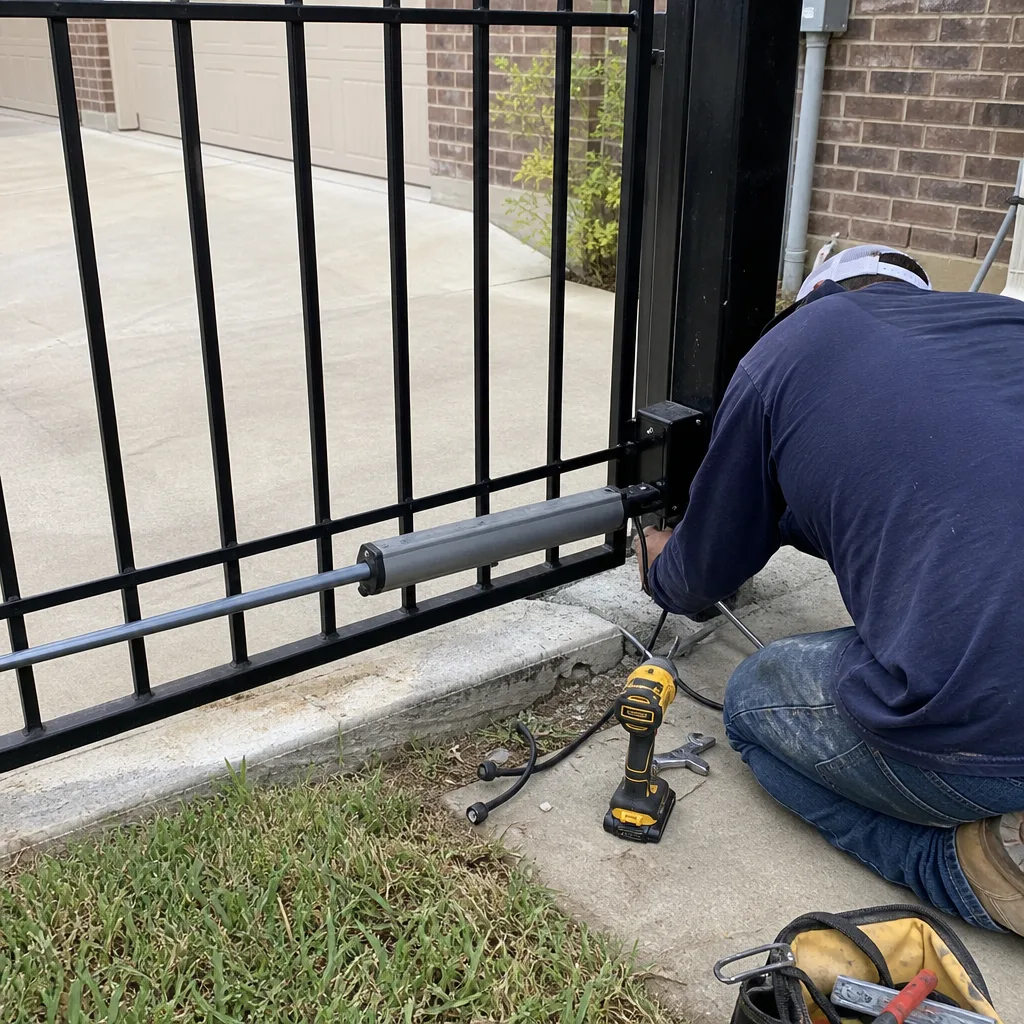 After
After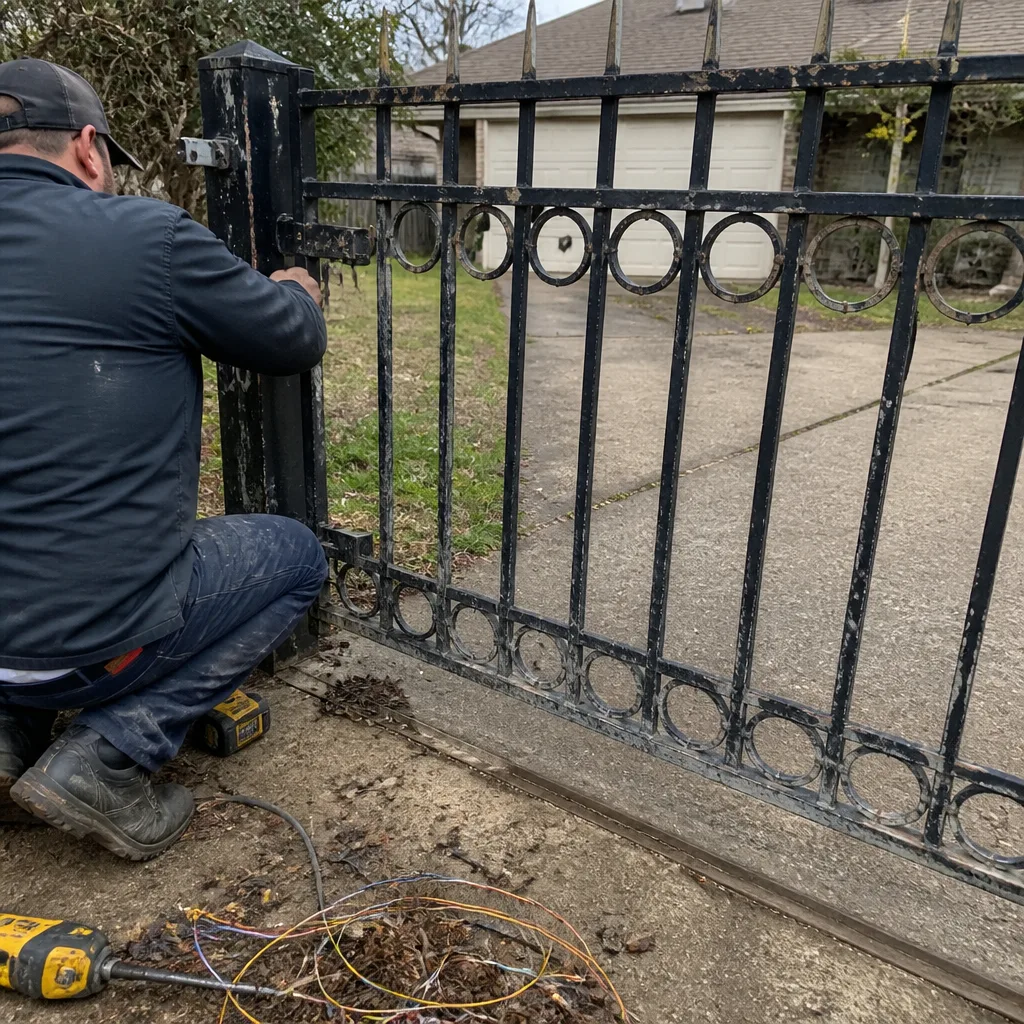 Before
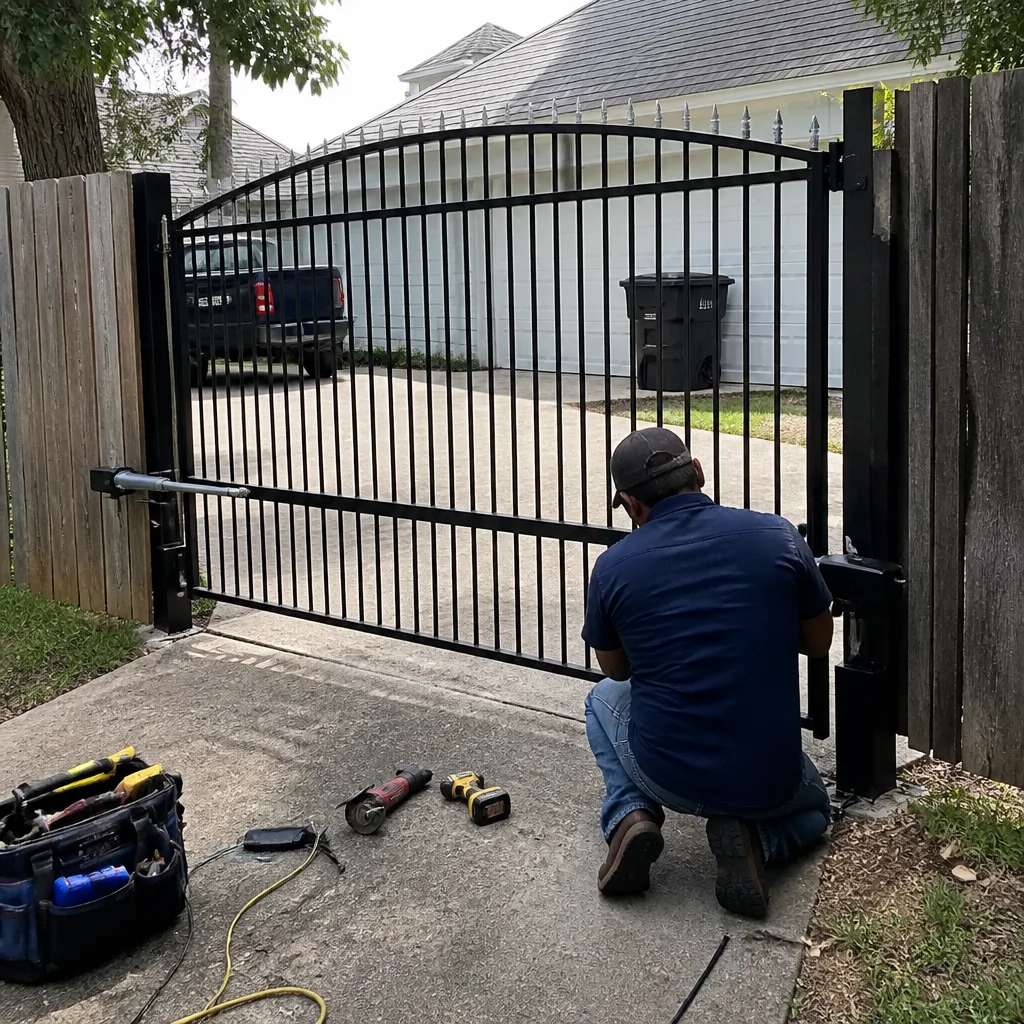 After
After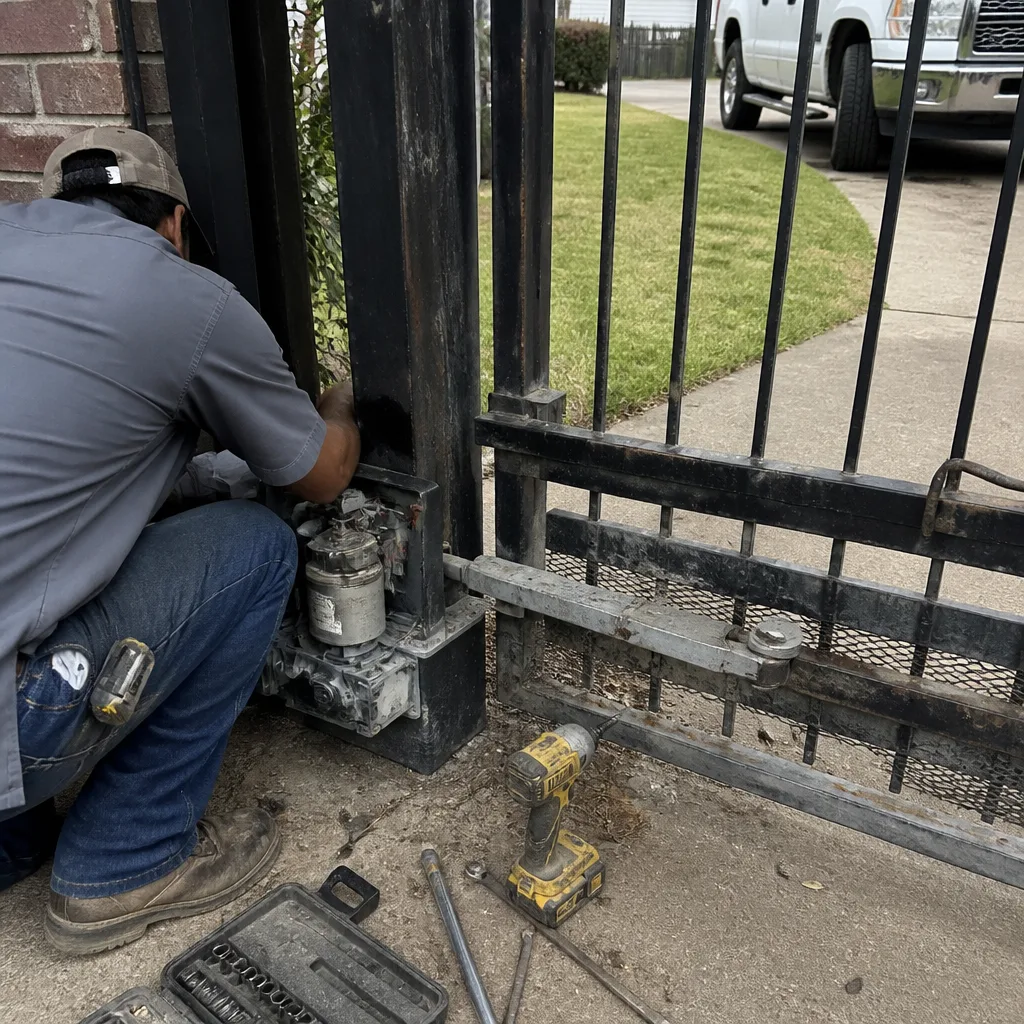 Before
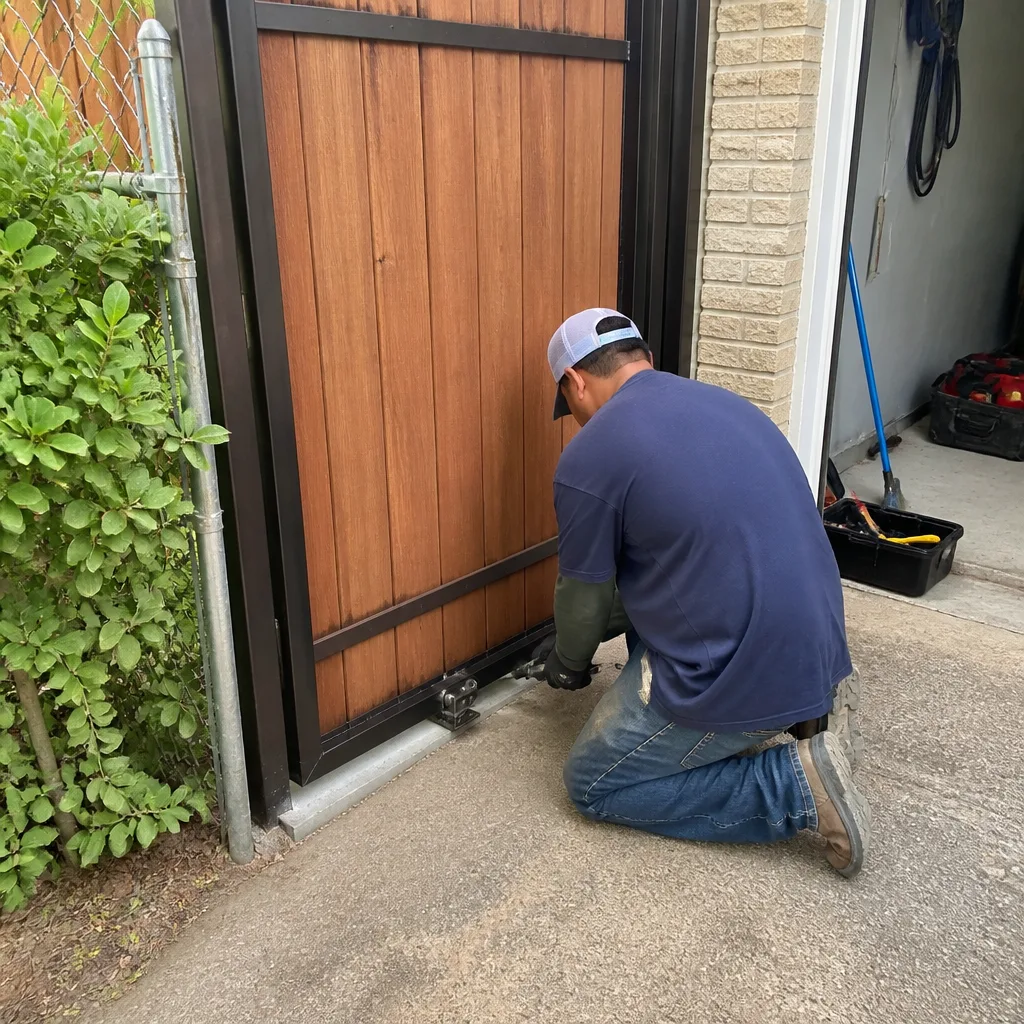 After
AfterGate Repair Permits, Codes & Inspections in TX: What You Need to Know
A gate operator wired directly to a home’s electrical panel without a permit can void the electrical portion of a homeowner’s insurance policy. That’s not a hypothetical. It’s a fact most contractors in Texas never mention, and most homeowners in Baytown only discover it during a claim, after a fire or an electrocution incident, when the adjuster asks for the permit number and the answer is silence. This guide maps exactly where the permit line sits for gate work in Baytown and Harris County, what happens when work crosses it, and how to verify that a contractor actually pulled what they said they pulled.
Quick Answer
Most gate repairs in Texas require no permit, but two triggers change that: electrical work (wiring a new operator, adding a dedicated circuit, or connecting to the panel) and structural work (replacing gate posts, changing gate dimensions, or pouring new concrete footings). In Baytown, those triggers fall under City of Baytown amendments to the National Electrical Code and Harris County structural requirements. When a permit is required and nobody pulls it, the homeowner – not just the contractor – can face code enforcement action, a failed home sale inspection, or a denied insurance claim.
Table of Contents
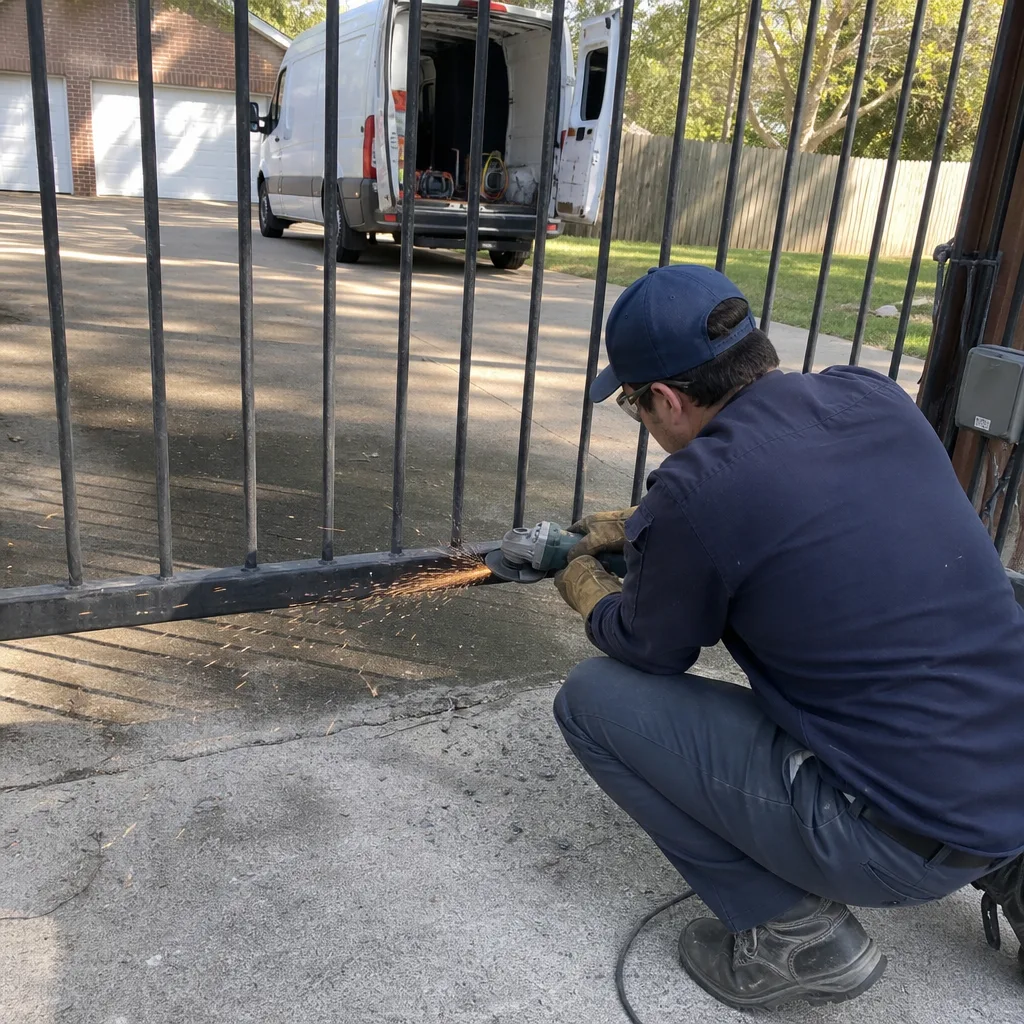
- Where the Permit Line Sits for Gate Work in Baytown
- When Gate Motor Installation Becomes “Electrical Work” Under Texas Code
- When Post Replacement Becomes a “Structural” Project
- How to Verify a Permit Was Actually Pulled in Harris County
- What Inspectors Look For on Gate Installations
- The Most Common Inspection Failures in Baytown
- HOA Overlay: When Deed Restrictions Exceed Municipal Code
- Contractor Responsibility vs. Homeowner Responsibility
BeforeAfterWhere the Permit Line Sits for Gate Work in Baytown
Baytown operates as a home-rule city, which means it amends the International Code Council’s model codes rather than adopting them wholesale. The two codes that matter for gate work are the National Electrical Code (NEC, adopted with local amendments) and the International Residential Code (IRC), which governs structural elements like posts, footings, and masonry.
Here is the functional breakdown of what requires a permit and what doesn’t:
- Repairing an existing operator (replacing a capacitor, limit switch, circuit board, or photo-eye) – no permit. This is a component swap on an already-permitted installation.
- Replacing a swing arm bracket or hinge – no permit. No electrical or structural change occurs.
- Replacing a gate operator with a like-for-like unit on an existing, previously-permitted circuit – no permit in most cases, but this is the gray zone. If the existing installation was never permitted, bringing it up to code requires one.
- Installing a new gate operator where none existed – permit required. You’re creating new electrical infrastructure.
- Adding a dedicated circuit from the panel to the gate – permit required, no exceptions.
- Replacing gate posts or pouring new footings – permit required when the post is structural (load-bearing for a cantilever or slide gate). Decorative post caps or trim do not require one.
- Widening a driveway gate opening or changing gate height beyond the existing footprint – permit required. This changes setback, wind-load, and safety requirements.
What surprises most Baytown homeowners is that the city doesn’t have a “gate permit” category. Gate work falls under existing electrical and building permit types. A contractor who says “gates don’t need permits in Texas” is technically right for many repairs and dangerously wrong for others. The distinction lives in what’s being changed, not in the word “gate” itself.
Our team at Vance Gate Repair has walked Baytown homeowners through this distinction since 2014. We’ve seen unpermitted operator installs fail home inspections in Lakeside, in Wooster, in the neighborhoods off Garth Road, and the fix is always more expensive than the permit would have been. If you’re planning gate work that might cross the line, start with our Gate Repair in Baytown page for a clear picture of what’s involved.
When Gate Motor Installation Becomes “Electrical Work” Under Texas Code
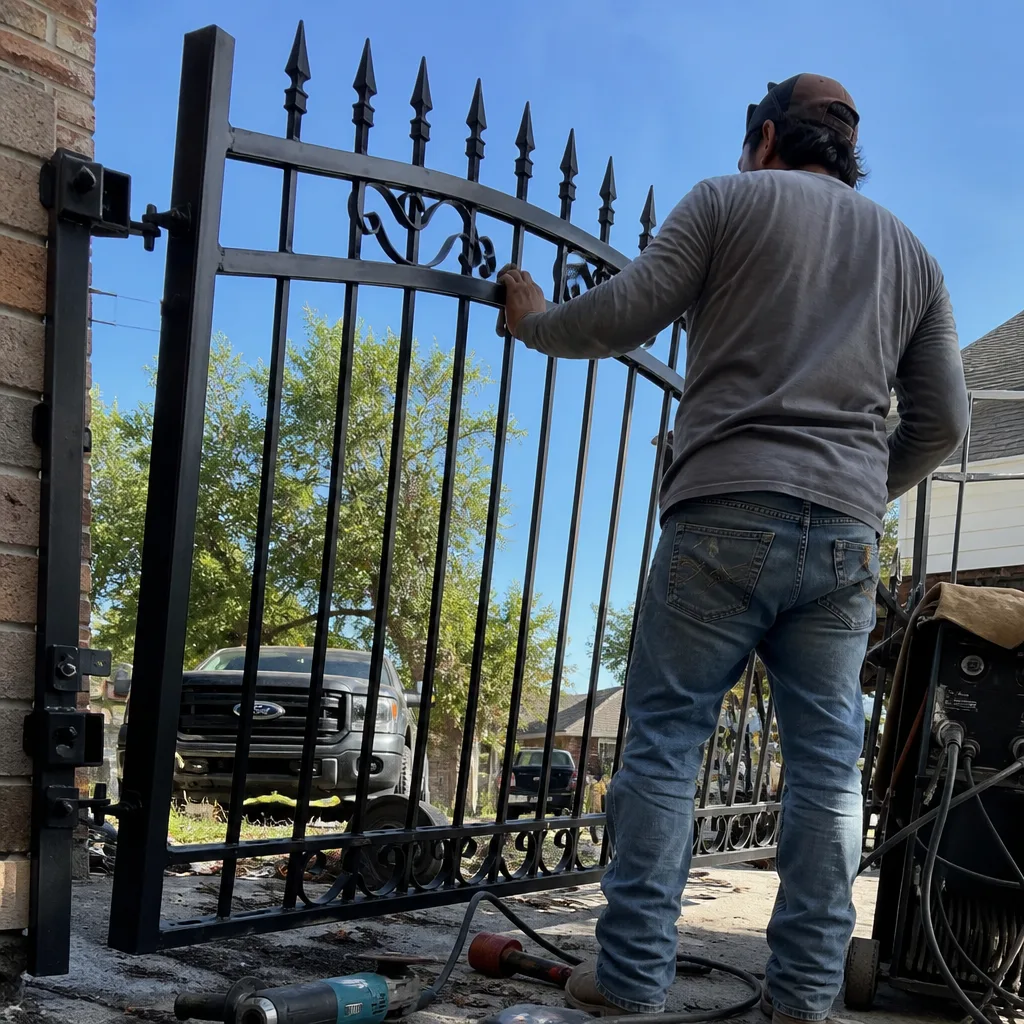
Texas adopted the 2023 NEC effective September 1, 2024, and Baytown enforces it with city amendments. Under NEC Article 300 (Wiring Methods) and Article 110 (Requirements for Electrical Installations), any new branch circuit, any connection to a panelboard, and any buried cable run feeding a structure or device falls under “electrical work” requiring a permit and a licensed electrician.
Here’s what that means for gate operators specifically:
- An operator hardwired to the panel is a new branch circuit. It needs a permit, a listed disconnect within sight of the motor, and a circuit sized to the operator’s nameplate amperage. LiftMaster and FAAC units, for example, have specific circuit-sizing tables in their installation manuals.
- An operator plugged into an existing exterior GFCI outlet does not create a new circuit, but it does create new utilization equipment. Baytown’s amendment to NEC 210.63 requires a GFCI-protected receptacle at the gate location if one doesn’t exist, and installing that receptacle is electrical work requiring a permit.
- Low-voltage wiring (photo-eyes, keypads, loop detectors, edge sensors) is Class 2 wiring under NEC Article 725. It does not require an electrical permit on its own, but the power source feeding it does.
- Battery-powered or solar-powered operators are the exception. A Viking or Ghost Controls solar unit that never touches line voltage does not trigger electrical permitting. However, if a 120V “trickle charger” backup is added, the permit requirement returns.
The practical line for Baytown homeowners: if the work involves opening the electrical panel, running wire through conduit, or burying cable, it’s electrical work. Period. And that work belongs to a licensed electrician. Most gate companies in the Baytown area are not licensed electrical contractors, which means they either subcontract the electrical portion or they do it without a permit. The homeowner who doesn’t ask which one is happening is the one who discovers the distinction during an insurance claim. For context on how operator work fits into the broader picture, see our Gate Motor & Opener in Baytown page.
When Post Replacement Becomes a “Structural” Project
Under IRC Section R105.2 as amended by Baytown, a building permit is required for any “structural alteration” of a fence or gate system, specifically when load-bearing elements are replaced, modified, or reset. The key word is “structural.” Replacing a rotted wood post that holds up a decorative garden gate is not structural. Replacing the steel post that bears the full cantilevered weight of a sliding driveway gate is.
The triggers that push post replacement into structural territory:
- The gate is cantilevered or slide-style. These gates hang their entire weight on the posts. The post is the foundation. Baytown’s wind-load requirements under IRC R301.2.1 treat a solid-surface slide gate as a wind sail, and the post footings must be engineered accordingly.
- The post is embedded in concrete. Digging out and re-pouring the footing is structural work. The footing depth, diameter, and concrete mix are specified by code, not preference. In Baytown’s expansive clay soil, an undersized footing will heave within two seasons.
- The gate exceeds 6 feet in height or 150 pounds. At that scale, the IRC treats the assembly as a structure, not an accessory, and the full structural permitting path applies.
- The post is attached to the house, garage, or a masonry pier. Any penetration into an existing structure triggers building code review.
Baytown’s soil is the quiet variable most guides miss. The soil across much of the city is Beaumont clay, which expands dramatically with moisture. A gate post set in a 2-foot hole with dry-mix concrete might hold for a year and then start leaning. An engineered footing for a structural gate post is typically 36 inches deep, with rebar and a bell-bottom or sonotube form, depending on the gate’s sail area. That’s structural work, it requires a permit, and it requires an inspection before the concrete is poured.
If you’re replacing a gate entirely rather than just a post, the scope changes again. Our Gate Installation in Baytown page breaks down what a full installation involves from a code and safety perspective.
How to Verify a Permit Was Actually Pulled in Harris County
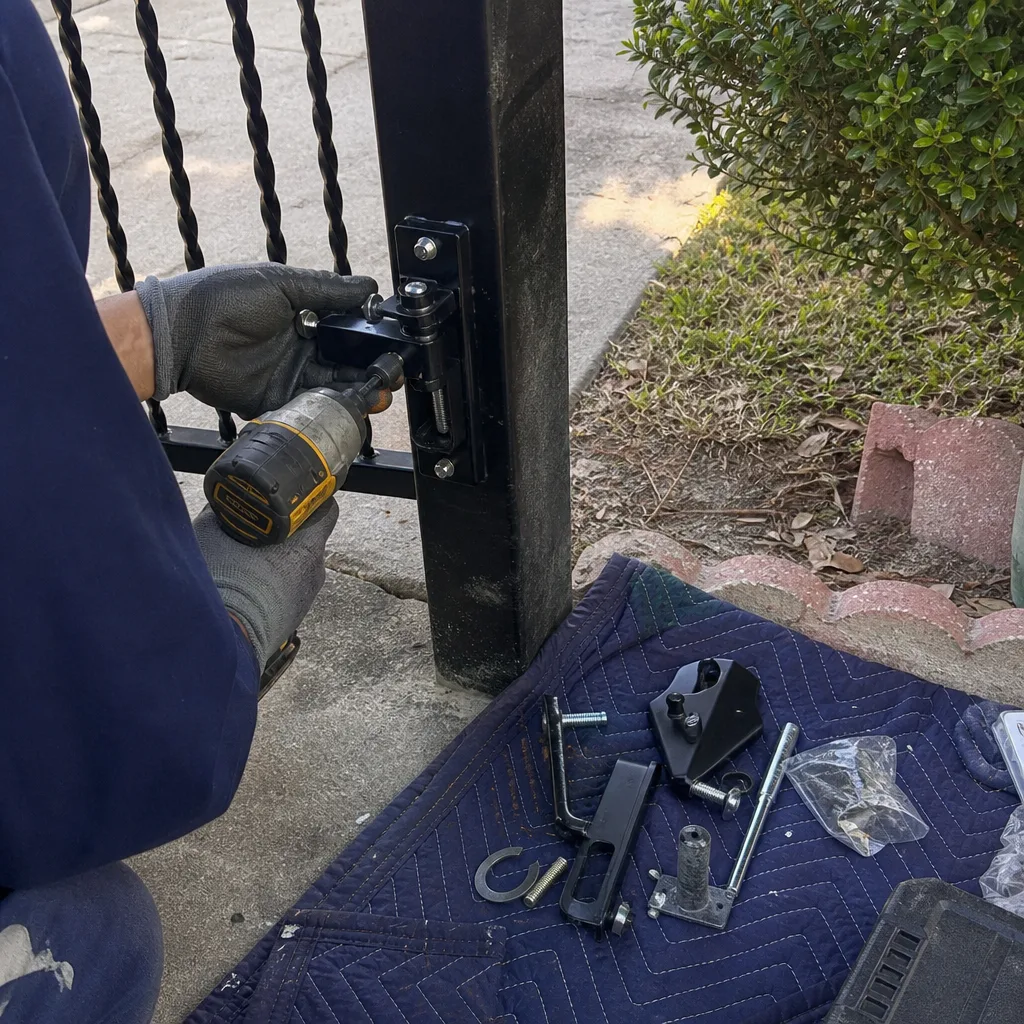
A contractor saying “the permit is handled” is not the same as a permit existing. In Harris County and the City of Baytown, permits are public records, and any homeowner can verify them in under ten minutes. Here’s the process:
- Ask the contractor for the permit number before work starts. A legitimate contractor has this number at the time they submit the application, not after the work is done. If they hedge, that’s your answer.
- Go to the City of Baytown’s online permitting portal. The city uses a digital system where you can search by address or permit number. If the work is inside Baytown city limits, this is where the permit lives, even for work that touches Harris County jurisdiction on drainage or floodplain matters.
- If the address is in an unincorporated area of Harris County, search the Harris County Permits office database. The county uses a separate system, and Baytown’s portal will not show county permits.
- Check the status. A permit that’s been “issued” is active. A permit that’s still “submitted” or “under review” means the contractor applied but hasn’t been approved, and work cannot legally begin.
- After the work is done, verify the inspection was passed. The permit record will show inspection history. A permit without a passing final inspection is an open code violation, and it will surface during any future home sale.
We recommend doing this verification even with companies you trust. It’s not about paranoia; it’s about documentation. The Haven Standard at Vance Gate Repair includes a written record of every permit number pulled on a job, and we hand it to the homeowner alongside the invoice. That way there’s never a question about what was filed.
What Inspectors Look For on Gate Installations
When a Baytown building or electrical inspector shows up for a gate-related inspection, they’re not evaluating whether the gate looks good. They’re running through a code checklist. Knowing what’s on that checklist makes you a more informed homeowner and helps you evaluate whether a contractor actually understands the work they’re quoting.
On the electrical side, the inspector checks:
- Disconnect location. NEC 422.31 requires a disconnecting means within sight of the motor. If the inspector can’t see the disconnect from the operator, it fails.
- GFCI protection. Any receptacle at the gate location must be GFCI-protected under NEC 210.8(A)(3) for exterior outlets.
- Conduit and burial depth. Buried cable must be in approved conduit at the correct depth per NEC Table 300.5. In Baytown, UF cable direct-buried at 24 inches is common for gate circuits, but inspectors will check depth and conduit type.
- Bonding. The gate frame, posts, and any metal raceway must be bonded to the equipment grounding conductor per NEC 250.4(A)(3). Loose bonding is one of the most common failures on gate installs.
- Circuit sizing. The breaker and wire gauge must match the operator’s nameplate requirements. An undersized circuit on a BFT or Linear operator will fail inspection.
On the structural side, the inspector checks:
- Footing depth and dimensions. The inspector verifies the hole before concrete is poured. If the pour happened before the inspection, be prepared to expose the footing or provide engineer documentation.
- Anchor bolt placement and specification. Posts must be anchored per the manufacturer’s engineering data, typically with 1/2-inch or 5/8-inch galvanized anchors.
- Gate wind-load capacity. For gates over 6 feet, the inspector may require the manufacturer’s wind-load rating or an engineer’s stamp, especially in Baytown’s hurricane-prone coastal zone.
- Safety entrapment devices. Under UL 325, which Texas incorporates by reference, every automated gate must have primary and secondary entrapment protection: photo-eyes, edge sensors, or both, depending on the gate type and location.
The UL 325 requirement is the one most frequently missed by contractors who don’t specialize in gates. A generalist fence company that adds an operator to a gate without installing the required photo-eye configuration will fail inspection, and worse, will leave a gate that can injure a child or pet. Gate operators are dangerously powerful equipment, and the entrapment protection exists for a reason. If your gate is being serviced, make sure the photo-eyes and edges are tested and documented on every visit – this is standard procedure on every Vance Gate Repair Baytown home service call.
The Most Common Inspection Failures in Baytown
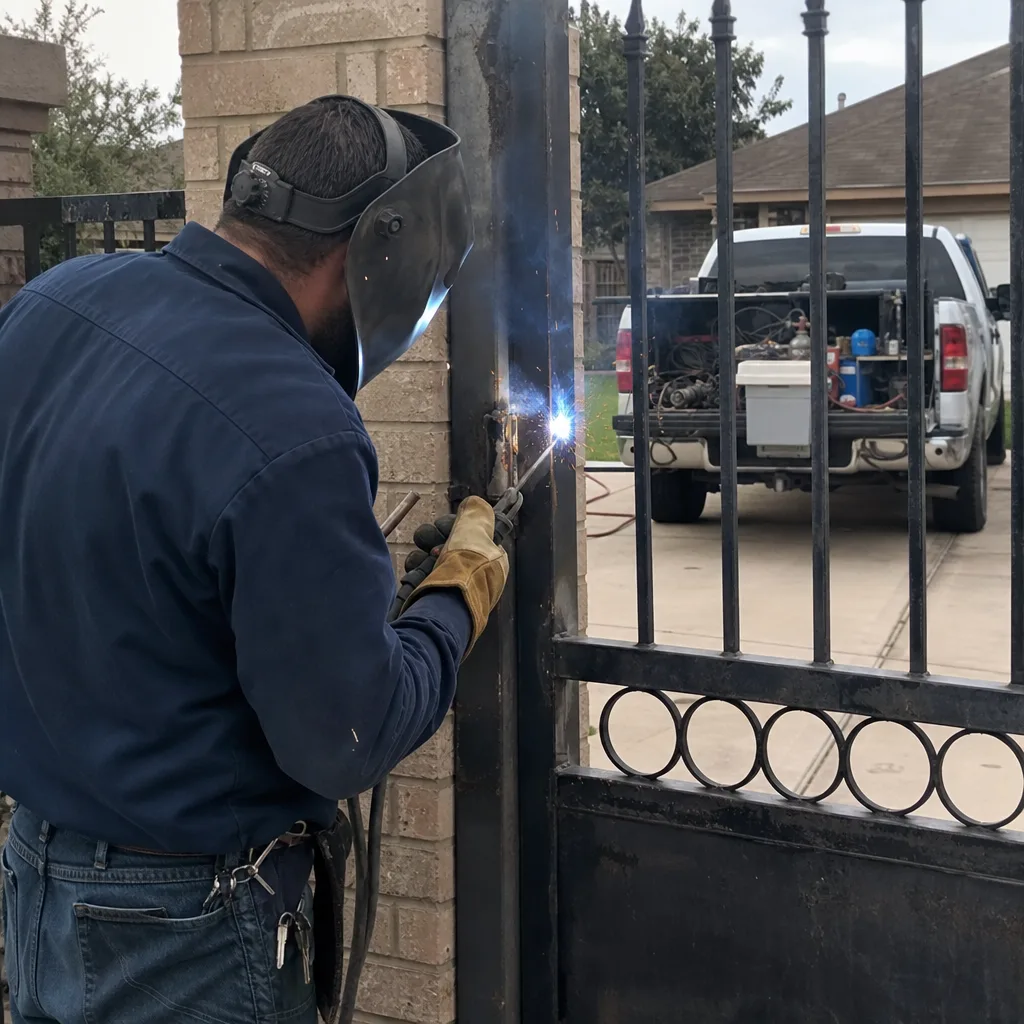
After years of seeing gate work in Baytown pass and fail inspection, the same failures show up over and over. Here’s what actually gets flagged:
- No disconnect within sight of the motor. The number-one electrical failure on gate operator installs. The motor is 40 feet from the panel, the disconnect is at the panel, and NEC requires a disconnect at the equipment. It costs $80 in parts and two hours to fix, but it fails the rough-in every time.
- Conduit filled above capacity. Contractors run too many conductors through undersized conduit, especially when adding a keypad and photo-eye wiring to the same run as the power circuit. NEC Chapter 9 fill tables apply, and inspectors in Baytown check them.
- Photo-eyes installed at the wrong height. UL 325 specifies the entrapment zone coverage. Photo-eyes that are too high or angled wrong leave a child-height gap at the gate’s leading edge, and the inspector will require a re-install.
- Footing poured without an inspection. Contractors pour concrete before calling the inspector because they want to move fast. The inspector can either make them expose the footing or reject the work and require an engineer’s letter. Both options are expensive.
- Missing bonding jumper on a metal post. On gates wired to line voltage, the metal frame can become energized if a conductor abrades against the post. The bonding jumper is a ground conductor connecting the frame to the system ground. It’s a $20 part that gets skipped constantly.
- Wind-load documentation missing for tall gates. In Baytown’s wind zone, a solid-surface gate over 6 feet needs a manufacturer’s wind rating. When the contractor can’t produce it, the inspector can require engineering analysis at homeowner expense.
None of these failures are caused by the gate being inherently difficult to install correctly. They’re caused by contractors cutting corners and hoping the inspection is superficial. It usually isn’t, not in Baytown.
HOA Overlay: When Deed Restrictions Exceed Municipal Code
In Baytown, many residential neighborhoods have deed restrictions or HOA covenants that impose requirements beyond what the city or county requires. This is where homeowners get surprised, because a gate that passes every city inspection can still violate an HOA rule that carries fines or a removal order.
Common HOA requirements in Baytown-area subdivisions include:
- Gate height limits lower than city code. The city may allow an 8-foot gate, but the HOA caps it at 6 feet for front-facing installations.
- Material restrictions. Some neighborhoods require ornamental iron, prohibit chain-link for front gates, or require wood gates to match the fence style of adjacent homes.
- Setback restrictions beyond city requirements. An HOA may require the gate to be set back farther from the street than municipal code demands, often to preserve sight lines.
- Approval processes. Many HOAs require architectural committee approval before installation or major modification, with a review period of 30 days or more. Skipping this approval can trigger a removal order even after the job is done.
- Color and finish specifications. The HOA might require black powder-coated metal, natural wood stain, or a specific brand of operator housing to maintain visual consistency.
Before you spend money on a gate project, check both layers: city permit requirements and HOA covenants. The HOA’s architectural guidelines are a private contract, not a code, but they’re enforceable through fines and liens in Texas. A gate company that doesn’t ask about your HOA before quoting is missing a step that can cost you real money.
Contractor Responsibility vs. Homeowner Responsibility
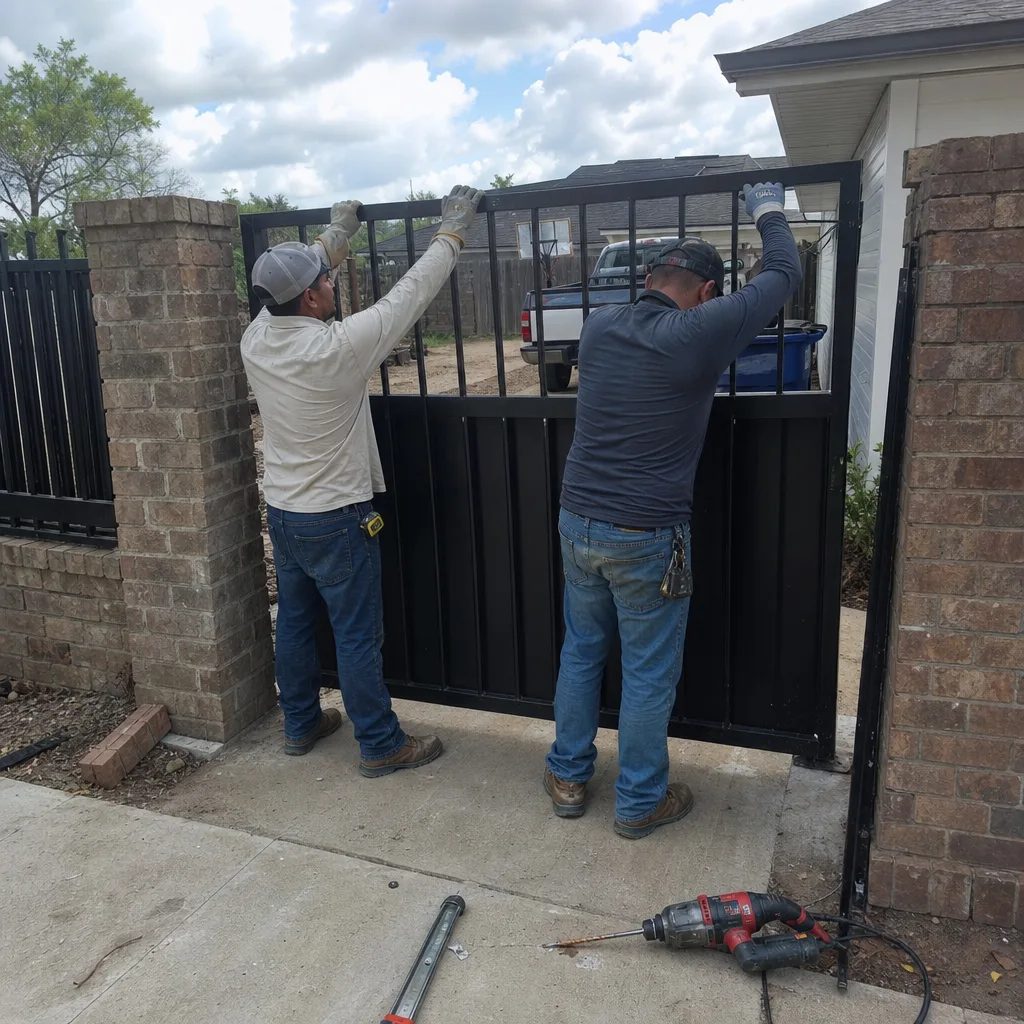
When a permit should have been pulled and wasn’t, Texas law and local practice divide responsibility in ways that surprise homeowners. Here’s the reality:
The contractor’s responsibility: Under Texas Occupations Code and the Texas Construction Trust Fund Act, a contractor who performs work requiring a permit without pulling one is committing a code violation and potentially a deceptive trade practice under the Texas Deceptive Trade Practices Act. If the contractor is licensed (electrical or general), their licensing board can levy fines or suspend the license. If they’re not licensed to do work they performed, that’s a separate violation. In practice, however, enforcement against contractors is slow, and the financial consequences often land on the homeowner long before any board acts.
The homeowner’s responsibility: The permit is attached to the property, not the contractor. If the work was unpermitted and the issue surfaces during a home sale, the seller – not the contractor – must remediate the issue or negotiate the price before closing. If an insurance claim involves the unpermitted work, the homeowner is the named insured and bears the denial. If the county code office issues a violation, the homeowner receives the notice. The contractor might be on the hook legally, but the homeowner is on the hook practically, and the practical hook is the one that hurts sooner.
The way we handle this at Vance Gate Repair is built into The Haven Standard: we advise the homeowner in writing whether the proposed work requires a permit before the quote is accepted. That written advisory is part of the estimate. The homeowner makes an informed decision, with a record of what was advised. That record protects both parties, and it’s the only honest way to operate when the permit line sits exactly where most Baytown gate work crosses it.
Common Mistakes to Avoid
- Assuming a gate repair never needs a permit. Most repairs don’t, but the moment the work touches the electrical panel or replaces a structural post, the permit question is live. Assuming your way through it is how unpermitted work happens.
- Trusting a verbal “we pulled the permit” without verification. Permits are public record in Baytown and Harris County. A contractor who gets defensive when asked for the permit number is telling you something.
- Signing a contract that doesn’t specify who pulls permits. The contract should name the party responsible for permitting and state that work won’t begin until permits are issued. If it doesn’t, you own the gap.
- Skipping the HOA check because “the city approved it.” City approval and HOA approval are separate systems. A gate that’s code-compliant but HOA-noncompliant can still get ordered for removal.
- Replacing a gate operator with a bigger motor on the existing circuit. The circuit was sized for the old motor. A more powerful LiftMaster or FAAC unit may draw more current than the breaker and wiring are rated for, which overloads the circuit and fails inspection, or worse, creates a fire hazard.
- Pouring a structural footing without calling for inspection first. The inspector needs to see the hole before the concrete goes in. Once it’s poured, you’ve bought yourself an engineer’s letter or a tear-out.
- Treating safety devices as optional afterthoughts. Photo-eyes and edge sensors are required under UL 325. Removing or bypassing them to speed up a repair is both a code violation and a serious safety risk. A gate without functioning entrapment protection can crush a person or pet, and the liability exposure is entirely the homeowner’s.
When to Call a Professional
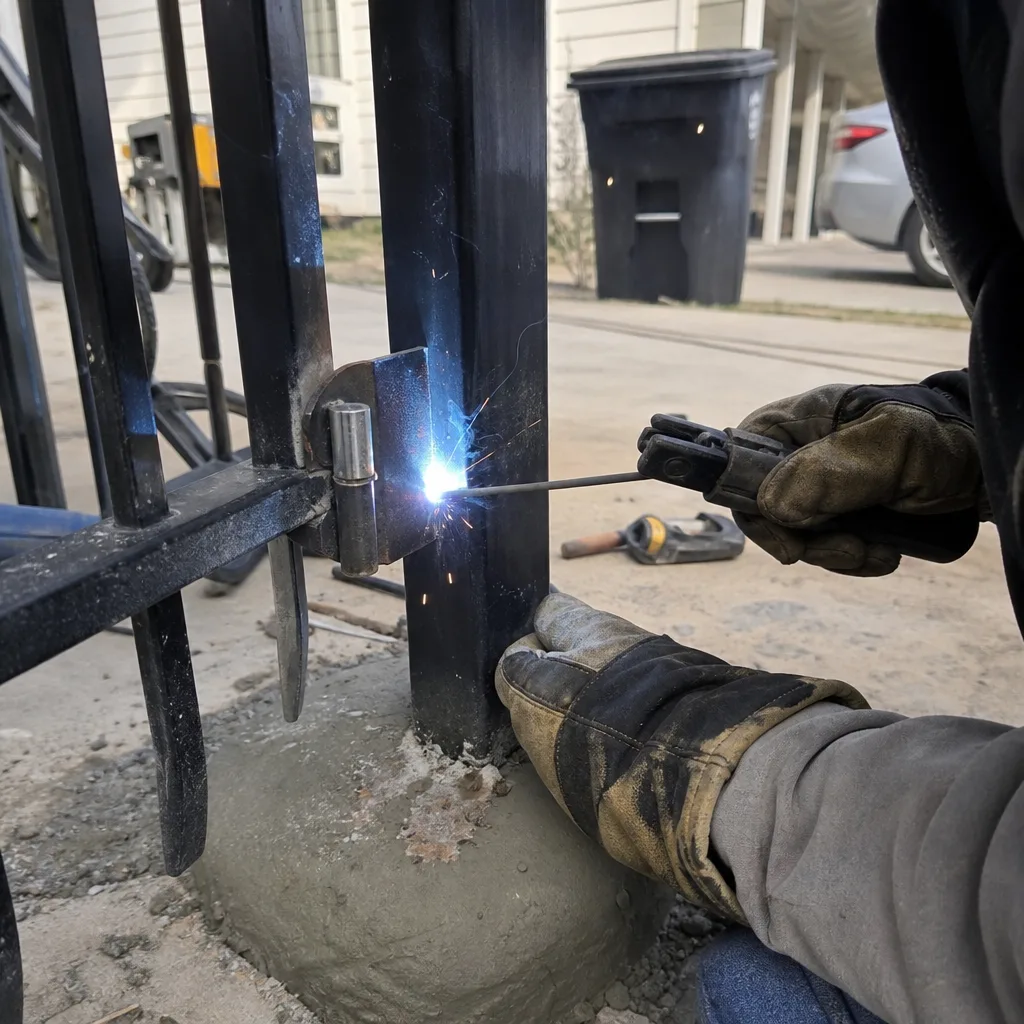
If your gate project involves new electrical wiring, replacement of load-bearing posts, a gate taller than 6 feet, or any work that touches the electrical panel, call a professional who can show you a permit plan before they show you a drill. That means a written scope that names the permits, names who pulls them, and names the inspection milestones. If the gate operator shows signs of electrical problems – tripping breakers, intermittent failures, scorched wiring at the motor – do not attempt repairs yourself. Line voltage is involved, and the failure mode is not forgiving. Vance Gate Repair Baytown offers free estimates in Baytown, and every estimate includes a written permit advisory so you know where you stand before any work begins. Call (346) 315-4812 to schedule, and you’ll get a written price and a documented record of what’s actually required.
Frequently Asked Questions
No, if the repair is limited to component replacement on an already-permitted installation – swapping a circuit board, replacing a limit switch, installing a new photo-eye, or welding a hinge. A permit becomes necessary when the work creates new electrical infrastructure (a new circuit, panel connection, or new operator) or changes structural elements (replacing load-bearing posts, widening the gate, or pouring new footings). When in doubt, get the answer in writing before work starts – call (346) 315-4812 and we’ll tell you where your specific job sits.
Electrical permits for a typical gate operator circuit run between $75 and $250 in the Baytown area, depending on the circuit scope and whether the work includes trenching or panel work. Structural permits for post replacement or gate widening typically run between $60 and $185. These are permit fees only – the labor to complete the permitted work is a separate line item. For an exact breakdown on your project, call (346) 315-4812 for a free estimate with the permit costs itemized in writing.
The unpermitted work will surface during the buyer’s inspection or the title company’s permit review, and you as the seller will be required to either remediate the work, retroactively permit it, or negotiate a price reduction. The cost of retroactive permitting is typically double or triple the original permit fee, because you’re paying for the permit, the inspection, and any corrections the inspector requires. If the work involved electrical and can’t be verified, the buyer may require a new electrical inspection before closing.
No. In Texas, only a licensed electrical contractor or a homeowner performing the work themselves on their own primary residence can pull an electrical permit. A handyman who is not a licensed electrician cannot legally pull the permit or perform the electrical portion of the work. If someone offers to do both, walk away. For gate motor and opener work, electricians who do the electrical portion while a gate company handles the mechanical portion is the standard, safest arrangement. Our Gate Motor & Opener in Baytown page explains how the division works.
No, a solar-powered or battery-powered operator that never connects to line voltage does not require an electrical permit, because no electrical wiring work is being performed. However, if the system includes a 120V AC backup charger or a trickle charge connection from the house, that connection is electrical work and requires a permit. The structural side still applies: if you’re installing a new operator on new posts, the structural permit questions remain.
No. HOA approval and city permitting are separate legal systems that do not substitute for each other. An HOA architectural committee can approve your gate design and still have nothing to do with whether the electrical work meets code, and the city can issue a permit while your HOA separately requires its own approval. You need both when both apply. Skipping either one creates a separate set of enforcement problems.
The Bottom Line
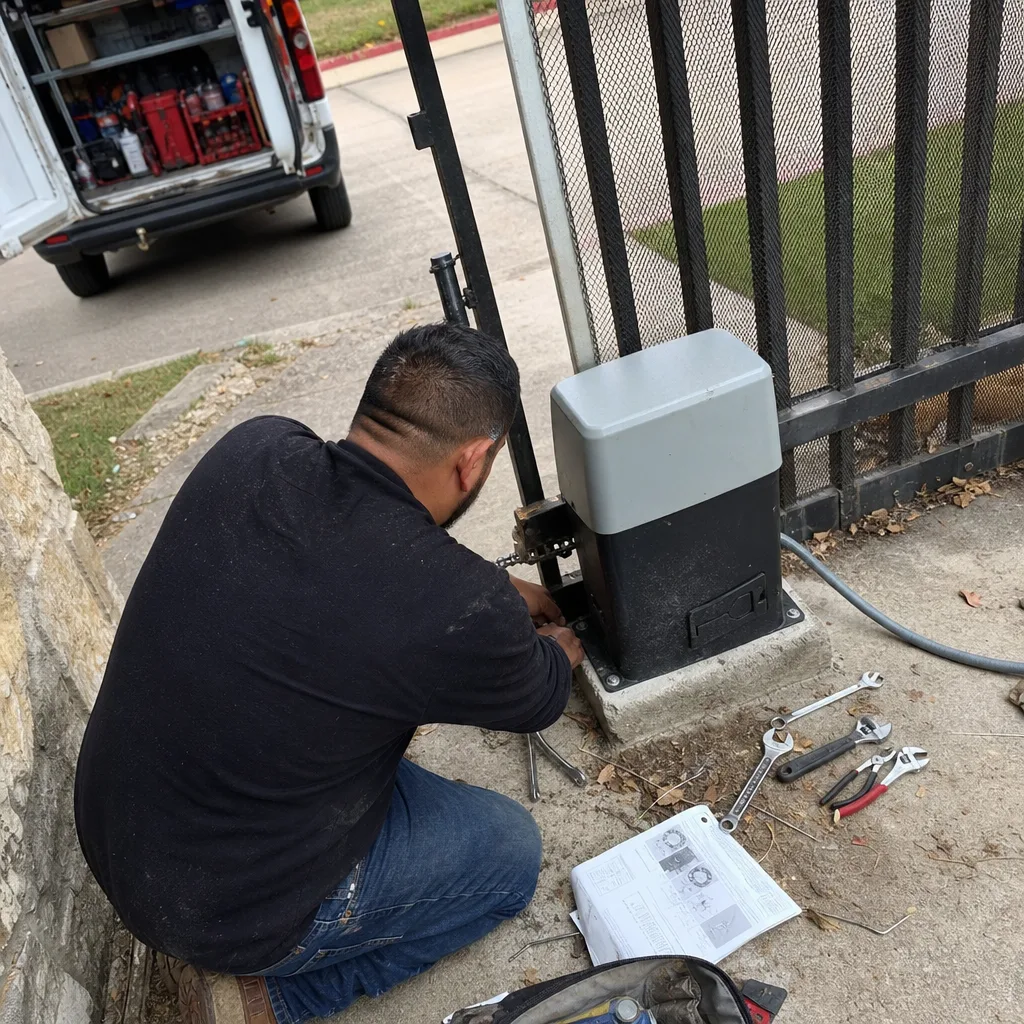
Gate work in Baytown sits on a permit line that many contractors blur and most homeowners never see until it costs them money. Component repairs don’t need permits. Electrical and structural work does. The line is knowable, the verification process is public record, and the cost of guessing wrong is a denied insurance claim, a failed home sale, or a code enforcement notice with your name on it. If you’re planning gate work in Baytown, get the permit answer in writing before the work starts – that’s the single most protective step you can take, and it’s one that Gate Repair in Baytown professionals at Vance Gate Repair provide on every estimate, free of charge.
Written by Adrian Vance, Owner at Vance Gate Repair Baytown, serving Baytown since 2014.